

In her book A Fly on the RBI Wall, published by Rupa Publications, Alpana Killawala, who worked as a communication officer at the Reserve Bank of India, shares a personal and insightful journey through her career, with a focus on the turbulent period of the Harshad Mehta scam. Through her eyes, we see the RBI’s behind-the-scenes efforts to safeguard its reputation, the Governor’s quick recognition of the scam’s magnitude, and the tough battle to shape public perception during one of India’s most infamous financial crises.
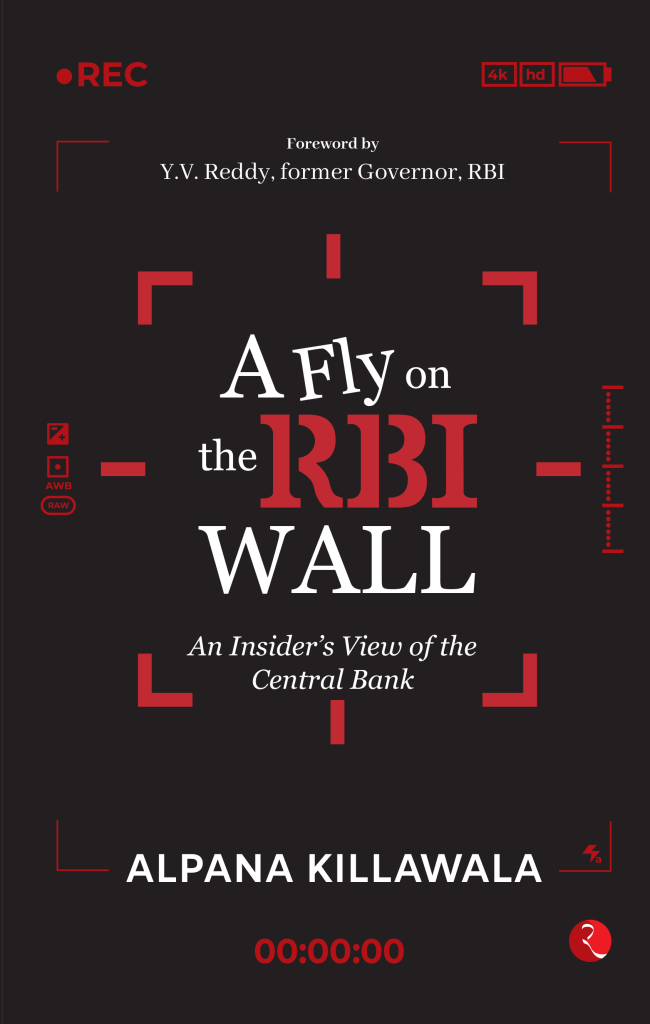
Killawala’s book opens with her first days at the RBI and traces the unfolding of the Harshad Mehta scandal. She offers detailed insights into how the RBI worked to protect its credibility during the crisis.
In her narrative, Killawala recalls how RBI Governor R. N. Venkitaramanan was one of the first to recognize the troubling link between the government securities market and the stock market—a connection exploited by Harshad Mehta. Mehta had been using Bankers’ Receipts (BRs) to borrow money from banks, which he then invested in the stock market through the ‘badla’ financing system, only to repay the loans after a few days when the stock trades unwound. Killawala highlights that Venkitaramanan was quick to realize the growing problem and understood that halting BR transactions was essential, even though they had long been a common practice in the market.
The book goes on to describe the RBI’s immediate steps following the scam’s discovery. The RBI set up the Janakiraman Committee to look into the matter, while the government formed a Joint Parliamentary Committee (JPC) for a deeper investigation. In a lesser-known move, Venkitaramanan also created an informal group of young RBI officers to manage communication with both the JPC and the public. Killawala was a part of this group, offering her insights and assisting in compiling relevant information.
Her role also took her to Delhi, where she met with journalists to clarify the RBI’s position and its actions in the wake of the scandal. As she recounts, the media in Delhi, often influenced by political and journalistic power plays, had already decided that the RBI Governor would be held accountable. During her regular visits, Killawala worked to change the narrative by engaging with journalists, showing them documents that illustrated the RBI’s proactive stance in uncovering the scam. Despite her efforts, she found it difficult to shift the media’s view, as many were unwilling or unable to fully understand the complexity of the situation.
The RBI also organized off-the-record meetings with journalists, aiming to provide a clearer picture of the institution’s operations and its role in the crisis.
In the final chapters, Killawala reflects on the tragic outcomes of the scam. Harshad Mehta’s life ended in jail, and many individuals connected to the scandal also met untimely deaths or suffered severe consequences. Among those implicated were key figures such as M. J. Pherwani, Chairman of UTI, and B. Ratnakar, Chairman of Canara Bank. Other associates either disappeared or faced long prison sentences. The aftermath of the scam left deep scars, both for the individuals involved and the reputation of Indian financial institutions.
Through her personal account, Killawala provides an insider’s perspective on how the RBI navigated one of the biggest financial scandals in India’s history, shedding light on the often-overlooked efforts to safeguard the institution’s integrity.


 Bookshotsapp
Leave a comment