
Sudeep Chakravarti’s Fallen City revisits the 1978 Billa and Ranga case, where two criminals kidnapped and murdered Geeta and Sanjay Chopra in Delhi. Despite advancements in police technology and training, crime investigations in India still suffer from inefficiency, delays, and political interference. Public outrage often forces quick action, as seen in the swift justice for Billa and Ranga. The case highlights enduring flaws in policing, raising questions about whether true change has occurred over the past 45 years.
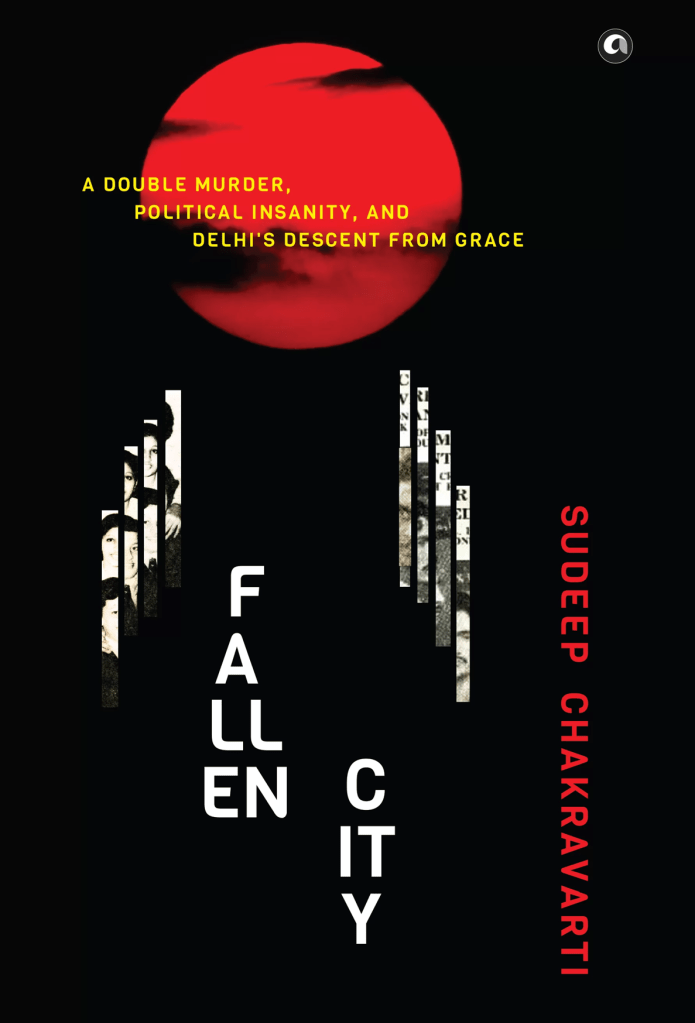
In Fallen City, published by Aleph Book Company, Sudeep Chakravarti revisits the shocking 1978 crime in Delhi involving two petty criminals, Billa and Ranga, who kidnapped and murdered Geeta and Sanjay Chopra, the children of a naval officer. The author not only uncovers the details of the case but also examines how little has changed in India’s crime investigation system over the last 45 years. Comparing the 1978 crime to more recent incidents like the Nirbhaya case and the RG Kar Hospital case in Kolkata, Chakravarti argues that despite advancements in technology and law enforcement, systemic flaws, political interference, and inefficiencies still plague India’s policing and judicial systems.
The Paradox of Progress: Then and Now
While modern police forces are equipped with advanced technology, better tools, and more training, Chakravarti highlights the persistence of the same issues that plagued investigations in 1978. Police are still overburdened, and the system remains slow to act unless there is widespread public outrage. The handling of high-profile cases like those of Billa and Ranga, Nirbhaya, and RG Kar Hospital illustrates how investigations and justice are often delayed or mishandled until public pressure demands action.
Who Were Ranga and Billa?
Ranga and Billa, both small-time criminals, fled Bombay after being targeted by the police and found their way to Delhi. It was here that they kidnapped and later murdered Geeta and Sanjay Chopra. Their arrest was not the result of police work but a stroke of luck when they boarded a train in Agra, where soldiers detained them after noticing their suspicious behavior. Once brought to Delhi, they admitted to the kidnapping but blamed each other for the murders and the rape of Geeta.
A Timeline of Justice
The legal proceedings in the Billa and Ranga case were notably swift by the standards of the time. Within a year of their arrest in September 1978, they were sentenced to death. Their appeals to commute the sentences to life imprisonment delayed their execution, which eventually took place in January 1982, just three and a half years after the crime. While the case was wrapped up faster than many others, the speed of justice still fell far short of true efficiency and transparency.
Speculation and Sensationalism
The media’s coverage of the Billa and Ranga case was riddled with speculation and incomplete information. The delay between the crime on August 26, 1978, and the suspects’ arrest on September 9, 1978, meant that much of the information reported was inaccurate. The police fed scraps of information to the media, and the public was left to digest a fragmented narrative, which only fully came together months later.
A Crime Fueled by Greed and Violence
Billa and Ranga’s crime was initially driven by a desire for ransom. However, their plans went awry when they realized the Chopra children were not the wealthy targets they expected, but the children of a naval officer. As Geeta and Sanjay fought back, the situation escalated into horrific violence. The children were brutally murdered with a sword and kirpan, their lives cut short in an act of mindless brutality.
Public Outrage and Political Consequences
The murder sent shockwaves through Delhi. Public outrage was palpable, with thousands of students from schools and colleges marching to demand justice. The case dominated headlines for weeks, forcing the Indian Parliament to take action. It became a symbol of how crime and public security were intertwined in political discourse. In the aftermath, Delhi experienced a profound sense of fear, with people avoiding public spaces. Billa and Ranga became synonymous with evil, a stark reminder of the dangers lurking in society.
Delays in Investigation
Despite the involvement of government officials—Geeta and Sanjay’s father being a naval officer—the investigation into their kidnapping and murder was delayed. A crucial gap in communication between police control rooms allowed Billa and Ranga to stay ahead of the authorities. While bystanders reported the children’s abduction, it took nearly three days for the bodies to be found. This delay gave the criminals a significant head start.
Political Mileage from Crime
The tragedy of the Chopra children’s murder quickly became a political issue, with parties vying to criticize the ruling government. Political actors often use such incidents to exploit public vulnerabilities and missteps. The Billa-Ranga case, with its national outrage, provided an opportunity for political figures to target the government, highlighting systemic failures in addressing crime.
As we look back at this case, and compare it to more recent incidents, one question remains: has anything really changed in how crime is investigated, or have we simply grown more adept at shining a light on the inefficiencies that have persisted for decades?




 Bookshotsapp
Leave a comment