
Ayodhya, an ancient city with a history that spans millennia, continues to echo through India’s religious and political landscape. Located on the banks of the Saryu River, Ayodhya was once the grand capital of the Ikshvaku dynasty, a lineage believed to be descended from the sun god. Its prominence in Hindu mythology, particularly as the birthplace of Lord Ram, has cemented its significance in India’s cultural and spiritual history.
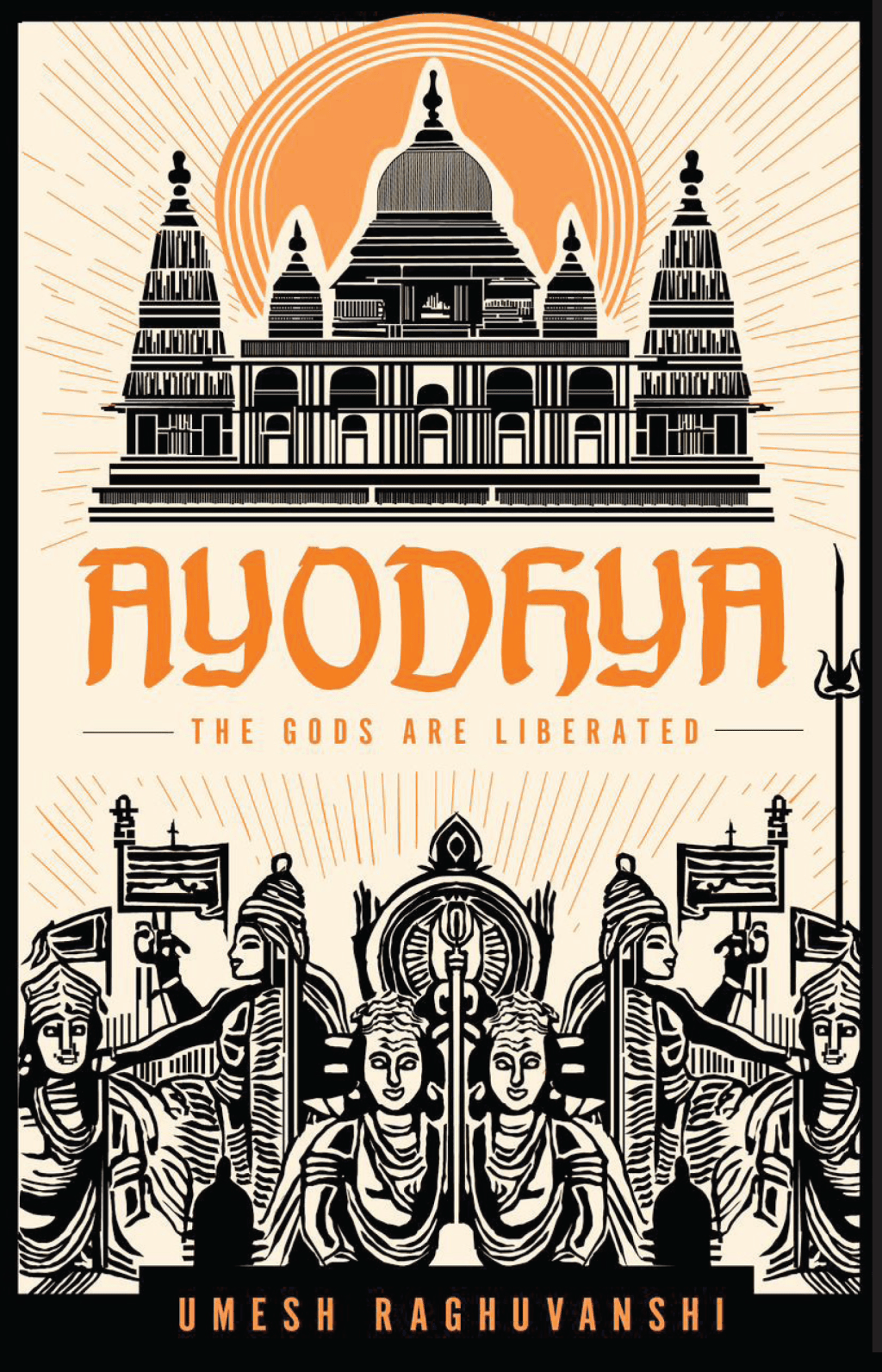
In his book Ayodhya: The Gods are Liberated, Umesh Raghuvanshi traces the history of the city, offering readers a deep dive into the layers of religious fervor, political power plays, and societal transformations that have shaped Ayodhya’s identity. The narrative spans from the first mentions of Ayodhya in ancient scriptures, to the grand temple that once stood at Ram Janmabhoomi, to the subsequent destruction of this temple and the construction of the Babri Mosque by invaders.
The book delves into the contentious and often turbulent history of the city, from the heated legal battles between Hindus and Muslims over the disputed land, to the rise of the Bharatiya Janata Party (BJP) and its unique political vision, which revolved around the temple’s restoration. These moments form the heart of the national debate over Ayodhya, a site that has both spiritual and political dimensions.
Main Highlights
Raghuvanshi highlights the evolution of India’s politics in the post-independence era, marking a shift that led to the BJP’s ascendancy. He traces the legal struggles, from the demolition of the Babri Mosque in 1992 to the eventual landmark judgments by the Allahabad High Court and the Supreme Court of India. The 2019 verdict, in particular, which ruled in favor of the Ram Temple’s construction, marked a definitive turning point in the saga of Ayodhya, culminating in the long-awaited victory for Hindu groups.
As the Ram Lalla temple is built on the contested land, the city of Ayodhya transforms once again, this time symbolizing not just a religious victory, but a deep-seated cultural and political shift. The book ends with a pivotal moment in India’s modern politics – the defeat of the BJP candidate in the 2024 General Elections in Ayodhya.
This conclusive event raises important questions about the intersection of religion and politics in India. Does Ayodhya, with its deeply symbolic significance, still hold the same sway in Indian electoral politics? Has the Ram Mandir movement truly reshaped the future of India’s political landscape, or is this just the beginning of new questions surrounding the country’s secular fabric? What does Ayodhya’s new chapter mean for the future of Hindu-Muslim relations in India?
Book, Ayodhya: The Gods are Liberated is a profound exploration of India’s enduring heritage, the spirit of its people, and the complex nature of faith, politics, and identity. The journey through Ayodhya’s past and present leaves us wondering: What is the next phase for this sacred city in the heart of India? Will the tensions of the past be fully healed, or will they continue to shape the country’s future?
About The Author
Umesh Raghuvanshi, a distinguished journalist, serves as senior associate editor at the Hindustan Times in Lucknow, India. He previously worked at The Pioneer in the same city. He has reported extensively on the twists and turns that changed India and its politics, including the Ram Janmabhoomi movement.
Raghuvanshi has an impressive academic background, having been a visiting scholar at the Graduate School of Journalism, University of California, Berkeley, USA, and a Metcalf Fellow at the Metcalf Institute of Marine and Environmental Reporting, University of Rhode Island, USA.
His accolades include the KC Kulish International Merit Award for excellence in journalism, received in New Delhi in 2017. He is also the winner of a competition organized by the United Nations Environment Programme DTIE OzonAction Programme in 2009 that assessed coverage of the interlinkages between ozone and climate change. He was awarded at Beijing, China, in 2010.
Raghuvanshi is a science graduate from DBS College, Dehradun, and holds an MA in Political Science from DAV (PG) College, Dehradun.
Details
Category – Non-Fiction
Format – Paperback
Imprint – Rupa
Price – 395
Pages – 280 pages
Date – 10th January 2025
 Bookshotsapp
Leave a comment