

India, seventy-five years after gaining Independence, stands as a beacon of democracy and economic growth. It is the world’s largest democracy and the fastest-growing major economy. Yet, beneath these proud achievements lie significant challenges that continue to hinder the well-being of its citizens and the overall growth of the nation. From education and health to public safety and jobs, India’s governance structures face pressing issues that demand urgent reform.
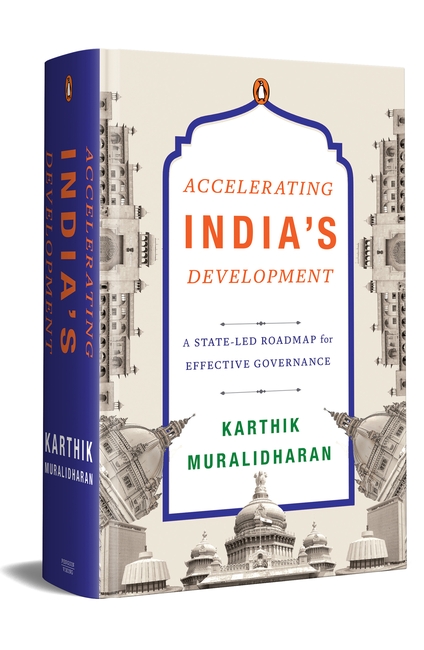
In his new book, Accelerating India’s Development: A State-Led Roadmap for Effective Governance, Karthik Muralidharan delves deep into the country’s governance challenges, emphasizing the importance of state-level reforms to unlock India’s full potential. The book provides a comprehensive analysis of the difficulties faced by India’s public services and offers actionable, evidence-based strategies to address them.
Muralidharan, a leading academic voice, argues that the key to transforming India lies in strengthening its state machinery. While India has made considerable strides since Independence, the public services that are central to the well-being of its citizens remain woefully inadequate. Issues such as poor quality education, inadequate healthcare, and inefficient justice systems continue to hold back millions of Indians from accessing the opportunities they deserve.
The Case for State-Level Reforms
Muralidharan’s book advocates for state-led reforms as the cornerstone of India’s development strategy. According to the author, building a more effective state is the “unfinished task” of Indian democracy. While the political system has given every Indian a voice with the principle of “one person, one vote,” the country’s public services have not yet ensured equal opportunities for all citizens.
“The political equality that comes with democratic participation must be paired with greater equality of opportunity through efficient public services. Only then can India truly realize its potential,” Muralidharan writes.
Through extensive research and real-world examples, Muralidharan demonstrates how reforms at the state level can lead to significant improvements in the delivery of services. He suggests that states, due to their proximity to local issues and populations, are better positioned to implement changes that can bring tangible benefits to citizens.
An Urgent Call to Action
The book is not just an academic exercise—it is an urgent call to action for all Indians, from leaders and officials to entrepreneurs, teachers, students, and citizens. Muralidharan stresses the importance of collective responsibility in fostering a more effective state and ensuring that the promise of India’s democracy is fulfilled for all its people.
“India’s next twenty-five years could be a period of unprecedented growth and societal enrichment if we prioritize state-level governance reforms,” Muralidharan argues. He expresses cautious optimism, believing that with the right public systems in place, India can overcome its challenges and create a more equitable and prosperous future for all.
A Blueprint for the Future
Muralidharan’s Accelerating India’s Development is both a detailed blueprint and a hopeful vision for the future. By addressing governance failures, the book provides concrete solutions that can be implemented to enhance the effectiveness of public services across the nation. Its message is clear: India’s future depends on its ability to build a state that serves its people efficiently, equitably, and effectively.
For India to truly take its place on the world stage, it must first ensure that its own citizens have access to the services and opportunities they need to thrive. In Accelerating India’s Development, Muralidharan offers a roadmap for achieving this goal—one that is rooted in the belief that with the right governance, India can achieve greatness for its people.
About The Author
Karthik Muralidharan is the Tata Chancellor’s professor of economics at the University of California San Diego (UCSD). He is also the co-founder and scientific director of the Centre for Effective Governance of Indian States (CEGIS), a non-profit that works with multiple states across India to improve state capacity, governance, and service delivery. He actively engages in policy advising at global, national, and state levels; and in public communication of research insights through op-eds, podcasts, and public lectures. Born and raised in India, he holds a bachelor’s degree in economics from Harvard, an MPhil in economics from Cambridge (UK), and a PhD in economics from Harvard.




 Bookshotsapp
Leave a comment