
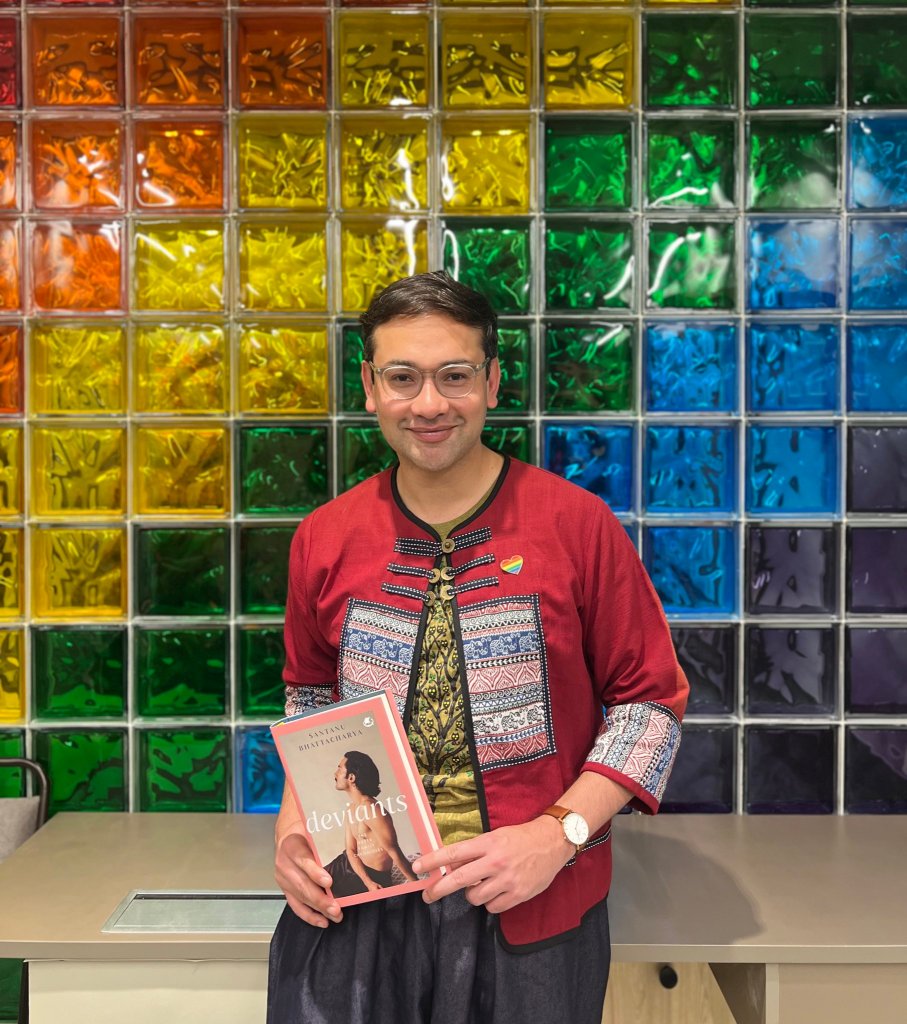
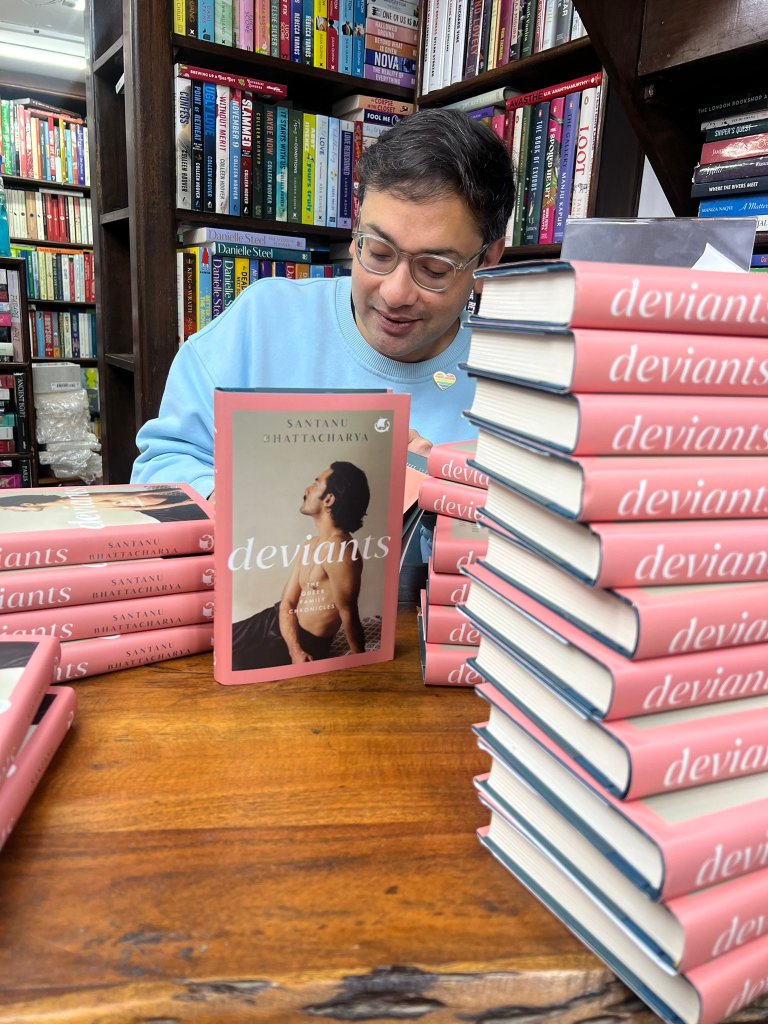
Santanu Bhattacharya’s Deviants is a masterful symphony of queer lives, a novel that weaves the stories of three gay men—Vivaan, Mambro, and Sukumar—across three generations of an Indian family. With prose that shimmers like monsoon light and cuts like a hidden blade, Bhattacharya crafts a narrative that is both a tender embrace and a fierce indictment of a society bound by heteronormative chains. Published by Westland Books, this debut is a luminous addition to global queer literature, offering a heart-wrenching yet hopeful exploration of love, identity, and the quest for belonging in a world that often demands conformity.
A Tapestry of Time and Desire
At its core, Deviants is a story of lineage and longing, tracing the delicate threads of queerness through Vivaan, a teenager in modern India; Mambro, his uncle navigating the oppressive 1990s; and Sukumar, his grand-uncle whose love bloomed in the shadowed 1970s. Each man’s journey is a distinct melody, shaped by the era’s cultural and legal landscape, yet harmonized by their shared defiance of societal norms. Bhattacharya’s ability to capture the nuances of their desires—Vivaan’s ache for intimacy, Mambro’s cloaked resilience, Sukumar’s dream of domesticity—makes their stories resonate with universal truths.
The novel’s structure, interweaving past and present, creates a rich tapestry that invites readers to witness how history shapes personal battles. Bhattacharya’s prose is a standout, lyrical yet precise, painting vivid scenes like Vivaan’s tech-fueled romances or Sukumar’s clandestine moments at the Docklands, a haven for gay men. His dialogue crackles with authenticity, especially in Vivaan’s clashes with his partner Zee, where debates over monogamy versus freedom reflect broader generational shifts.
A Modern Heart in Turmoil
Vivaan’s story is the pulse of contemporary India, where the repeal of Section 377 has cracked open new possibilities. At 17, he dives into a whirlwind romance with Zee, whose embrace of ethical non-monogamy both liberates and unsettles him. Bhattacharya captures Vivaan’s inner conflict with aching clarity: “I was a shadow to my parents’ trust, an enigma to peers for craving a quieter love—too tame for my boundless lover, ever incomplete.” His struggle to reconcile emotional intimacy with sexual freedom is a poignant reflection of youth navigating uncharted waters, making him achingly relatable.

Courage in the Shadows
Mambro’s narrative, set against the 1990s’ draconian enforcement of Section 377, is a study in quiet endurance. A college student betrayed by his own journals, he faces brutal bullying that strips away his confidence. Bhattacharya writes, “There’s Mamu, a mirror to your hidden self, lingering at the world’s edge, as you do.” Mambro’s isolation, tempered by his unspoken bond with his gay uncle Sukumar, underscores the cost of living authentically in a hostile era. His story is a gut-punch, yet his hope for a freer future glimmers like a distant star.
Love’s Quiet Rebellion
Sukumar’s tale, rooted in the 1970s, is the novel’s emotional anchor. His love for X, marked by stolen touches that draw the world’s glare, is both tender and tragic. Bhattacharya’s prose soars here: “A hand on X’s back, so delicate yet defiant, turned heads, the world poised to catch discord.” Sukumar’s choice to co-parent X’s son, defying familial expectations, fulfills his yearning to “slip into the world’s rhythm.” His spiritual awakening at the Docklands adds depth, framing queerness as a sacred act of self-discovery.
A Resonant Triumph
Deviants is not without flaws—some transitions between timelines feel abrupt, and secondary characters occasionally fade into the background. Yet these are minor notes in an otherwise soaring composition. Bhattacharya’s novel is a triumph, blending raw vulnerability with defiant hope. It challenges readers to confront the scars of exclusion while celebrating the resilience of those who love beyond boundaries. For anyone seeking a story that sings of courage and mourns its costs, Deviants is a must-read, a beacon of queer storytelling that lingers long after the final page.
 Bookshotsapp
Leave a comment