
Great Eastern Hotel, A Novel by Ruchir Joshi and published by HarperCollins’s Fourth Estate
Saurabh Shankar ।
Imagine a city as a grand hotel. One with chandeliers heavy with memory and wallpaper peeling like forgotten history. The air smells of spice, ink, jazz, and revolution. Outside, the world is at war. Inside, in Room 1941, a man paints shadows on the wall while the city mourns its poet-saint, Rabindranath Tagore.
This is where Great Eastern Hotel begins.
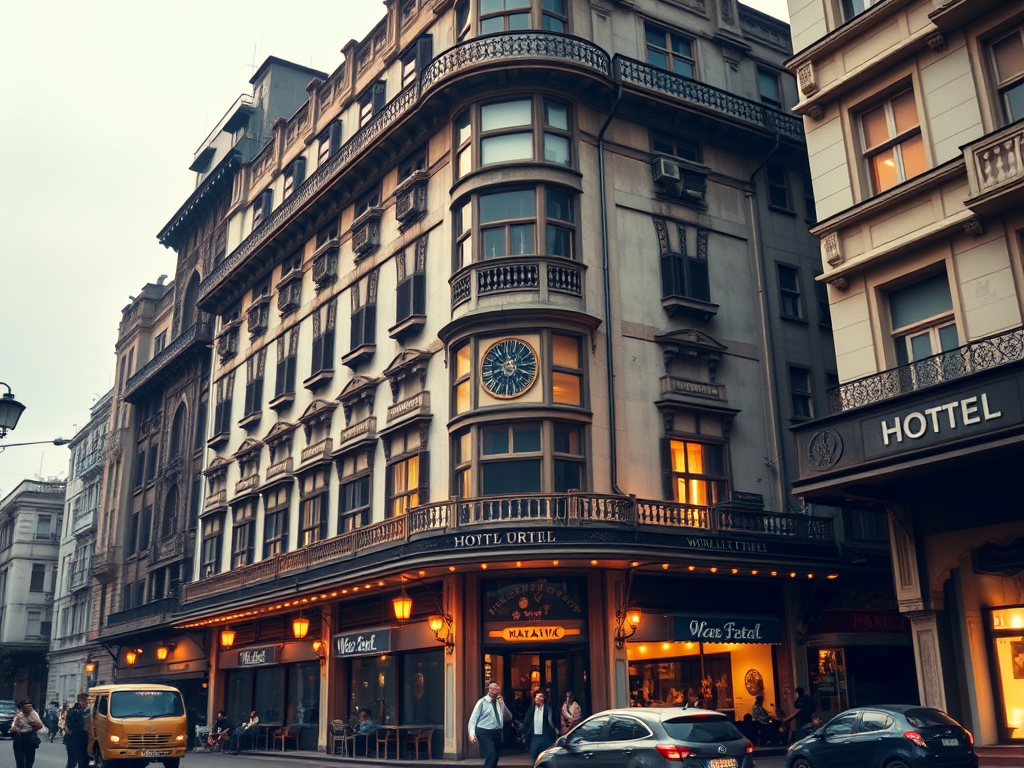
Ruchir Joshi’s 900-page novel, twenty years in the making, is not just a book. It is a resurrection. It brings Calcutta of the 1940s back to life—vivid, chaotic, sprawling, and unforgettable. The city becomes a character in itself. Its streets teem with pickpockets and protesters, artists and army men, jazz players and chefs. All their stories unfold in the looming shadow of war, famine, revolution, and change.
Like any great hotel, the novel holds multitudes. Some guests stay forever. Others just pass through.
A City Paused in Grief
The novel opens with a moment of stillness. On August 7, 1941, Calcutta halts. Rabindranath Tagore is dead. The streets are flooded with mourners. Thousands follow the poet’s bier from Jorasanko to Nimtala Ghat.
This day of mourning sets the tone. It’s a quiet moment before the chaos of history. It marks the start of a journey through the lives of people caught in a world falling apart—and coming together in unexpected ways.
We meet Nirupama, a history student and Communist Party volunteer. Imogen, a young Englishwoman from a colonial family, full of questions and contradictions. Kedar Lahiri, a zamindar’s son who paints and dreams of Europe. And Gopal, a street-smart pickpocket drawn into the dangerous world of wartime smuggling.
Each character has their own arc. Each one touches others in ways both subtle and profound.
The Music of the City
Reading Great Eastern Hotel is like riding a tram through old Calcutta. It moves slowly at times, winding through neighborhoods filled with memories. The rhythm of the novel feels like jazz—big-band, improvisational, bold.
The city is alive on every page. We see soldiers drinking in bars, artists sketching protests, and British officers nervously watching Japan’s advance. One moment, you’re at an auction of army surplus. The next, you’re inside a smoky nightclub, listening to a trumpet solo.
Joshi uses sound and texture to build his world. He captures the scent of wet canvas, the heat of a riot, the sound of a bomb blast far away. Calcutta becomes a place of motion and noise, beauty and fear.
A Story Built Like a Hotel
The novel is structured like a hotel. Each chapter is a room. Some rooms are richly furnished, others bare. Some hold secrets. Some connect unexpectedly with others down the hall.
The Great Eastern Hotel in the book isn’t the main setting, but it becomes a symbol. It stands for the city itself—elegant but battered, filled with stories, full of guests from across the world. The narrator guides us through it all. He is a quiet presence, someone compiling interviews and cataloging Kedar’s art for a future exhibition.
Through his voice, the city’s past comes to life.
Paintings That Tell History
Kedar’s journey as an artist runs throughout the book. His paintings aren’t just background—they are central to how the story unfolds. Each piece captures a moment in the city’s history: sandals abandoned during Tagore’s funeral, the chaos of a protest, the luxury of a colonial ballroom.
Joshi describes painting with a filmmaker’s eye. He focuses on light, texture, and mood. We don’t just learn what a painting looks like—we feel the moment that inspired it. Kedar paints to understand the world, to hold onto fleeting emotions.
Yet, his art never fully satisfies him. The city overwhelms the canvas.
Characters in a Crowded Landscape
There are many characters, and yes, it can be hard to keep track. But that’s the point. This novel is about a crowd—a teeming city full of people whose lives bump against each other like trams at a junction.
Some characters fade out and return later. Some, like Squadron Leader Lambert or the jazz-playing American soldier, feel sketched in. Others, like Nirupama and Gopal, are drawn in deep detail. They grow with the story.
Joshi knows he’s juggling a lot. He even jokes about it in the text. A narrator wonders if there are too many people in this book, too many loose ends. But like a jazz band, the novel finds harmony in the chaos.
Politics in Every Corner
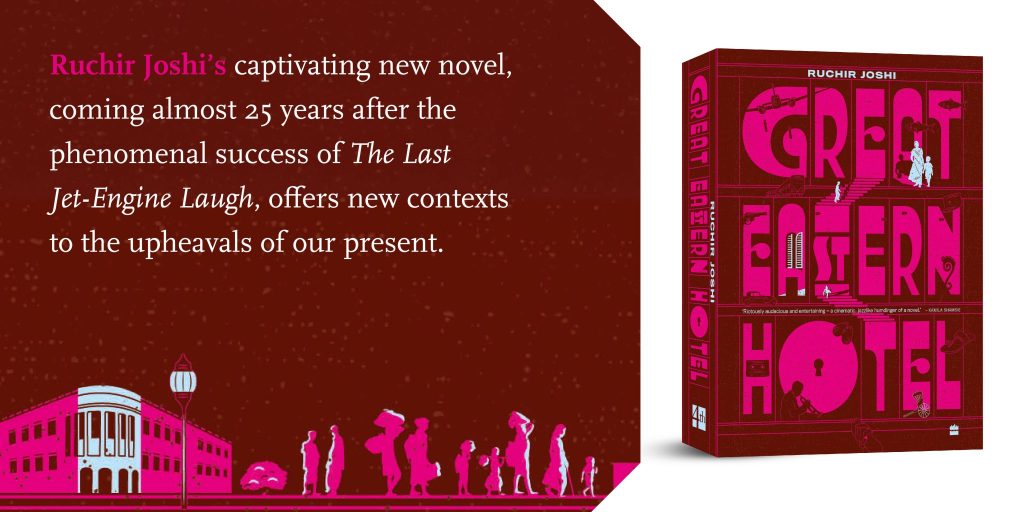
The novel isn’t just personal. It’s deeply political. Anti-fascism, anti-colonialism, communism, and nationalism all collide in these pages. The story explores debates about the Raj, the Indian National Congress, and the Muslim League. We see Gandhi, Jinnah, Nehru, and Bose appear in the background of people’s lives.
There are also stories that history books overlook. Black market deals. Food riots. The invention of penicillin and its misuse. The quiet bravery of people like Matangini Hazra. The heartbreak of the Great Bengal Famine. These are not side notes. They are central to the lives lived here.
The Echoes of Today
Though set in the past, the novel feels modern. It’s about surveillance, suspicion, identity, and resistance. It’s about who gets to tell the story of a country, and what gets left out.
We see echoes of our world in its pages. Jhola-carrying students still march down College Street. Artists still struggle to break free from foreign influences. Cities still swell with inequality, ambition, and unrest.
Great Eastern Hotel doesn’t preach. But it reminds us that history isn’t finished. It keeps returning.
A Heavy Book With a Light Step
At over 900 pages, this novel is no quick read. It’s ambitious, complex, and demanding. Some parts drag. Some characters could have used more depth. But the scale is part of its charm.
Joshi isn’t trying to write a perfect story. He’s trying to write a living one—imperfect, overwhelming, beautiful.
His language is playful. He pokes fun at colonial names and local habits. He writes with wit and affection, even when describing tragedy. His prose shimmers with references, jokes, and poetic flourishes.
This isn’t a story you speed through. It’s one you walk through slowly, like the corridors of an old hotel.
The Final Room
By the end, the war is over. Some characters survive. Some don’t. But the city remains.
Joshi has given us a novel that feels like memory itself—fragmented, vivid, haunting. It captures a moment when Calcutta was a city at the center of the world, bursting with life, change, and uncertainty.
It’s not just a historical novel. It’s a love letter to a place, a time, and the people who shaped it.
So if you’re ready, pack your bags. Turn off your phone. And check in to the Great Eastern Hotel. You might lose track of time. But you’ll come out the other side changed.
About The Author
Ruchir Joshi is the author of the novel, The Last Jet-Engine Laugh, and of Poriborton! – An Election Diary, a road book about the 2011 state elections in West Bengal. He is also the editor of Electric Feather, a collection of Indian erotic fiction. Over the years, Joshi has contributed to Granta, India Magazine, Man’s World, Seminar, E-Flux, Witte de Witt Review, The Indian Quarterly and other journals.
He has also been a columnist for The Telegraph, The Hindu, Economic Times and other major Indian newspapers. As a filmmaker, he has directed documentaries and essay films, including the award-winning Eleven Miles, Memories of Milk City and Tales from Planet Kolkata. Joshi lives in Calcutta.


 Bookshotsapp
Leave a comment