
Yatish Bajpai
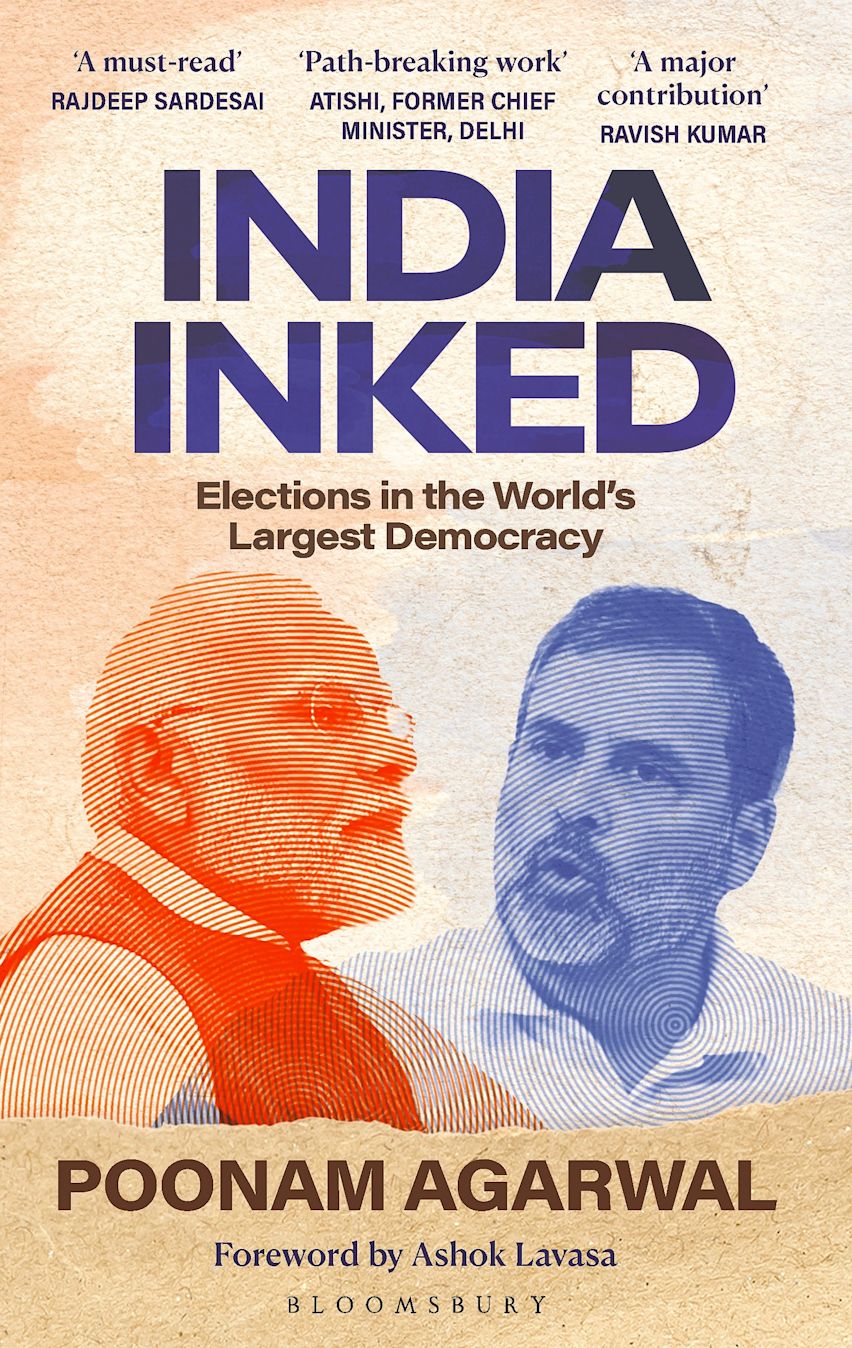
In India Inked, published by Bloomsbury India, the author delivers a searing, deeply investigative account of how India’s electoral process — once a global example of democratic resilience — is being steadily undermined by opacity, institutional silence, and political opportunism. At the heart of this narrative is the explosive story of the electoral bonds scheme, introduced in 2017 under the guise of electoral reform but exposed here as a powerful tool of political funding control and donor surveillance.
The book begins with a tribute to the towering legacy of T.N. Seshan, the legendary Chief Election Commissioner who served from 1990 to 1996. With sharp clarity, the author recounts how Seshan transformed the Election Commission of India (ECI) into an institution of integrity and fearlessness. The contrast with today’s scenario is stark. As the Supreme Court itself recently observed, “Seshan happens once in a while.” Since 2004, no Chief Election Commissioner has completed a full six-year term, and public trust in the ECI has steadily eroded.
A Bold Exposé on the Erosion of Electoral Integrity in India
But the core of India Inked is its brave and meticulous investigation into the electoral bonds scheme. Drawing from RTI documents, court records, and firsthand reporting, the author reveals how the ruling party used hidden alphanumeric codes embedded in the bonds to potentially trace donors — effectively compromising the promise of anonymity that the scheme was said to offer. The findings are damning: over 95% of bond donations in early years went to the BJP, with little pushback from the political opposition, most of whom quietly accepted the same opaque funding.
Only the Communist Party of India (Marxist), led then by the late Sitaram Yechury, mounted a serious legal challenge and refused to accept donations through these bonds. Yechury’s warnings about the scheme — that it would deepen quid pro quo politics and erode Article 19(1)(a), which protects freedom of expression — proved prescient.
What sets this book apart is its tribute to the quiet warriors of transparency: civil society activists like Commodore Lokesh Batra (Retd.) and Anjali Bhardwaj. Through relentless RTI filings, they revealed the alarming extent of the scheme’s impact — including the fact that over ₹14 crore of taxpayer money was spent on printing bonds, and that 99.9% of the bonds sold were of high denominations, suggesting corporate influence, not citizen participation.
Despite these revelations, the mainstream media largely ignored the issue, and public engagement remained low — a fact the author notes with quiet frustration. While several independent journalists published exposés, the topic never gained national traction. The author’s own interactions with opposition leaders show a mix of apathy and powerlessness, underscoring how bipartisan consensus has quietly formed around the preservation of opaque political funding.
Strengths of the Book:
- Richly documented with RTI responses, legal filings, and on-ground reporting.
- Clearly written, even on technically complex financial topics.
- Bold in holding institutions and political parties accountable.
Limitations:
The book could have expanded its scope to include other aspects of electoral decline, such as media influence, voter data misuse, and misinformation. Additionally, a deeper analysis of why opposition parties remained silent — beyond political convenience — would have strengthened the argument.
Conclusion:
India Inked is not just a book — it is a warning. As India prepares for future elections, this work challenges readers to rethink the mechanisms of power, transparency, and accountability in the democratic process. T.N. Seshan’s legacy serves here not as nostalgia, but as a call to action. If Indian democracy is to preserve its legitimacy, the lessons in this book must not be ignored.
Rating: ★★★★½ (4.5/5)
Book Description
On an average, India has two to five elections in any given year. With 15 million polling staff, 5.5 million electronic voting machines, officers trekking across glaciers, forests, deserts, riding elephants and camels, travelling by boats and helicopters to ensure the last standing Indian citizen gets to cast their vote, the Indian general election is a beast unto itself. In the summer of 2024, 969 million Indians cast their votes and the incumbent Narendra Modi was elected prime minister for a third consecutive term.
When Poonam Agarwal first began reporting on the electoral bonds scheme, she had not foreseen that her investigative work would imminently make history in one of the most landmark Supreme Court judgements. In her trailblazing pursuit, she chased the big questions that the media, courts and citizens had no easy answers to.
Just how big is the Indian electoral machinery? Are money and muscle power in bed together? Was the electoral bonds scheme ‘one of the biggest legalised robberies’? What tools do political parties assemble for campaigning and propaganda? And what will the imminent exercise of redrawing of electoral boundaries, muscular calls for ‘one nation one election’, and the women’s reservation bills mean for the fabric of the Indian polity?
With insights into the forbidden world of election war rooms, on how electoral strategies are formulated and rules bent, what works with voters on the ground and what simply doesn’t, Poonam Agarwal’s India Inked is nothing short of a revelation into the inner workings of politics in the world’s largest democracy.




 Bookshotsapp
Leave a comment