
Sapna Bajpai
Sanjena Sathian’s Goddess Complex doesn’t just unsettle—it unmoors. This is a book that grabs you by the throat with one hand and presses a cold compress to your forehead with the other, whispering You see it too, don’t you?
Meet Sanjana Satyananda: anthropologist, runaway wife, and woman unraveling. A year ago, she walked out on her husband, Killian, in an Indian commune after he pressed her for children. Now she’s back in Connecticut, hemorrhaging money, crashing at her sister’s sterile McMansion, and fielding eerie congratulatory texts about a pregnancy she erased. Then the real horror hits—somewhere in Mumbai, there’s another Sanjana. Same face. Same name. Pregnant belly.
What follows is a deranged pilgrimage back to India, where Sanjana stalks her own ghost through wellness retreats and Instagram grids, each encounter warping her sense of self like heat haze over pavement. The other Sanjana isn’t just a double—she’s a living accusation. A walking what if.
Sathian writes like she’s got a bone to pick with the entire apparatus of modern womanhood. Baby showers where guests wear “MommyBoss” masks of the mother-to-be? Check. A fertility resort peddling enlightenment via ovulation charts? Obviously. The novel thrums with the low-grade panic of being thirty-two and realizing the script you were handed—marriage, mortgage, motherhood—might as well be hieroglyphics.
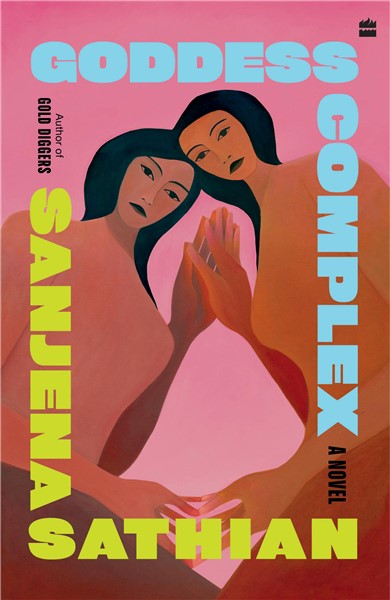
But here’s the magic trick: beneath the satire’s glittering surface, there’s real blood in the water. The scenes between Sanjana and her judgy older sister Maneesha crackle with the quiet violence of sibling love. Her ex, Killian, looms like a phantom limb—present even in absence. And the doppelgänger? She’s not just a plot device. She’s the embodiment of every road not taken, grinning back with perfect teeth.
The prose is restless, kinetic, switching between sardonic detachment and raw nerve with the flick of a sentence. When Sanjana observes that “you could accidentally become the wrong version of you,” it lands like a sucker punch. By the final act, the narrative fractures into something wilder—part thriller, part psychedelic interrogation of choice—until you’re not sure if you’re reading a novel or staring into one of those carnival mirrors that stretches your reflection into grotesque new shapes.
Goddess Complex is the kind of book that lingers. Days after finishing, I caught myself side-eyeing my own life choices, half-expecting to round a corner and meet another version of me—happier, sadder, pregnant—smugly sipping golden milk.



 Bookshotsapp
Leave a comment