
Saurabh Shankar
A Forensic Examination of Caste and the Courts in India
In Caste Pride: Battles for Equality in Hindu India, veteran journalist Manoj Mitta delivers a searing indictment of the Indian judiciary’s historical complicity in upholding caste hierarchies. Combining rigorous legal analysis with a deep historical sensibility, the book offers a bold, unflinching look at how India’s courts — far from being neutral arbiters — have often acted as defenders of privilege, particularly that of the Brahminical elite.

Mitta challenges the common notion that British colonial rule was the principal architect of caste’s codification. Instead, he argues that it was the social elites, particularly Brahmins, who manipulated legal institutions to maintain their dominance. While the colonial state initially avoided caste questions, it was only after increased legal mobilization by marginalized groups that the British were compelled to respond. Even then, it was the entrenched elites who consistently resisted reformist policies and legal measures aimed at empowering the oppressed.
The book is structured thematically, tracking the evolution of laws relating to caste, and examining key episodes — from the early 20th century anti-Brahmin movements to landmark court cases involving caste atrocities. Mitta meticulously documents how, despite constitutional promises of equality and fraternity, the legal system has frequently failed to protect Dalits and other oppressed groups. He highlights cases such as the Kilvenmani massacre (1968) and the Khairlanji killings (2006), where the judicial process either ignored or downplayed the caste motivations behind brutal crimes. The result, Mitta argues, is a culture of impunity.
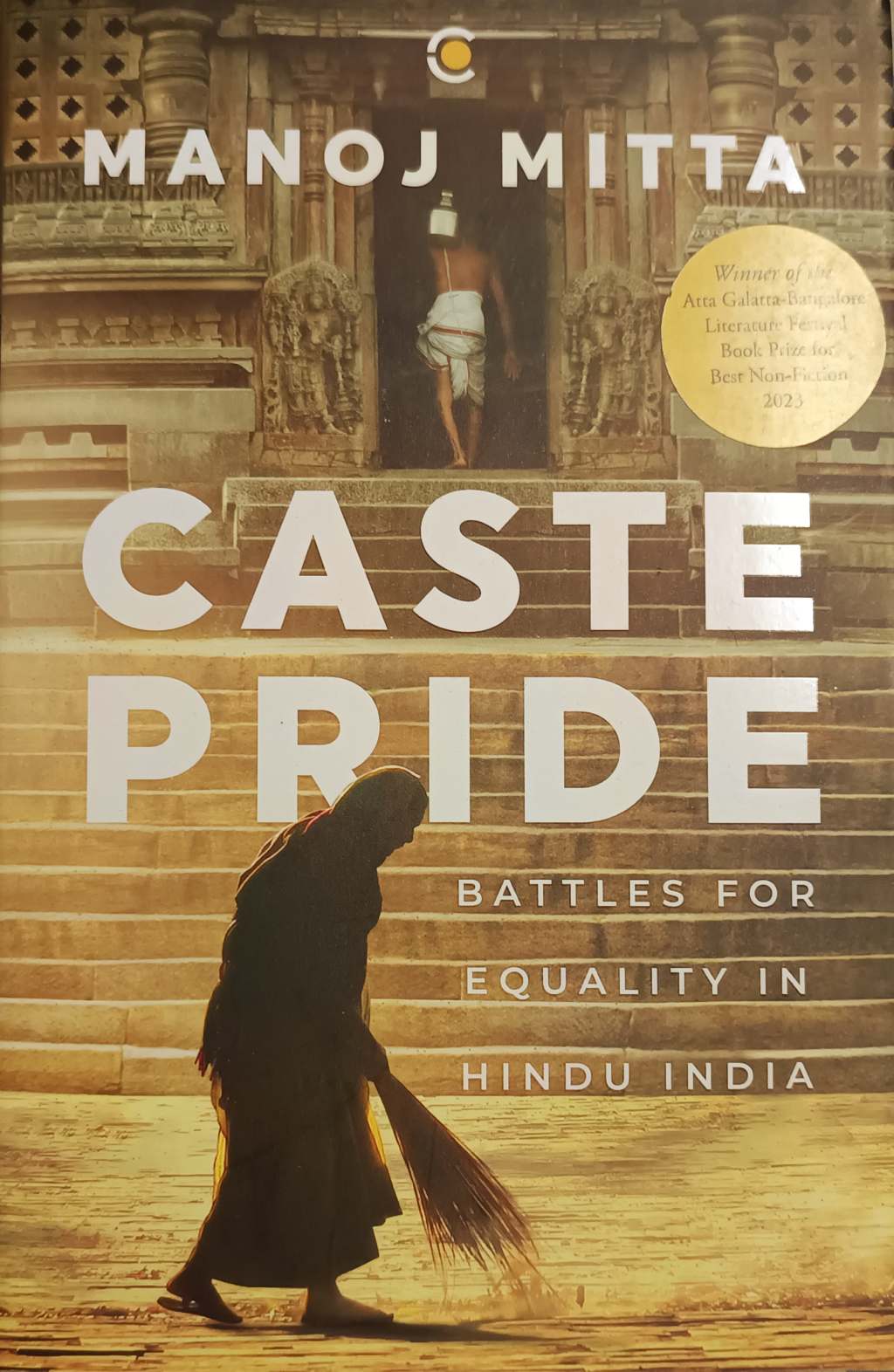
What distinguishes Caste Pride is its depth of research and clarity of purpose. Mitta does not rely on broad generalizations; instead, he builds his case through detailed examination of court judgments, legislative debates, and social reform movements. The book stands as both a historical archive and a powerful commentary on the judiciary’s failure to live up to its constitutional mandate.
Yet, the book is not simply a chronicle of legal failures. It is also a testament to the enduring resistance by non-Brahmin communities — from the Satyashodhak movement in Maharashtra to the Dravidian mobilizations in Tamil Nadu — who challenged the supremacy of orthodox traditions and demanded dignity and representation.
Caste Pride is an essential read for those seeking to understand the intersection of law, caste, and power in India. It forces us to confront uncomfortable truths: that the very institutions meant to deliver justice have often reinforced injustice. In doing so, it adds an indispensable layer to the conversation on caste and constitutional morality in modern India.
In a way it’s a groundbreaking, meticulously researched work that exposes the caste biases embedded in India’s legal system. Caste Pride is both a historical reckoning and a call to action — one that is long overdue.



 Bookshotsapp
Leave a comment