
Can love turn into betrayal? Can ambition make a son raise his hand against the very father who gave him life? And can the act of patricide echo through generations like a curse, dooming a dynasty to blood and ruin?
These haunting questions form the beating heart of Bimbisar’s Curse, Tanushree Podder’s new historical novel published by Rupa Publications. The book plunges readers deep into the world of the Haryanka Dynasty (544–413 BCE), the first rulers of Magadh—an empire that would later shape the course of Indian civilization. With her signature flair for weaving drama, history, and human emotion, Podder resurrects an era where empires were built through marriage alliances, courtesans could alter the fate of kingdoms, and kings were not only betrayed by enemies but by their own blood.
The Golden Age and Its Shadow
At the center of the narrative is King Bimbisar, often remembered as one of the most enlightened rulers of ancient India. A contemporary of both Gautama Buddha and Mahavira, he ruled Magadh for over fifty years, ushering in an age of prosperity, diplomacy, and intellectual ferment.
Yet even a wise and accomplished monarch was not immune to the shadows lurking in his own household. Bimbisar’s story is not only one of statecraft but of love and longing—his famed liaison with the celebrated courtesan Amrapali adding both romance and scandal to his reign. From her, he fathered a son who would one day become part of a darker chapter of history.
The golden age ends with an act so unthinkable it transformed the dynasty’s fate forever: Ajatashatru, Bimbisar’s son, imprisoned and killed his father. What began as one man’s ambition became a generational curse, as sons turned into patricides—Udayin slaying Ajatashatru, Aniruddha murdering Udayin, only to fall to his own son, Munda. Blood became the inheritance, betrayal the tradition.
Patricide as Destiny
What makes Bimbisar’s Curse compelling is not merely its historical detail but the way Podder transforms dry chronicles into a sweeping family saga. The repeated cycle of fathers killed by sons might appear like the cold recitation of a timeline in history books, but here, it becomes a chilling rhythm, each betrayal heavier than the last.
Podder probes the psychological terrain of ambition and resentment. What compels a son to kill his father? Is it hunger for power, manipulation by others, or an inescapable destiny? Was this a dynasty cursed, or were these rulers merely men trapped by the brutal demands of kingship?
A Tale of Power, Love, and Legacy
Alongside its blood-soaked intrigue, the novel offers a lush portrait of Magadh at its peak. We encounter bustling courts, the weight of political marriages, the allure of courtesans, and the magnetic presence of figures like Buddha and Mahavira—silent witnesses to the empire’s grandeur and decay.
Podder’s strength lies in giving flesh and breath to historical figures often reduced to names in textbooks. Bimbisar is not merely a king but a lover, a father, and a man undone by forces larger than himself. Ajatashatru is not just a patricide but a complex heir—both ruthless and haunted. The women of the story—Amrapali and the queens bound by alliances—are portrayed with a sense of agency that resonates beyond the ancient setting.
The Storyteller Behind the History
For Tanushree Podder, history has never been a distant, dusty archive—it is living material to be reshaped into story. A management graduate turned full-time writer, Podder has spent decades moving between genres: from military life (Boots Belts Berets, The Girls in Green) to historical reimaginings (Nurjahan’s Daughter, Ambapali). With over 35 books to her name, she has become one of India’s most versatile storytellers.
Her background as an avid traveler and chronicler of places infuses her fiction with a sense of landscape and detail that breathes life into long-lost worlds. That gift is fully on display in Bimbisar’s Curse. Here, she takes a dynasty remembered only in passing and crafts a narrative both intimate and epic—a family drama that unfolds like Greek tragedy, but rooted in Indian soil.
Why This Story Matters Today
Beyond its ancient setting, Bimbisar’s Curse feels eerily relevant to contemporary readers. The questions it raises—about power, legacy, betrayal, and the heavy costs of ambition—are timeless. In an age when nations grapple with leadership struggles, shifting loyalties, and the collision of personal desires with public duty, the Haryanka dynasty’s downfall feels less like a distant tale and more like a mirror.
This is not just a novel for history buffs; it is for anyone who has ever wondered how fragile human ties can become when weighed against the hunger for power.
A Riveting Historical Saga
Bimbisar’s Curse is more than historical fiction—it is a meditation on family, fate, and the treacherous bonds between fathers and sons. It is a story that shows us the heights of glory and the depths of ruin, often within the same bloodline.
With its evocative prose and gripping narrative, the book ensures that the Haryanka Dynasty will no longer remain a forgotten footnote in India’s history. Instead, it becomes a stage upon which some of the most dramatic and haunting tales of the subcontinent are played out.
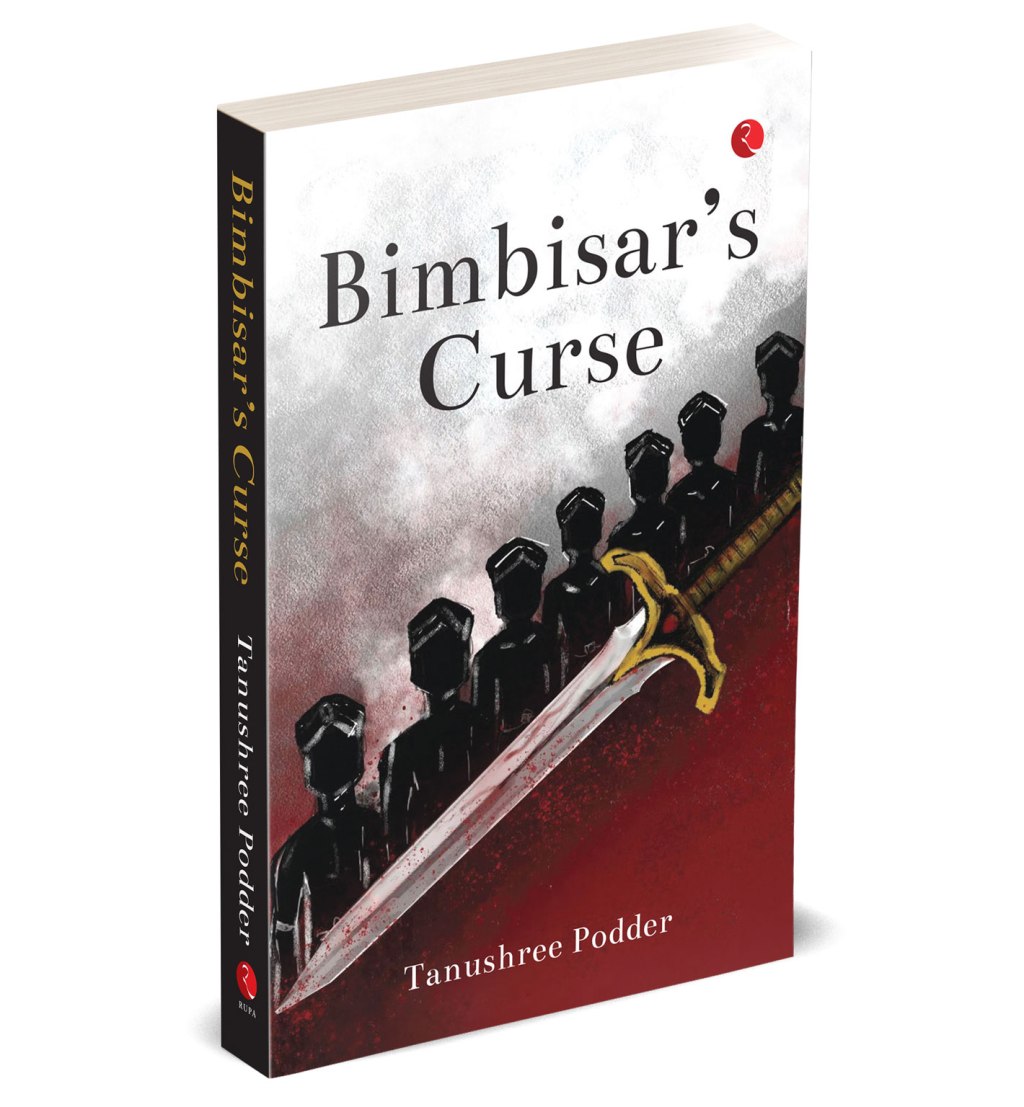
Verdict: A dark, immersive, and unforgettable journey into India’s first imperial dynasty. Tanushree Podder once again proves that history, in the hands of a gifted storyteller, is not dead but alive—bleeding, breathing, and endlessly compelling.
Would you like me to also add a punchy headline + subheadline combo (like a magazine cover story) for this, so it feels even more feature-like?

 Bookshotsapp
Leave a comment