
In a literary landscape brimming with rediscoveries, Mahua Sen’s translation of Rajkamal Choudhary’s Machhli Mari Hui (1964), now The Dead Fish (Rupa, 2025), stands out as a triumph of cultural and emotional resonance. This first-ever English rendition of Choudhary’s seminal Hindi novel breathes new life into a work that was audacious for its time and remains strikingly relevant today. Set against the gritty backdrop of 1950s Kolkata, The Dead Fish is a raw, unflinching exploration of identity, desire, and societal repression, and Sen’s translation captures its essence with a poet’s precision and a storyteller’s heart.
A Bold Voice Reborn
Rajkamal Choudhary (1929–1967), a literary maverick who burned brightly in his brief 37 years, was a poet, novelist, and critic whose work in Hindi and Maithili redefined Indian literature. Known as a “bold leader of new poetry,” Choudhary’s experimental style and fearless themes made him a trailblazer. The Dead Fish, one of his finest works, dives into the psychological depths of Nirmal Padmavat, a ruthless businessman grappling with his contradictory desires and fractured identity. The novel’s exploration of queer identity, societal hypocrisy, and emotional turmoil was revolutionary in its era, placing characters like Nirmal alongside literary giants like Mephisto or Heathcliff for their complex, tormented humanity.
Sen, an award-winning poet and translator, takes on the daunting task of translating Choudhary’s lyrical yet jagged prose, preserving its raw intensity while making it accessible to English readers. Critics have lauded her ability to strike a delicate balance. Noted poet Anamika praises Sen for finding “a middle way between a tiresomely faithful and beautiful rendition,” while Hindi poet Arun Kamal calls her work “eminently readable … faithful and flawless.” Professor Malashri Lal goes further, noting that Sen’s translation “sets a new direction for gender studies.” These accolades underscore Sen’s ability to channel Choudhary’s vision with both fidelity and flair.
A Tapestry of Lyricism and Grit
Sen’s translation is a study in contrasts, weaving together stark realism and vivid, poetic imagery. She mirrors Choudhary’s oscillation between the mundane and the profound, letting the novel’s emotional weight shine through in bursts of startling metaphor. Consider the line, “Like a bride switching off the light in her bedroom on the first night”—a simile that is at once tender, visceral, and heavy with subtext. Or the epigrammatic “Love dies. Lust dies. Not compassion. Only compassion never dies,” which carries a biblical cadence and a universal truth. These moments of lyrical brilliance punctuate the narrative, standing out against plainer passages that detail financial transactions or social machinations, such as: “He paid the income tax and penalty amount with the money received from the sale of National Jute Mill.”
This juxtaposition of the poetic and the prosaic is no accident. Sen’s deliberate shifts in register—short, fragmented sentences for emotional intensity, longer exposition for societal context—mirror the novel’s themes of inner conflict and external pressure. Her poet’s sensibility shines in these choices, creating a rhythm that feels both breathless and deliberate, like a heartbeat skipping and then steadying. For readers familiar with Choudhary’s original, Sen’s translation retains the novel’s rawness and cultural specificity; for newcomers, it reads like a modernist poem laced with the stark realities of mid-20th-century India.
A Timely Resonance
The Dead Fish is more than a historical artifact; it’s a mirror to contemporary India, where conversations about identity and desire are still fraught. The novel’s title—a haunting metaphor for sterility and unfulfilled longing—echoes through its exploration of censored bonds and psychological realism. Nirmal’s relationships with Shirin, Priya, and Kalyani, layered with queer subtext and emotional complexity, challenge societal norms in ways that feel urgent in 2025. As India navigates evolving discussions around love and identity, Sen’s translation serves as a bridge, connecting Choudhary’s radical vision to today’s readers.
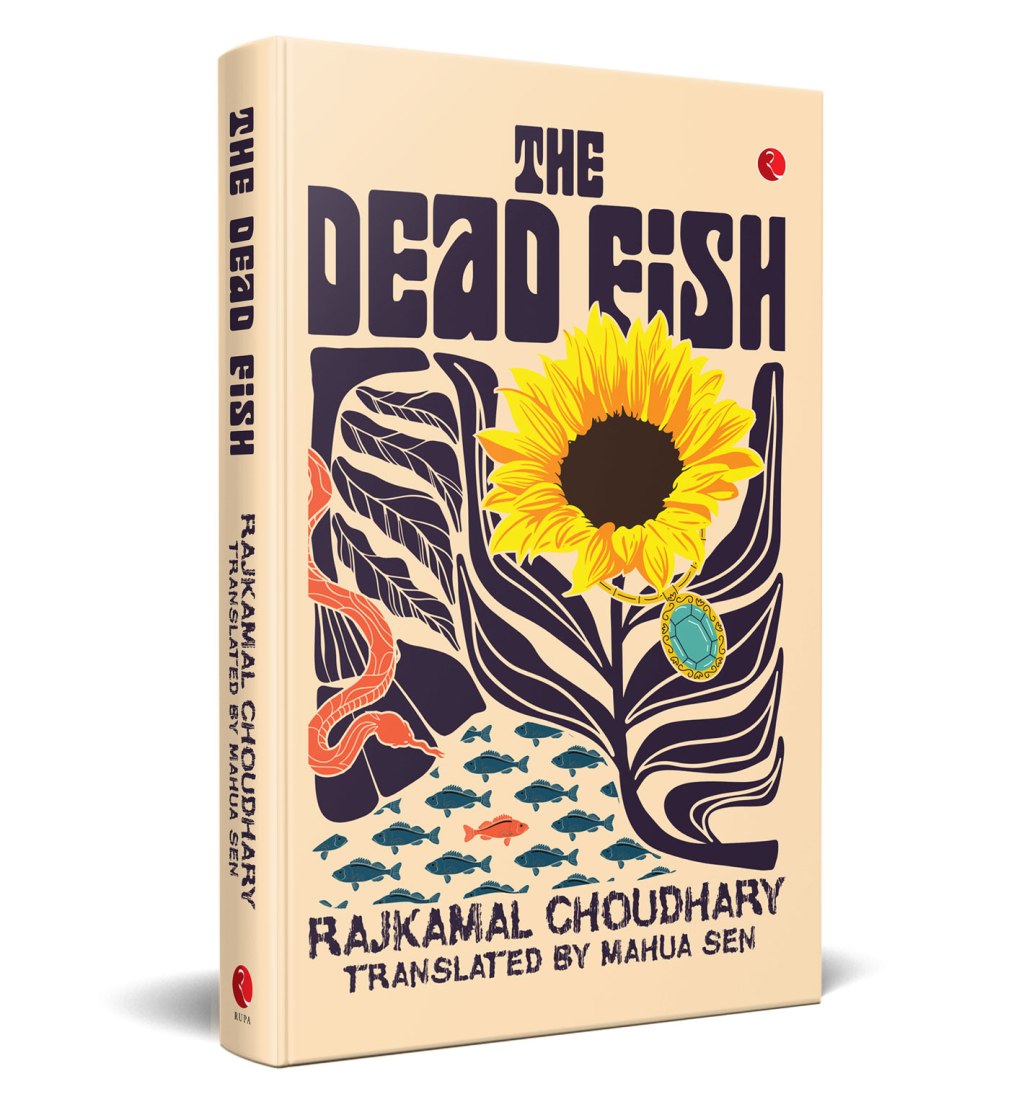
Sen’s work is both a literary feat and a cultural milestone. By resurrecting The Dead Fish, she not only honors Choudhary’s legacy but also amplifies its relevance, inviting readers to confront the beauty and pain of human experience. This translation is a must-read for anyone invested in Indian literature, identity, or the power of stories to transcend time.



 Bookshotsapp
Leave a comment