
In a thought-provoking new release, The Governance Gap, Shashi Budhiraja, a 94-year-old former technocrat with a storied career spanning Indian Oil Corporation, the United Nations, and the World Bank, delivers a sharp critique of India’s governance challenges. Co-authored with his son, Rajeev Budhiraja, a behavioral science expert based in Dubai, the book asks a pressing question: Has India’s democracy truly empowered its 1.4 billion citizens, or is it held back by flawed institutions and a lack of political will?
With India celebrated as the world’s largest democracy, The Governance Gap shines a spotlight on the disconnect between the nation’s potential and its reality. Drawing on his experiences witnessing India’s independence in 1947 and the assassination of Mahatma Gandhi, Shashi Budhiraja weaves a narrative that blends personal history with policy analysis. From his early days at St. Stephen’s College to becoming the youngest-ever Managing Director of Indian Oil Corporation at 43, Budhiraja’s journey offers a unique lens on India’s post-independence trajectory.
The book argues that robust institutions and citizen-centric governance are the keys to unlocking India’s growth. It critiques the influence of money and muscle power in elections, the legislature’s failure to hold the government accountable, and the bureaucracy’s sluggish pace. Focusing on critical sectors like agriculture, education, and health, the authors expose a “governance gap” that has left millions of Indians without equitable access to opportunities.
“Freedom was meant to ensure every Indian could realize their potential,” Budhiraja writes, reflecting on the ideals of the 1950 Constitution. “But have we delivered on that promise?” Citing Dr. B.R. Ambedkar’s warning that a constitution’s success depends on those who implement it, the book calls for political will to prioritize citizens’ needs over short-term political gains.
Rajeev Budhiraja adds a modern perspective, leveraging his expertise from the London School of Economics and the University of Pennsylvania. His proposals for behavioral nudges—such as using data-driven campaigns to boost public health compliance or financial literacy—offer innovative solutions to bridge the gap.
The book doesn’t just diagnose problems; it provides a blueprint for reform. Recommendations include strengthening institutional accountability, streamlining bureaucracy, and leveraging technology for transparent governance. However, critics may note that the book’s broad scope occasionally sacrifices depth, particularly on judicial reforms, and its reliance on political will as a solution could be seen as optimistic given entrenched interests.
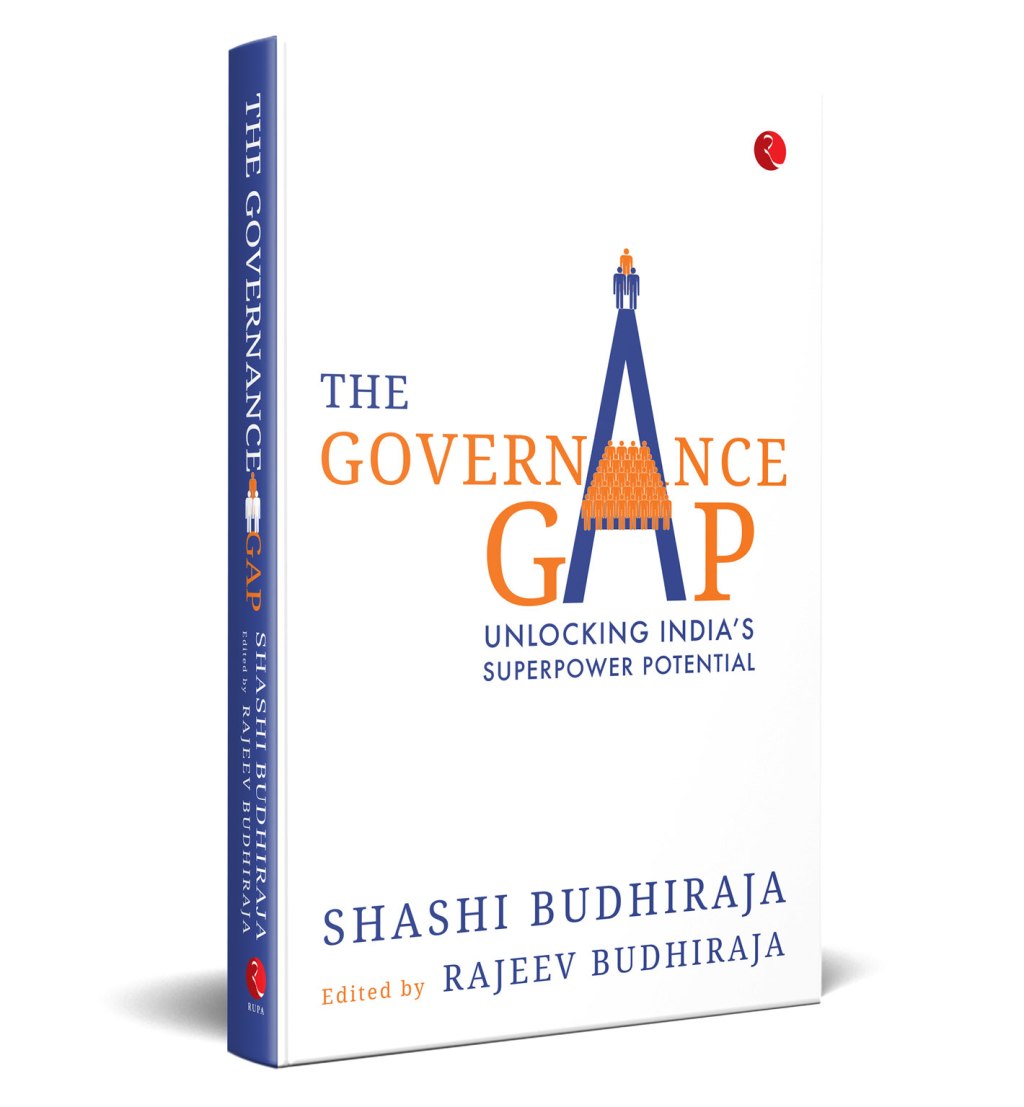
The Governance Gap is a timely wake-up call as India aims for global economic leadership. Its blend of historical reflection, policy critique, and actionable solutions makes it essential reading for policymakers, scholars, and citizens alike. Available now, this book challenges India to confront its shortcomings and build a future where governance truly serves the people.

 Bookshotsapp
Leave a comment