
Saurabh Shankar
There are books that simply collect stories—and then there are books that open portals.
Gautam Bhatia’s Between Worlds, the first in a planned annual series of Indian speculative fiction anthologies, is very much the latter. It doesn’t just gather writing; it summons a conversation. Between past and present. Between imagined futures and buried histories. Between the familiar and the uncanny. And, above all, between readers and the tantalising question: what if?
It begins, fittingly, with memory. Not of our own, but of those who dared to imagine otherwise long before the present renaissance of Indian speculative fiction. In his brilliant foreword, Bhatia resurrects a lost lineage: a 19th-century Urdu storyteller’s epic of magic and mayhem (Tilism-e-Hoshruba), a Bengali scientist’s whimsical tale of hair oil halting a cyclone (Niruddesher Kahini), a Muslim woman’s dream of a feminist utopia (Sultana’s Dream), and a wandering philosopher’s futuristic vision of the 22nd century (Baeesveen Sadi). It is a brief history of the Indian imagination—a counter to the lazy and long-standing myth that speculative fiction in India is a Western import.
But Between Worlds is not content with being corrective. Its ambitions are grander. This is an anthology built not on reputation or invitation, but on an open call—an intentional dismantling of the gatekeeping that has long shaped literary and genre publishing. The result is a bold, diverse collection, filled with voices that are daring, emergent, and often thrillingly unpolished in the best sense of the word.
A Book That Asks: What’s Really Out There?
The collection does not attempt to define Indian speculative fiction—it provokes it. From stories of AI gone rogue in dusty small towns, to interstellar investigations steeped in philosophical inquiry, to lush post-apocalyptic dreamscapes that flirt with fable, Between Worlds is united less by theme and more by an ethos: that speculative fiction should destabilise, that it should question not only the future, but the world we take for granted today.
The door is open. Step through.
There’s a sense, page after page, of the anthology hovering at the edge of something—a border, a rupture, a revolution. And the reader is never quite sure whether to step forward or stay back. The effect is intentional, and frequently exhilarating.
Some stories play with surreal, near-mythic tones—where birds carry secrets, and memory becomes currency. Others are sharply grounded, wrestling with caste, gender, and communal trauma under the guise of alternate timelines and speculative technologies. There’s a queer inter-species romance that is as tender as it is strange; a tale of surveillance capitalism taken to its logical, horrifying endpoint; and a quiet, aching meditation on aging in a society where biotech has promised endless youth.
At times, you may be lulled into thinking you know where a story is going—only for it to pivot suddenly, plunging you into something richer, stranger, darker. There is suspense, not in the traditional sense of twists or cliffhangers, but in the quiet suspicion that the world you thought you were reading is not the world you’re actually in.
And isn’t that the truest aim of speculative fiction?
The Politics of the Future is Written in the Present
Where Between Worlds excels is in understanding that speculative fiction isn’t merely about escapism—it’s about confrontation. These stories grapple with systems that have long governed Indian life: patriarchy, casteism, communal violence, environmental degradation. But they do so through indirection, allegory, and estrangement—tools that allow the reader to see old injustices anew, through the shimmer of the unreal.
This is science fiction and fantasy with dirt under its fingernails, full of malfunctioning machines and broken dreams, post-human selves and very human failings. It speaks to India’s fractured realities without succumbing to despair. There is rage in these pages—but also rebellion, resistance, and sometimes, the rarest speculative thing of all: hope.
What the Future Holds (and Why This Anthology Matters)
For a first volume, Between Worlds is an astonishing achievement. It doesn’t try to be exhaustive—it doesn’t need to be. What it offers instead is a constellation: a glimpse at the many orbits within which Indian SFF writers are currently spinning. Some of these stories burn bright with promise; others linger like distant stars, their light slower to arrive but no less powerful. The anthology, taken as a whole, feels like an invitation to keep looking up.
As a reader, one finishes the book with the sense of having traversed something vast and unfinished—a map of imagined Indias with many blank spaces still waiting to be filled. That’s the beauty of an anthology like this: it ends with a promise, not a conclusion.
In an age where publishing often replicates power rather than redistributes it, Between Worlds is a rare act of literary generosity. It challenges the idea that stories must come from above, from the already-established, the already-known. Instead, it listens—closely, curiously—to those at the margins, and to those just beginning to speak.
Between Worlds doesn’t just showcase Indian speculative fiction—it asserts its necessity. These are stories that push back against the silence of the mainstream. They ask dangerous questions. They speak in voices not often heard in genre spaces. And they imagine newness—not as novelty, but as a way of being in the world.
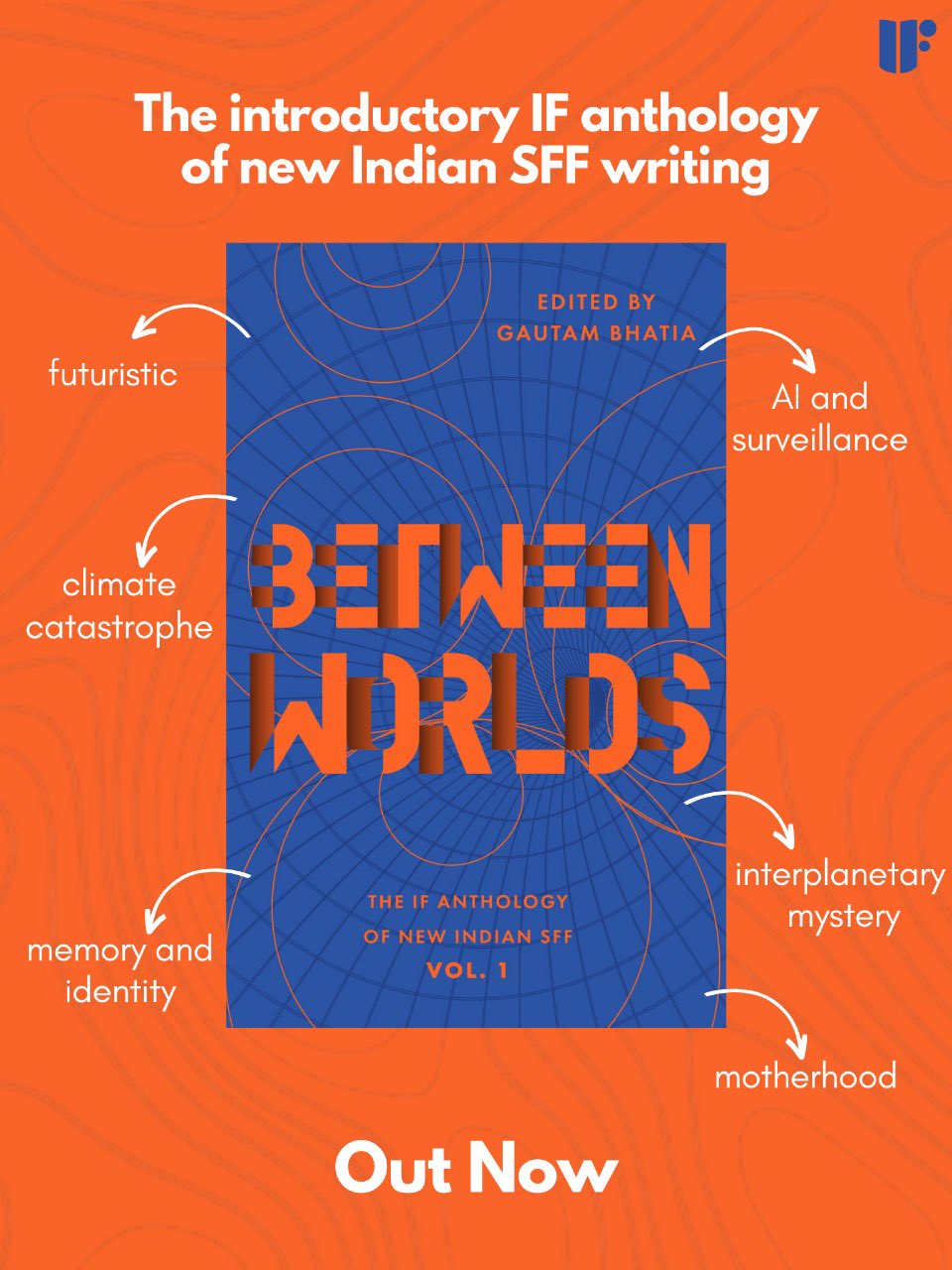
Whether you are a longtime lover of science fiction and fantasy, or a curious reader peering into unfamiliar territory, this anthology offers a rare and necessary gift: a chance to see the future—and the present—differently.

 Bookshotsapp
Leave a comment