
Saurabh Shankar
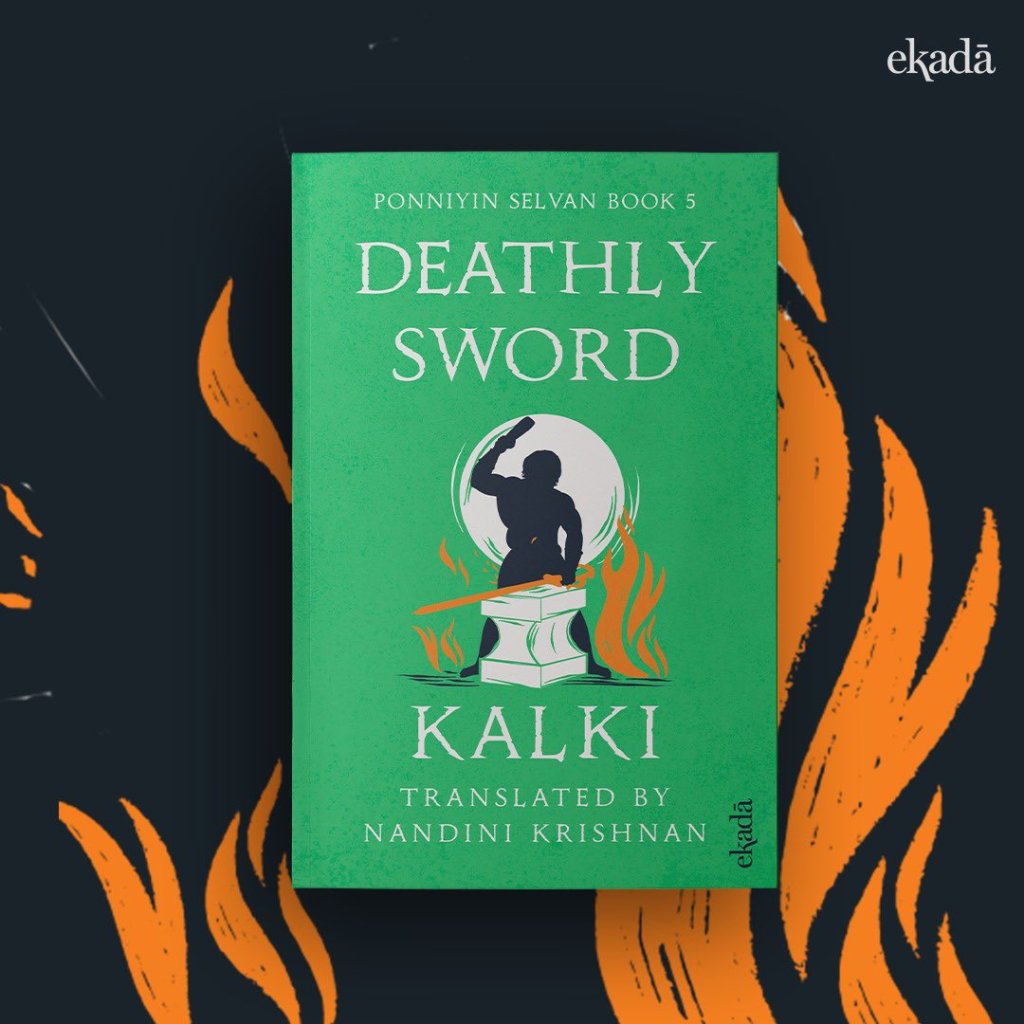
In the clang of metal on the anvil and the resigned sigh of an aging ironmonger, Kalki’s timeless world comes alive once more, rich with echoes of war, honour, and fading glory. The brief yet evocative excerpt from this newly translated volume—spearheaded by the inimitable Nandini Krishnan—promises not just a return to the past, but a reanimation of it.
This book is more than historical fiction—it is a resurrection of a literary legacy. Ramaswamy Krishnamurthy, better known by his pen name Kalki, remains a towering figure in Tamil literature, and his work is deeply intertwined with the cultural and political resurgence of pre- and post-independence India. His novels—blending vivid storytelling with meticulous historical detail—were not just entertainment; they were acts of resistance, of preservation, and of nation-building.
Krishnan’s translation carries this spirit forward, letting Kalki’s sharp observations and rich character voices sing in English without losing their rootedness in Tamil ethos. Her deft handling of tone and cultural context ensures that nothing feels flattened or exoticised. We hear the wry defiance of Vandiyadevan, the weariness of a craftsman who has seen too many wars come and go, and the deeper lament for a world where swords are now souvenirs instead of emblems of purpose.
History That Breathes
What stands out in the scene is not grand action, but a subtle poignancy. The blacksmith’s comment—“What use does one have for either [a sword or spear] these days?”—is not merely a throwaway line. It is the heart of the scene. In that single sentence lies an entire nation’s transition from battle to bureaucracy, from heroism to hesitation, from mythic past to a modern, uncertain future.
And yet, as the title suggests—“Throw them in the fire!”—this is no passive surrender. There is defiance here too, and perhaps a deeper metaphor: that something must be reforged, even if it must first be broken down. Kalki’s characters, much like the people of India in the 20th century, are caught between the fading echo of empires and the fragile birth of a republic.
Why This Book Matters Now
In a time when global publishing is finally turning its gaze toward non-Western classical and popular literature, this translation is not just overdue—it is urgent. Kalki’s work predates, and in many ways prefigures, the sprawling historical sagas of modern Indian cinema and serials. And yet his prose remains unmatched in intimacy, cinematic without being melodramatic, political without being preachy.
Krishnan, already well-known for her sensitive translation of Perumal Murugan, proves once again that she is not merely a linguistic bridge but a cultural mediator. Her introduction contextualises the original work without patronising it, and her translation preserves the rhythm and flavour of the Tamil original while making it accessible to contemporary readers.
For those new to Kalki’s writing, this book is an ideal entry point. And for longtime fans, this is a much-needed English reincarnation of a voice that shaped Tamil literary consciousness for decades.
This is not just a story of swords and kingdoms—it is a story of time itself. Of how eras fade, how memory rusts like steel, and how the stories we tell can sharpen that which has long gone blunt.
Kalki’s words still cut. And thanks to Nandini Krishnan, they now cut across language.


 Bookshotsapp
Leave a comment