
When a practising Supreme Court advocate who has spent years inside the Indian justice system chooses to step back and write a book about it, the result can be either a dry legal manual or an angry polemic. Dr. Vivek Singh’s The Conflict of Supremacy & Judicial Reforms is neither. It is a sweeping, deeply felt and rigorously argued meditation on how India’s three great constitutional pillars — legislature, executive and judiciary — interact, clash and sometimes fail the people they are meant to serve. It is also an unapologetic call to action: to rediscover the country’s indigenous legal ethos and build a justice delivery system worthy of that heritage.
A Civilisational Backdrop
One of the book’s distinctive features is that it does not begin in 1950 or 1947 but in “Bharat-varsha,” a time when the subcontinent saw itself as the mother of law, justice and governance. Dr. Singh evokes a world where kings and citizens gathered at the Great Kumbh not simply for ritual bathing but to update and amend laws in accordance with Dharma — a participatory, value-driven form of jurisprudence. He paints vivid pictures of a society in which truth, piety, charity, compassion, sacrifice, loyalty, heroism and reverence for women were not abstract virtues but everyday practices; where even minor acts of public welfare were recognised and praised. This framing is unusual in contemporary legal writing and gives the book a living sense of history rather than a nostalgic backdrop.
From Dharma to Colonial Codes
Having established this high ground, Dr. Singh traces how invasions, and later British rule, eroded the natural justice system of ancient Bharat. He shows how codified laws designed for subjugation — the Criminal Procedure Code, the Civil Procedure Code, the police laws — replaced a participatory tradition with a rigid bureaucracy. Even after independence, India remained bound to those codes, operating a system whose procedures, language and dress codes were alien to its own citizens. This part of the book is as much social history as legal analysis and is written with a narrative verve that makes the reader feel the loss.
Diagnosing Today’s Malaise
The middle of the book is the most hard-hitting. Here Dr. Singh dissects the present-day judiciary with an insider’s eye: endless pendency of cases stretching over decades, red tape at the grassroots level, an inaccessible apex court, a police system notorious for illegal detention, and a persistent mismatch between the language of the courts and the people they serve. He gives human faces to these flaws — farmers trapped in litigation over their land, poor litigants unable to afford Supreme Court advocates, citizens dying before their cases are heard. This is the section where his line “Death is different so is Justice. Let justice flow in the sphere of times…” appears, and it lands with force.
Judicial Challenges and Reforms
Rather than just lamenting, Dr. Singh surveys past attempts at reform — from the Justice V.S. Malimath Committee onwards — and sets out the terrain of “judicial challenges” that still need attention. He tackles delayed justice, red-tapism, the opacity of the collegium system, and the tendency of both executive and judiciary to overreach. The inclusion of candid comments from eminent jurists like Justice K.G. Balakrishnan, Sr. Adv. Ranjit Kumar and Sr. Adv. Vikas Singh gives this section credibility and shows that his critique is widely shared across the legal community.
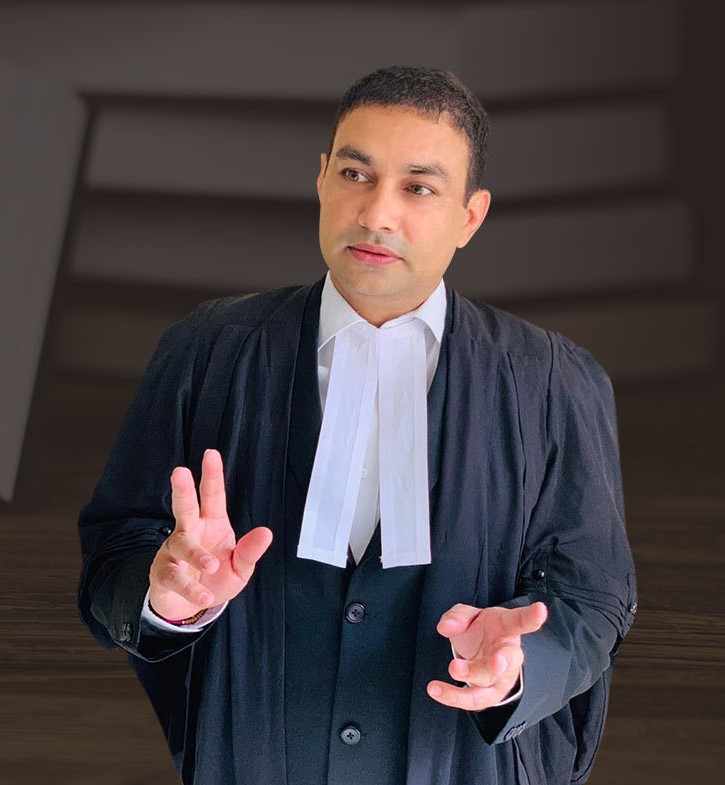
Dr Vivek Singh
A Vision Rooted in Bharat
What elevates this book above a technical critique is its vision. Dr. Singh argues for “ending the evil system of 1,000-year-old mixed laws of invaders and Britishers” and for creating a “mega structure of the Justice Delivery System” that is swift, transparent, technologically current and linguistically inclusive. He calls on the government, courts and citizens alike to shed their “millennial amnesia” and reclaim the spirit of Dharma — not as a religious concept but as a civic one: rule of law as a living moral duty rather than a mere process. He reminds us that even the most admired features of modern Western legal systems were inspired by principles found in ancient Bharat and challenges India to modernise by drawing on its own roots.
Style and Accessibility
Despite dealing with dense constitutional concepts — separation of powers, judicial activism, parliamentary sovereignty — the prose remains accessible. Historical vignettes, direct quotations, and a touch of poetry break up the argument and make it memorable. This makes the book useful not only for lawyers and judges but also for students, journalists, policy-makers and ordinary citizens curious about why India’s justice system feels indispensable yet exasperating.
Praise and Impact
What emerges from The Conflict of Supremacy & Judicial Reforms is not just a critique but a manifesto grounded in scholarship and first-hand experience. Dr. Singh deserves praise for daring to write a book that is at once erudite and heartfelt, bridging the gap between ancient memory and contemporary reform. Few legal texts manage to combine insider knowledge, historical sweep, and a sincere patriotism without lapsing into either jargon or sentimentality. This one does.
Verdict
The Conflict of Supremacy & Judicial Reforms is a landmark contribution to the debate on judicial reform in India. It offers readers both a mirror to our present failings and a map to a more humane, culturally resonant future. For anyone who cares about the health of Indian democracy — lawyers, judges, policy-makers, students, journalists, or simply engaged citizens — this book is essential reading.
Rating: ★★★★★ — Insightful, accessible and inspiring; a timely reminder that justice delayed is justice denied, and that reform rooted in our own traditions is possible.
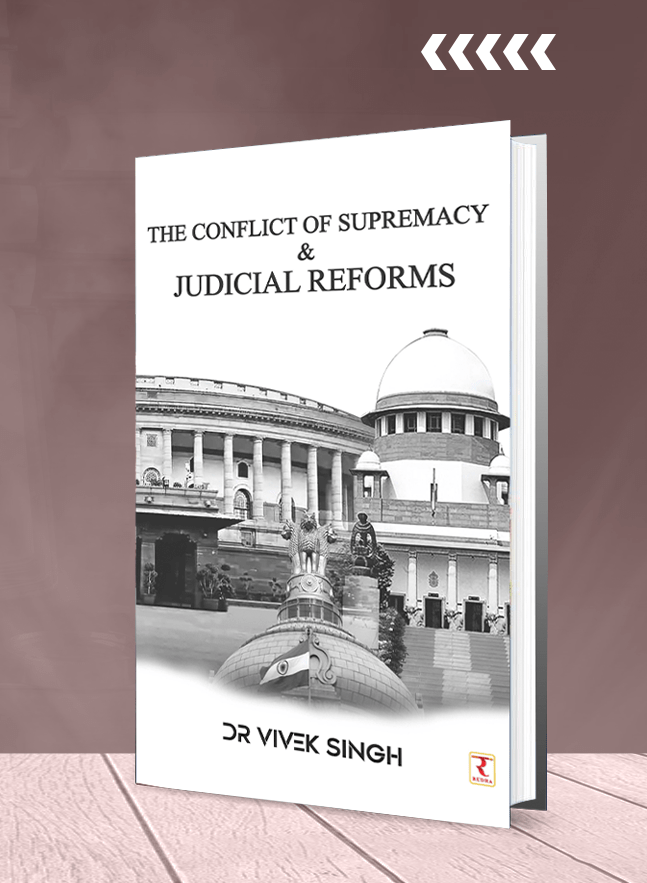
Title: The Conflict of Supremacy & Judicial Reforms
Author: Dr. Vivek Singh
Publisher: Rudra World Publication Pvt. Ltd.




 Bookshotsapp
Leave a comment