
Some books creep up on you quietly. Udayan Vajpeyi’s Love Is Participation in Eternity does exactly that. On the surface it’s about a stranger who walks into a sleepy, unnamed town and revives a dead library — scrubbing floors with neem water, rescuing books gnawed by termites, cataloguing them by hand. He does all this with such patience and invisibility that most regular readers never even see him. And then, years later, he’s found knifed to death in his own home.
It sounds like the set-up for a murder mystery. But this is no ordinary whodunit. Vajpeyi isn’t chasing a culprit; he’s tracing the ripples left behind by a life of quiet service. Who was Sudipt, the man at the centre of this story? Why did he work so hard? Why did no one know him? And what happens to the places he built once he’s gone?
We meet him only through others: a winter visitor to the town who finds the library mysteriously closed for a week; people at the chai-thela gossiping about “the special person connected to the library”; occasional readers who slip in and out of the cool, thick-walled rooms. Each voice tries to measure Sudipt but ends up revealing its own inner world — disappointments, gratitude, regrets. Slowly, through their fragments, a portrait of the man emerges like a photograph developing in a darkroom.
Vajpeyi writes with a poet’s eye for detail. Morning mist becomes “light-blue wool” swirling around squat trees. The copper-plated door of the library holds “big nails hammered” into it like time itself. You can almost smell the old paper, feel the cool floor under your palms, hear the muffled cough of a reader turning a page. This sensory richness gives the book an unusual rhythm: it moves like someone strolling between shelves, pausing to pick up a volume, to look out of a window, to think.
And yet it’s not just atmosphere. Love Is Participation in Eternity is also about recognition. We pass by people who keep public life alive — the librarian, the archivist, the caretaker — and rarely stop to notice. By the time we do, they may already be gone, leaving only clean floors, catalogued books and a mystery. Vajpeyi’s novel asks us to look again at those invisible lives and the quiet love behind their work.
This isn’t a thriller you’ll race through. It’s a book to savour on a winter morning with a cup of tea, like the narrator who keeps returning to his ancestral city to sit in that library. Its tenderness and deceptive simplicity stay with you, as if you too have been one of the anonymous readers in those cool rooms, carrying away a little of the man who “hasn’t died though he is dead.”
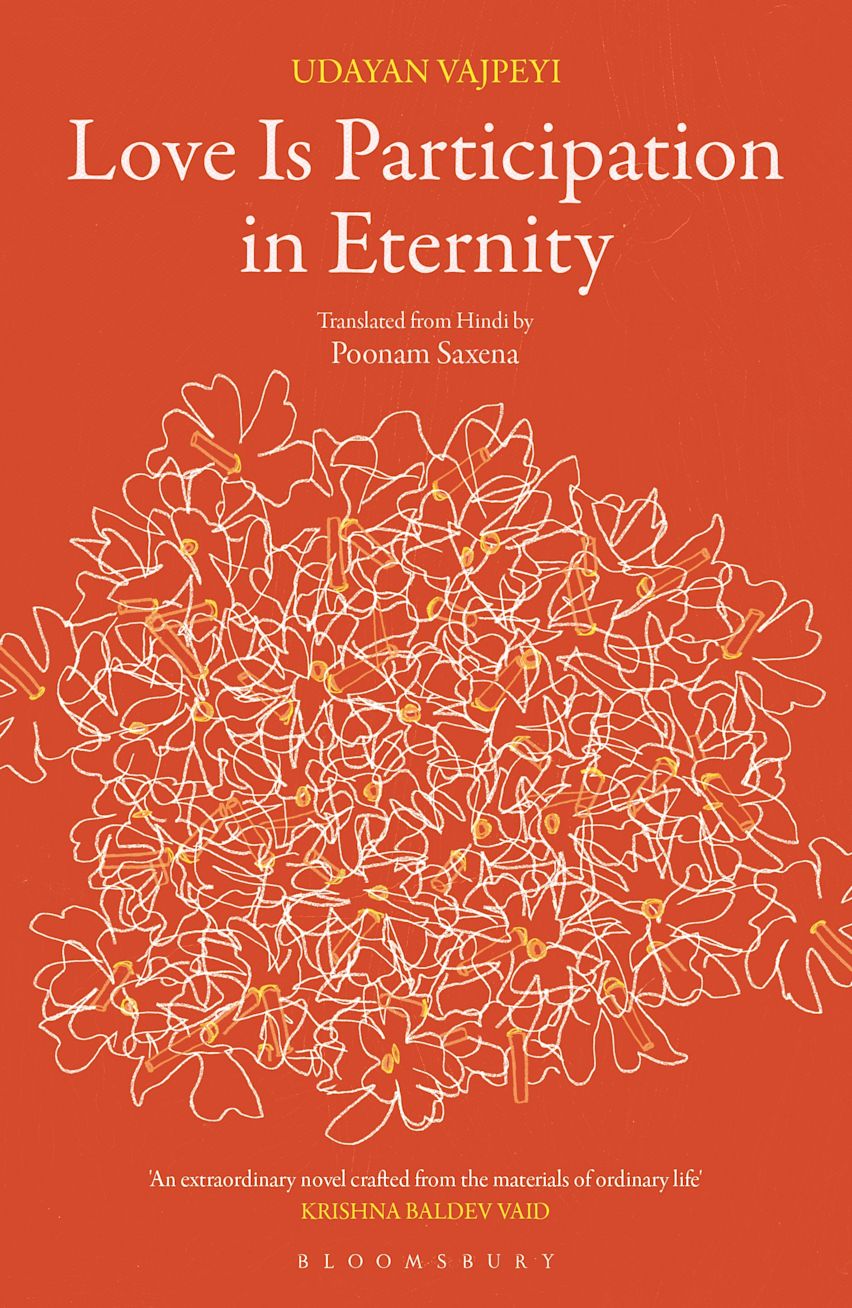
If you’ve ever loved a library, or wondered about the lives that make such places possible, this is a novel that will speak to you — and, gently, haunt you.




 Bookshotsapp
Leave a comment