
The Last King is an extraordinary biography that brings to life the remarkable journey of Raja Mahendra Pratap — a revolutionary, visionary, and patriot whose contributions to India’s freedom struggle have been largely forgotten. Dr. Vivek Singh’s meticulous research and evocative storytelling restore this towering figure to the center of historical memory, painting a vivid portrait of courage, intellect, and unwavering commitment to the cause of Bharat’s independence.
The narrative begins with Raja Sahib’s early life in Mursan, tracing the cultural and moral environment that shaped him. From the outset, the reader senses the weight of destiny pressing upon him. Dr. Singh writes with palpable suspense as he recounts the fateful night of 20th December 1914: “That unforgettable night of 20th December 1914 changed the history of Bharat forever. Destiny and obligation converged at that midnight, creating a moment that raced through Raja Sahib’s heart.” Torn between leaving behind his wife and children and answering the call of freedom, Raja Sahib steps into the unknown, setting in motion a journey that would redefine India’s struggle for independence.
The book details Raja Sahib’s daring campaigns abroad, from Switzerland to Berlin, Istanbul to Kabul, highlighting his diplomatic acumen and unwavering resolve. Dr. Singh vividly describes his establishment of the Provisional Government of India in Kabul in 1915, where Raja Sahib became the first President of united Bharat, laying the foundation for a vision of Akhand Bharat. “The path of possibilities was vague, but the flame of hope in Raja Sahib’s heart was defeating the darkness,” Singh writes, capturing the mixture of fear, determination, and hope that defined this historic venture.
Dr. Singh also brings to light Raja Sahib’s pioneering work in education through the establishment of Prem Mahavidyalaya in Vrindavan in 1909. This institution, one of the first modern colleges in India, challenged the entrenched caste norms and promoted inclusivity. Despite repeated attempts by the British government to shut it down, Raja Sahib’s vision endured, proving his commitment not only to freedom but to social reform and empowerment. “The British government saw patriotism and rebellion in the fame of Prem Mahavidyalaya, yet the institution stood firm, a beacon of courage against oppression,” Singh notes.
The biography does not shy away from complexities. Raja Sahib is portrayed as a pragmatic visionary who, after participating in early Indian National Congress sessions, concluded that conventional methods alone could not secure independence. He understood the necessity of global alliances and even considered armed rebellion. Dr. Singh skillfully conveys this boldness, showing Raja Sahib’s strategic foresight and unwavering dedication.
Equally compelling is Singh’s focus on Raja Sahib’s later life. Even in his 70s, elected to the Lok Sabha from Mathura in 1957, he continued advocating for social justice, education, and inclusivity. The book emphasizes the tragic irony that, unlike other exiled leaders of the world, Raja Sahib was largely forgotten in his own country, despite being the originator of initiatives such as the government-in-exile and laying the groundwork for what later became Netaji Subhash Chandra Bose’s Azad Hind Fauj. Singh highlights the deliberate suppression of his contributions, asserting that historical oversight has denied Bharat a rightful hero.
Stylistically, Dr. Vivek Singh excels at combining historical rigor with a literary sensibility. The book is replete with suspenseful passages, vivid descriptions, and poignant reflections. Readers are drawn into the tense uncertainty of Raja Sahib’s travels, the audacious formation of the Provisional Government, and the emotional weight of leaving family behind. Every chapter resonates with a sense of moral and historical urgency, making the biography not just informative but deeply immersive.
The Last King is more than a biography; it is a reclamation of history. It reminds us that India’s freedom struggle was complex, global, and multifaceted, and that Raja Mahendra Pratap was a revolutionary whose vision and sacrifices shaped the course of modern Bharat. Dr. Vivek Singh emerges as both a meticulous historian and a storyteller, adept at turning archival research into a living, breathing narrative.
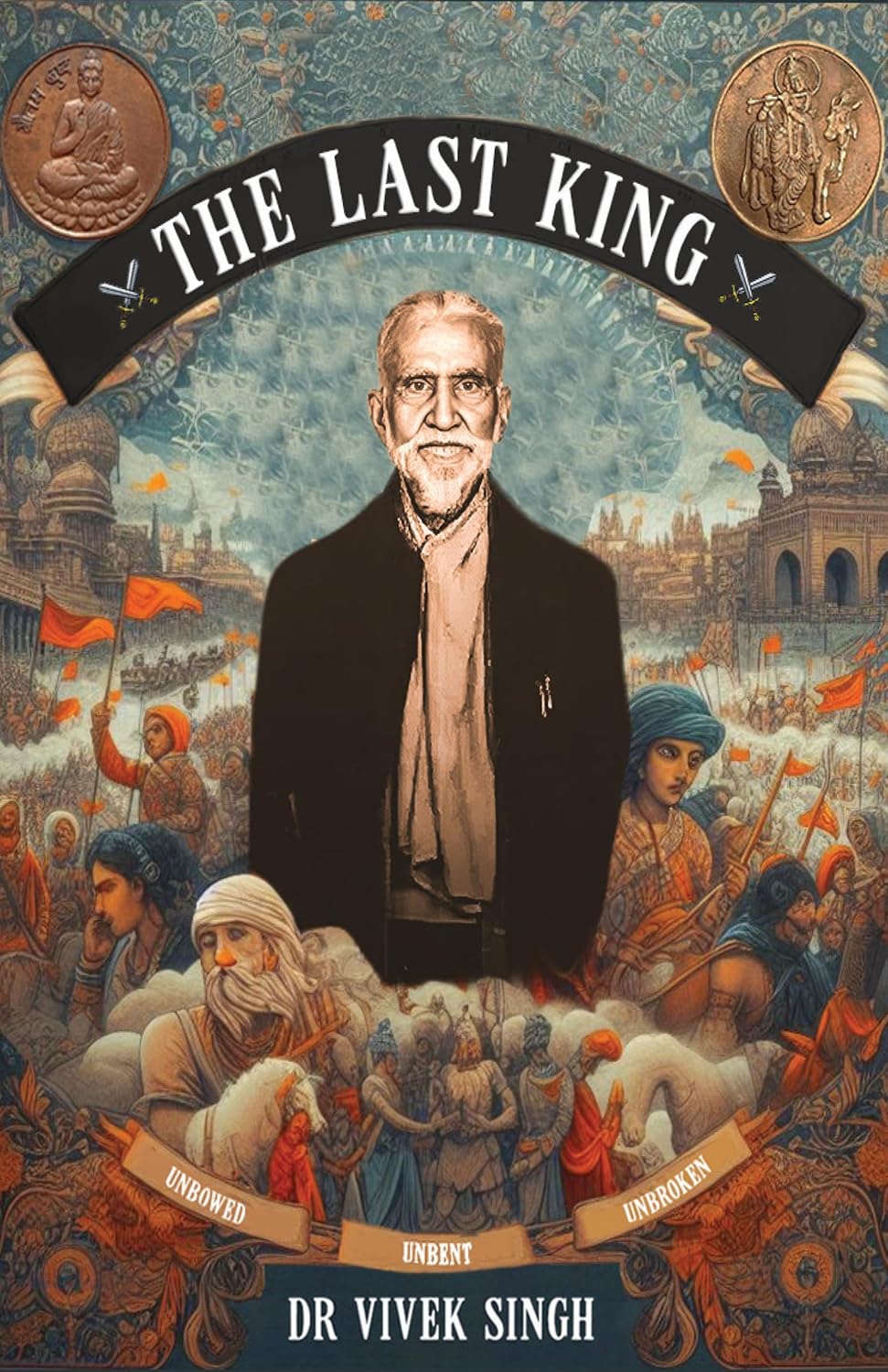
For readers interested in India’s independence, social reform, or the untold stories of its leaders, The Last King is an essential and inspiring read. It is at once a chronicle of courage and a call for recognition, ensuring that Raja Mahendra Pratap finally receives the honor he so richly deserves.
 Bookshotsapp
Leave a comment