
Have you ever felt that there’s more to life than meets the eye? That despite comfort, success, and the endless buzz of modern living, something remains missing — a quiet, inexplicable yearning for peace, meaning, and wholeness?
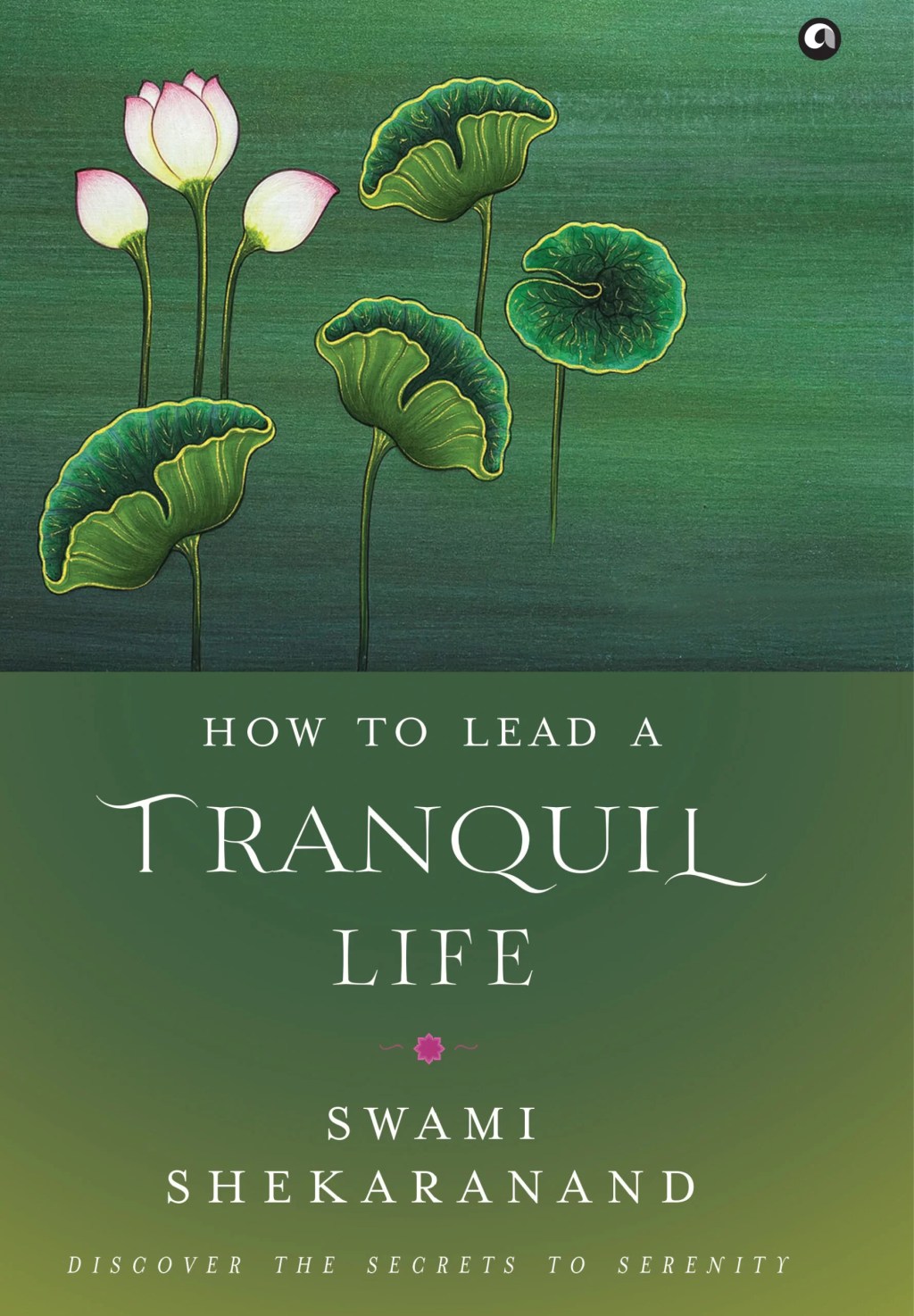
In his transformative new book, How to Lead a Tranquil Life, Swami Shekaranand gently guides readers through these timeless human questions. Drawing from the profound wisdom of Hindu philosophy and the teachings of the Bhagavad Gita and Advaita Vedanta, the Swami offers a clear and practical pathway to inner harmony, resilience, and spiritual fulfilment.
For anyone feeling burdened by uncertainty, restlessness, or anxiety, How to Lead a Tranquil Life serves as both mirror and map — a mirror reflecting the nature of one’s mind and desires, and a map leading towards peace, purpose, and clarity.
From the Boardroom to the Himalayas of the Heart
Swami Shekaranand’s own story is as remarkable as his teachings. Before embracing the life of a monk, he led an accomplished career in international banking — holding senior leadership roles with American Express Bank, serving as CEO of Commerzbank in India, and later assuming regional responsibilities in Singapore. His final corporate role was as Senior Director with Standard Chartered Bank’s private banking group, also in Singapore.
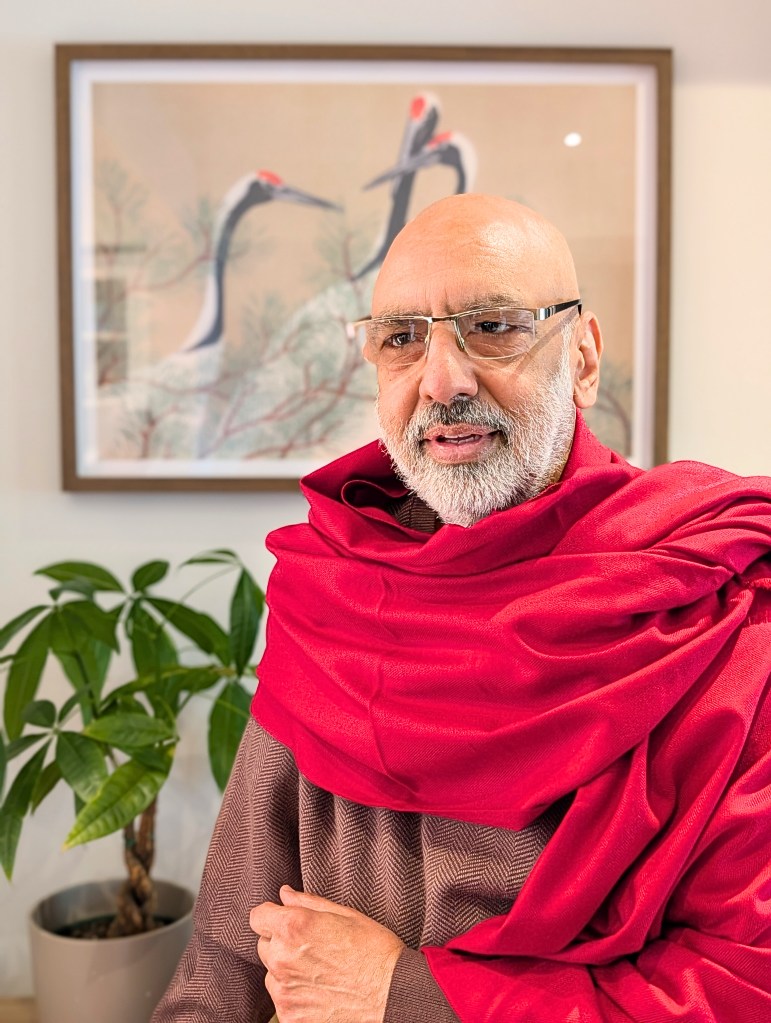
Yet, amid the relentless pace of corporate life, he began to feel the stirrings of a deeper calling. “Even surrounded by success,” he recalls, “I found myself wondering — what is the true purpose of it all? Is there peace at the end of constant striving?”
That inner questioning led to a radical transformation. In 2012, he immersed himself in the study of Vedanta, the timeless philosophy of the Vedas, along with the Yoga Sutras, under the guidance of revered gurus in southern India. Over the next decade, he dedicated himself fully to these profound spiritual traditions, eventually embracing the monastic life within the Jagat Guru Adi Shankaracharya order.
Now based in Canada, Swami Shekaranand leads a life of service, teaching, and humanitarian work — demonstrating that spirituality need not be a retreat from life, but a way to engage with it more deeply and consciously.
The Science of Stillness
How to Lead a Tranquil Life is organized into eleven sections, each illuminating a key aspect of the spiritual journey. Through explorations of intention, meditation, compassion, karma, acceptance, devotion, and equanimity, the Swami reveals how these timeless principles can be applied in our everyday lives.
A particularly insightful portion of the book delves into the three foundational Vedic gunas — sattva (clarity and harmony), rajas (activity and passion), and tamas (inertia and ignorance). Swami Shekaranand explains how these elemental forces shape human thought, behaviour, and destiny — and how understanding them can empower one to rise above habitual patterns and live consciously.
He also brings clarity to some of spirituality’s most debated themes — karma and free will, spirituality and science, and the intersection of inner awareness and outer action. His approach is neither dogmatic nor abstract; rather, it is deeply applied Vedanta — philosophy as a living practice rather than distant theory.
Wisdom for a Restless World
In an era defined by noise and speed, Swami Shekaranand’s message feels profoundly relevant. “Peace,” he writes, “is not the absence of activity but the presence of awareness.” The book encourages readers to stop chasing calm as an external goal and to instead realize it as an intrinsic state — accessible at any moment through understanding, acceptance, and right living.
Every chapter of How to Lead a Tranquil Life is infused with the Swami’s characteristic warmth and simplicity. The language is lucid, yet layered with insight. Each idea flows seamlessly into the next, encouraging quiet reflection rather than intellectual debate.
Through this approach, the book becomes more than a guide — it becomes a companion. Whether read slowly over weeks or dipped into during moments of inner unrest, it offers steady, compassionate guidance toward self-awareness and transformation.
A Journey of Service and Awakening
Beyond the pages of his book, Swami Shekaranand continues his mission through community outreach and humanitarian service. His teachings remind us that tranquillity is not achieved by withdrawing from the world but by engaging with it more consciously and compassionately.
Having once navigated the complexities of high finance and global leadership, he now channels that same discipline and clarity into the inner sciences of the self. His life bridges two seemingly opposite worlds — the material and the spiritual — showing that the path to peace can begin anywhere, even in the middle of worldly success.
Living with Tranquillity and Truth
At its heart, How to Lead a Tranquil Life is an invitation — to slow down, to reflect, and to rediscover one’s essential nature. It reminds us that the search for meaning, though timeless, need not be confusing or mystical. The tools for peace already lie within; the Swami simply helps uncover them.
“Tranquillity,” he writes, “is not something to be achieved. It is what remains when all else falls away.”
With his unique blend of modern experience and ancient wisdom, Swami Shekaranand offers a message the world deeply needs: that in knowing ourselves, we find the calm we have always been seeking.


 Bookshotsapp
Leave a comment