
In the age of endless scrolls, viral fame, and digital narcissism, Anurag Minus Verma’s The Great Indian Brain Rot arrives like a mirror held up to the chaotic, dazzling, and often absurd world of India’s internet. This is not just a book about memes, influencers, or TikTok stars—it is a searing, humorous, and at times heartbreaking exploration of how the digital realm has transformed our minds, our culture, and even the way we understand ourselves.
From the first page, Verma plunges the reader into the frenzied reality of modern India’s online life, where fame is both currency and obsession. Memes are national anthems, content creators are demigods, and dating apps quietly curate the rhythms of desire, loneliness, and identity. Through a satirical yet razor-sharp lens, Verma navigates this world with a blend of humor, introspection, and piercing cultural commentary, exposing the contradictions and complexities of being hyper-connected in a country that has embraced the internet with unparalleled intensity.
The Anatomy of Digital Chaos
Verma’s essays explore the bizarre economies of virality, the relentless grind of the influencer hustle, and the illusion of online authenticity. He uncovers the strange alchemy of attention, where “quality is a footnote” and reproduction is more valuable than originality. Here, the line between creator and consumer collapses, forming a loop of engagement, distraction, and compulsive validation. Whether it’s the neighbor-turned-YouTube gamer or the cab driver-turned-Instagram influencer, everyone is chasing their moment of digital immortality—while the world outside continues to spin, often unnoticed.
“The internet is no longer just a window into human behaviour; it has, in a fascinating way, become a stage, a shrine, a bazaar, and, occasionally, a dumpster fire,” Verma writes.
It is this restless, all-encompassing quality that makes the essays in The Great Indian Brain Rot both hilarious and unsettling. The digital landscape is at once absurd, intoxicating, and slightly terrifying—an ecosystem that rewards virality over depth, spectacle over nuance, and performance over reflection.
Cringe, Loneliness, and the Search for Meaning
Perhaps the most compelling aspect of Verma’s work is his exploration of loneliness and the human need for connection in the age of constant online engagement. In a society obsessed with projection, curated images, and performative self-expression, authentic emotion is increasingly rare, and even meditation or solitude becomes content.
A friend returning from a ten-day Vipassana retreat immediately posts on Instagram about his inner peace. “There is an urgency in him, a need to announce his detachment,” Verma observes, perfectly capturing the absurd paradox of digital-era mindfulness.
The essays are a meditation on this paradox: despite our constant connectivity, the internet amplifies our isolation. It encourages us to measure our lives against others, to curate our identities in the service of validation, and to consume endlessly while forgetting to reflect. The “brain rot” of the title is not hyperbole—it is a literal, cultural diagnosis of the fatigue, distraction, and cognitive overload that define contemporary Indian digital life.
A Cultural Diagnosis
Verma’s work is as much anthropological as it is comedic. He traces the sociopolitical and cultural undercurrents of India’s online spaces: the rise of caste and class hierarchies in digital discourse, the performative morality of online outrage, and the peculiar ways millennials and Gen Z negotiate intimacy, identity, and ambition. Through sharp, witty, and often painfully accurate observations, he captures a society negotiating the collision of tradition and technology, aspiration and absurdity.
The essays range from “Loveless Loners on the Internet” to “Digital Kurukshetra: New Caste Mythologies in Digital India” and “A Pandemic of Podcasters: Monetising the Mumble,” each shining a light on a different facet of online India. They are connected by a singular thread: the way technology reshapes human behavior, desires, and hierarchies, often in ways we barely understand.
Writing with Wit, Insight, and Empathy
What sets Verma apart is his voice: a mix of insider knowledge, personal experience, and unflinching satire. He is both participant and observer, having grown up in the pre-internet era and witnessing the radical transformation that digital India has undergone. His essays are as much memoir as they are cultural critique, infused with humor, nostalgia, and the occasional pang of existential reflection.
“The paradox of the internet is that it has made us sharper, yet it has also induced a strange kind of brain fog. There is too much to absorb and very little to hold onto. Everyone is overwhelmed. Everyone is tired. Everyone is watching things they can’t explain.”
Verma’s reflections resonate precisely because they are grounded in lived experience, yet they extend beyond the personal into the collective. He captures a generation navigating new technologies, aspirations, and anxieties while questioning what it means to live, love, and create in a digital world.
Why This Book Matters
The Great Indian Brain Rot is more than a collection of witty essays. It is a cultural document, a generational manifesto, and a cautionary tale rolled into one. It forces readers to confront the cost of “free” social media, the compulsions of attention economies, and the subtle erosions of empathy, reflection, and authenticity. At the same time, it celebrates the strange creativity, resilience, and humor that flourish amidst chaos.
For anyone who scrolls endlessly, debates silently with strangers online, or wonders why the internet sometimes feels like a hall of mirrors—this book offers clarity, laughter, and a strangely comforting sense of recognition. It is, in short, required reading for anyone trying to make sense of India’s digital psyche.
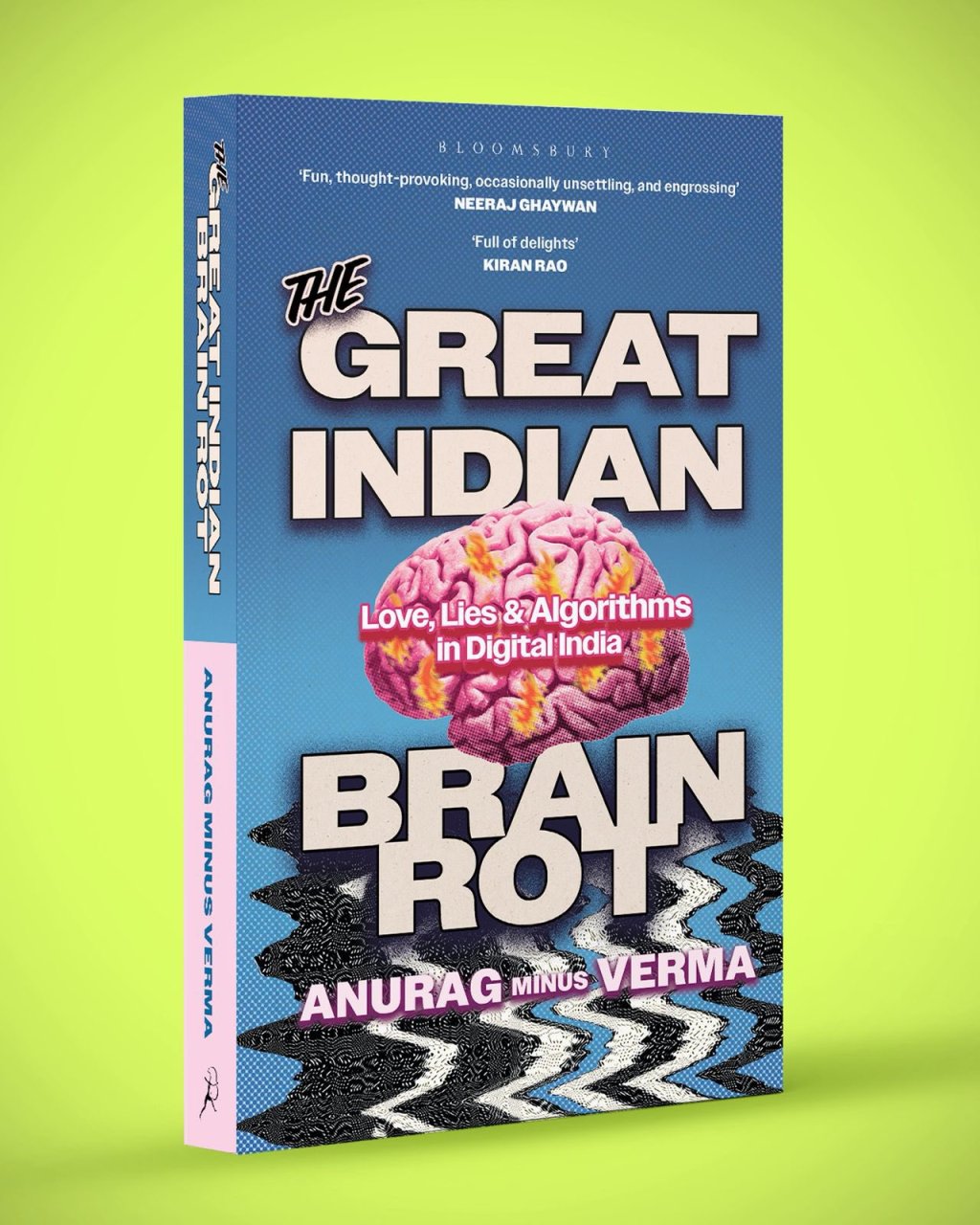
With razor-sharp wit, incisive commentary, and a deeply personal perspective, Anurag Minus Verma’s The Great Indian Brain Rot is a funny, fearless, and deeply resonant exploration of contemporary India online. It is a book that makes you laugh, wince, and think—often all at once—while holding a mirror to a society addicted to attention yet starving for meaning.
In the words of the author himself: we may be suffering from a digital brain rot, but at least we are now able to see it for what it is. And perhaps that is the first step toward recovery.
 Bookshotsapp
Leave a comment