
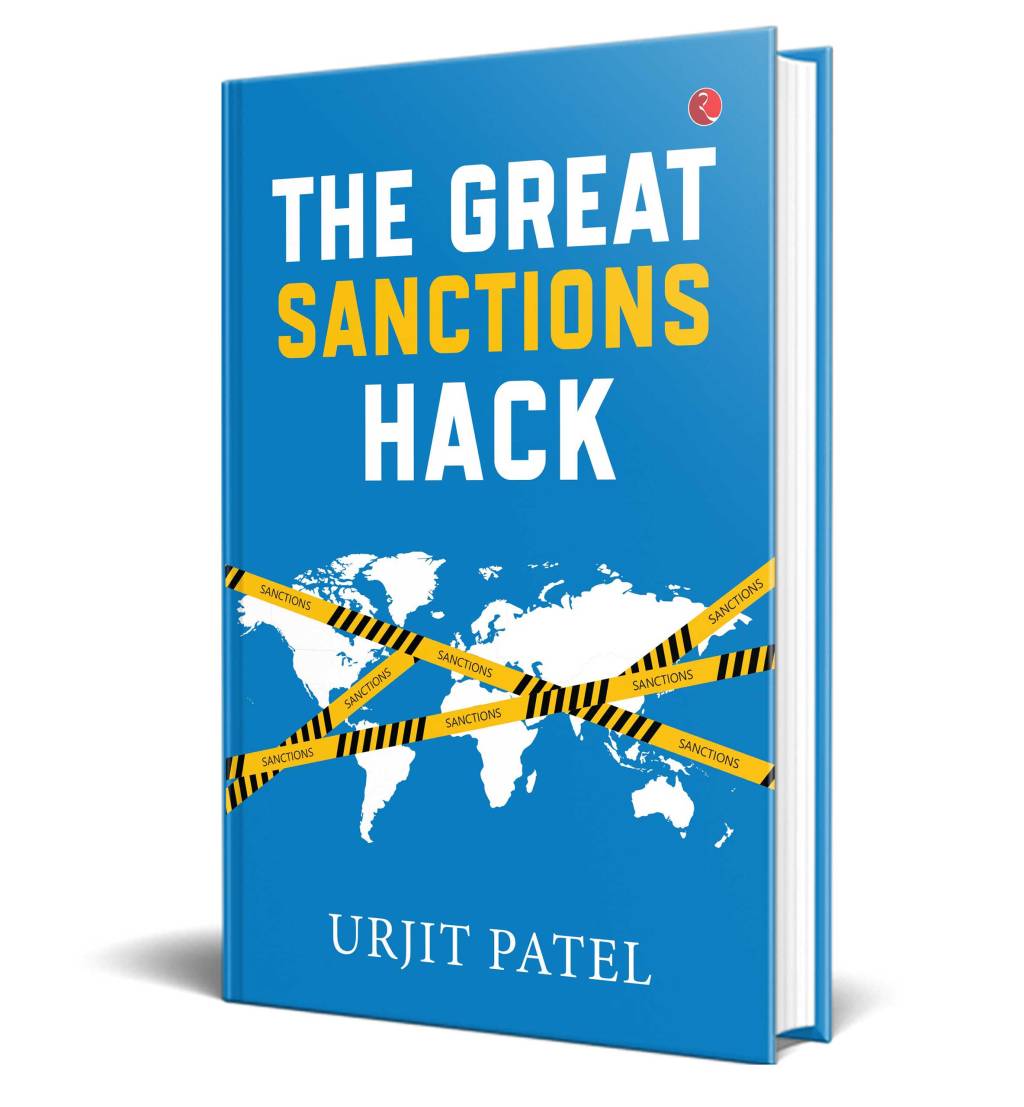
There are books that explain the world, and then there are books that jerk your head up and make you realise you’ve been looking at the wrong battlefield altogether. The Great Sanctions Hack is firmly the latter. Urjit Patel—typically the quietest man in any policy room—steps out with a book that is startlingly blunt, intellectually bold, and quietly explosive. In Patel’s telling, global conflict has shifted from tanks and treaties to spreadsheets and sanctions lists. And unless you’ve been following the fine print of US Treasury statements, this is a war you probably didn’t know you were already living inside.
A Technocrat Who Didn’t See It Coming
Patel opens with a confession most policymakers would bury: he wasn’t paying attention. Sanctions were background noise—grey, boring, inconsequential. Then the Russia–Ukraine conflict, energy disruptions, banking freezes, and compliance panic flipped the world on its head. What was once an abstract tool suddenly became a force with the power to jolt currencies, reroute tankers, and shut down multi-billion-dollar strategic projects. That rude awakening forms the spine of this book.
Sanctions: The War Without Gunfire
Patel argues that sanctions are not diplomatic scoldings—they are slow-motion assaults. Unlike drones and missiles, sanctions don’t make headlines the day they land. They work by choking air supply. They starve economies of credit, isolate them from global trade, and create a climate of fear so pervasive that banks and firms retreat even before penalties are imposed. By the time damage is visible, the siege has long been underway.
Why the Numbers Don’t Add Up
Here’s the twist Patel wants us to confront: sanctions are multiplying even though they rarely deliver what they promise. They are now used faster than they are studied, and more aggressively than they are understood. The data he lays out is uncomfortably clear—success stories are the exception, not the rule. Yet the world keeps slapping new sanctions on new targets as if it were muscle memory.
Patel’s diagnosis? Sanctions aren’t just foreign policy. They are theatre, leverage, and economic muscle rolled into one. They allow powerful countries to act without firing a shot—and to score domestic and diplomatic points along the way.
The Global South: Caught in the Crossfire
Patel gives India a special place in this narrative. Not as a protagonist, but as collateral. Whether it was buying Russian oil or pushing ahead with the Chabahar port in Iran, India learned the hard way that sanctions don’t just punish the intended target. They reshape the choices of every nation around them.
From delayed port projects to lost trade corridors, from rerouted oil purchases to compliance nightmares—India’s exposure to sanctions has quietly become one of its biggest policy risks. Patel doesn’t dramatise this; he simply lays out numbers that speak for themselves.
The Silence of the Institutions
One of the book’s most provocative threads is Patel’s critique of the very institutions he once served. The IMF, World Bank, G20—bodies that sermonise endlessly on global stability—have barely begun to count the welfare costs of sanctions. Patel calls this silence “institutional timidity.” It’s a quiet but scathing indictment.
China’s Shadow Moves
The book’s geopolitical muscle comes in its exploration of China’s long game. While the West is busy tightening sanctions screws, Beijing is building financial escape routes—currency networks, payment alternatives, and quiet diplomatic corridors for sanctioned economies. Patel stops short of geopolitical commentary but the implication is unmistakable: China’s rise is being lubricated by the West’s sanctions obsession.
A Manual for the Next Global Shake-up
What elevates The Great Sanctions Hack above typical policy literature is its clarity. Patel does not moralise. He does not preach. He simply shows—through data, history, and hard logic—how sanctions distort markets, fracture alliances, and create long-term uncertainty that no country can fully hedge against.
The writing can get dense, yes. Patel is an economist first and a storyteller second. But when he does slip into metaphor, it lands with force. His version of global conflict is unsettling: a world where financial plumbing, not fighter jets, decides who bends and who breaks.
Verdict: A Wake-Up Call Wrapped in Equations
The Great Sanctions Hack is not bedtime reading, nor is it meant to be. It is a sharp, unflinching audit of a tool the world uses recklessly and understands poorly. Patel pushes readers to grapple with an uncomfortable truth: in the 21st century, power doesn’t announce itself with flags or fleets. It hides in compliance guidelines, correspondent banks, and the algorithms of fear.
For policymakers, journalists, and anyone trying to understand why the global economy feels permanently on edge, this book is an indispensable map.
Patel has written not just a book about sanctions, but a book about the invisible architecture of modern power.



 Bookshotsapp
Leave a comment