
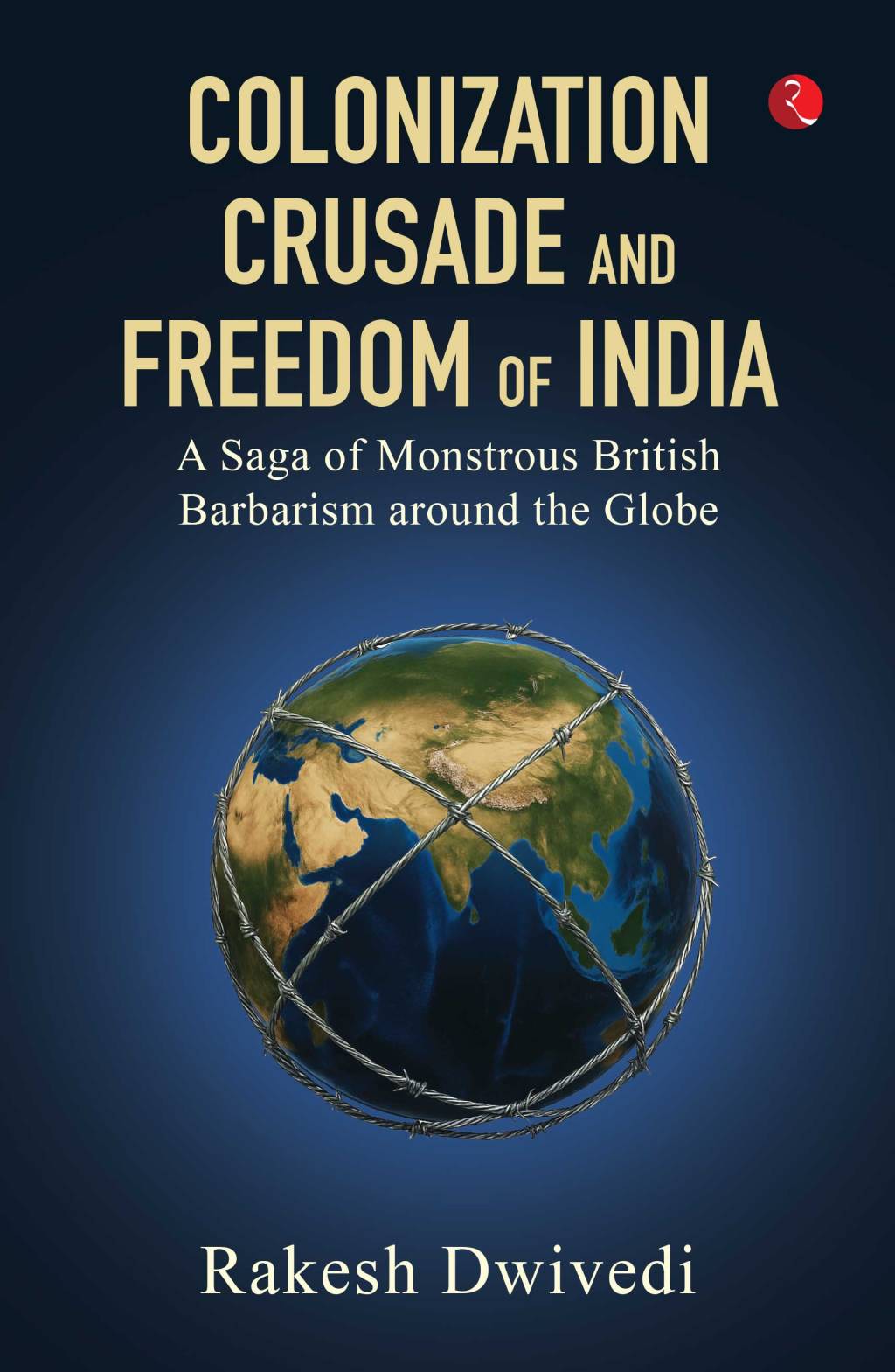
In an age when the legacies of empire are being re-examined around the world, Rakesh Dwivedi offers a scorching intervention. His latest book tears down the romantic mythologies surrounding British rule in India and replaces them with an unsentimental portrait of conquest driven by greed, racial arrogance and geopolitical ambition.
Where many histories of the Raj soften the edges or lean on familiar narratives, Dwivedi takes the opposite route: he writes to unsettle, to confront, and to restore the moral weight of colonial violence. The result is a book that feels both urgent and necessary.
A History That Refuses Amnesia
Dwivedi begins by dismantling the most enduring imperial lie—that British rule was a “civilizing mission.” Through a meticulous reading of official archives, military correspondence and global political records, he shows how the empire cloaked famine, plunder and coercion in the language of benevolence.
What lifts this book above routine anti-colonial critiques is its global framing. Dwivedi insists that India’s story cannot be told in a vacuum. Instead, he situates it within a wide canvas that includes the slave economies of America, the colonization of Africa, and the resource wars that reshaped Asia and the Middle East. It is an ambitious, sweeping approach—and one that exposes the empire not as a uniquely Indian experience but as part of a larger worldwide machinery of extraction and control.
Rewriting the Road to Freedom
The chapters on India’s path to independence are among the strongest. Dwivedi traces how international rivalries, World War alliances and shifting British priorities shaped every major decision—from repression and reform to the hurried, catastrophic Partition. By relying on declassified records and less-studied diplomatic cables, he makes the case that India’s freedom was not gifted but strategically conceded under global pressure.
These insights are delivered with clarity and conviction. Dwivedi’s legal training shows in the precision of his argumentation, the crispness of his evidence, and his ability to unmask contradictions in official British accounts.
A Voice Both Scholarly and Combative
Stylistically, the book is bold, even confrontational. Dwivedi writes with a moral intensity that some readers will find invigorating and others may consider provocative. But even when the prose sharpens into accusation, it avoids slipping into polemic. Instead, he anchors his arguments in carefully curated historical material.
A Timely Reclamation of Truth
At a moment when debates over colonialism are being revived—from museum restitution to curriculum reform—Dwivedi’s work arrives as a significant contribution. It demands that readers rethink the foundations of modern India and question the sanitized versions of empire that continue to circulate in public memory.
This is not a gentle or comforting book. It is a powerful, necessary corrective—one that forces us to confront the real costs of empire and the intertwined global forces that shaped India’s long march to independence.
Verdict
A sweeping, forceful, deeply researched work that challenges the myths of British rule and reclaims a narrative long buried beneath imperial propaganda. Essential reading for anyone interested in history, geopolitics, or the unfinished debates around colonialism.


 Bookshotsapp
Leave a comment