
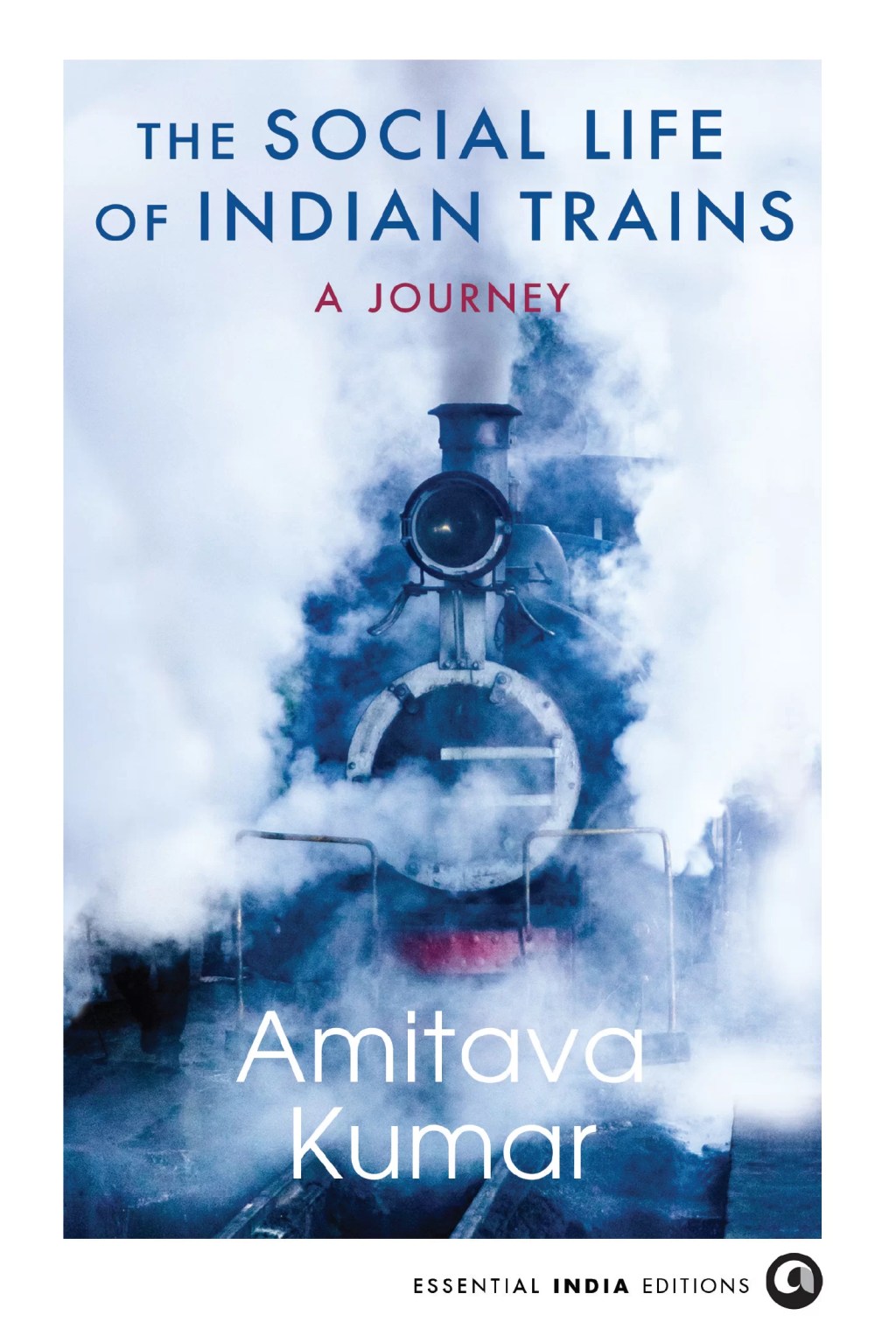
Anyone who has ever sat by an Indian train window knows that it’s more than just a seat—it’s a front-row view into the beating heart of the country. There’s something comforting in the clatter of wheels, the chai calls drifting through the aisles, the sudden flash of paddy fields, towns, and far-off hills. In his latest book, Amitava Kumar taps straight into this shared nostalgia and transforms it into an unforgettable reading experience.
This isn’t just a book about railways. It’s a journey—slow, reflective, full of unexpected moments—guided by a writer who sees India not just with his eyes, but with a traveller’s curiosity and a novelist’s compassion.
More Than 150 Years of History—Told Through People, Places, and Stories
Kumar begins with a startling but beautiful truth: Indian train history is older than India itself. Before we were a nation, we were a vast stretch of railway lines, stitching together landscapes, languages, and lives.
Reading this, you sense the weight of that history—but Kumar never lets it feel heavy. He writes about the railways the way one might write about an old friend, someone who has quietly been part of our lives for generations. The facts blend seamlessly with anecdotes, memories, and moments that feel as real as the train journeys we’ve each taken.
Travelling to Understand a Nation
To truly explore what trains mean to India, Kumar boards some of the country’s most iconic routes. One of the highlights is the Himsagar Express—the monster of a train that begins in the snowy stillness of Kashmir and ends at the windswept tip of Kanyakumari.
Then there’s the Darjeeling Himalayan Railway, a tiny mountain train that looks delicate but carries on its back a century of stories, music, films, and childhood dreams. Through these trips, Kumar gently reminds us that every station is a world, every compartment a small universe of strangers sharing tea, space, silence, and sometimes their lives.
Why Trains Still Matter—Maybe More Than Ever
What makes the book so relevant is Kumar’s clarity about the future. India is on the move—literally. Millions are leaving home in search of work, returning for festivals, visiting family, chasing opportunities, escaping circumstances, or simply exploring. And for most of them, the train isn’t just an option—it’s the only affordable bridge between their past and their hopes.
Kumar captures this beautifully. The train becomes a metaphor for movement, migration, dreams, and survival. It becomes a place where India’s diversity isn’t theoretical—it’s sitting next to you, sharing a meal wrapped in newspaper.
Kumar’s Voice: Patient, Observant, and Full of Heart
Amitava Kumar has written across genres—novels, essays, reportage—and his range shows here. There’s a gentle rhythm to his prose, a willingness to pause and observe. He is as comfortable describing the technical miracle of India’s rail network as he is capturing the quiet loneliness of a traveller staring out into the dusk.
Kumar is a writer who pays attention—to the small, the overlooked, the delicate. His eye for detail and his deep empathy turn what could have been a dry history into something warm and unmistakably human.
A Book for Anyone Who Has Ever Watched the World Pass From a Train Window
More than anything else, this book reminds you what it feels like to travel slowly, to watch India unfold mile by mile. It’s a celebration of a country held together by steel tracks and shared experiences.
If you’ve ever:
- Shared a berth with strangers
- Waited for your stop while half-asleep
- Held a warm cup of train-side chai
- Or watched a sunset from a moving train
…this book will feel like revisiting a memory you didn’t know you missed.
Amitava Kumar’s exploration of Indian trains is thoughtful, warm, and quietly profound. It’s a story about a country in motion and the railways that carry its people, dreams, anxieties, and ambitions. It reminds you that India isn’t just defined by its borders, but by the journeys that connect us.
Full of insight and heart, this book is a must-read for anyone who loves travel, history, or simply a beautifully told story about a nation that never stops moving.

 Bookshotsapp
Leave a comment