
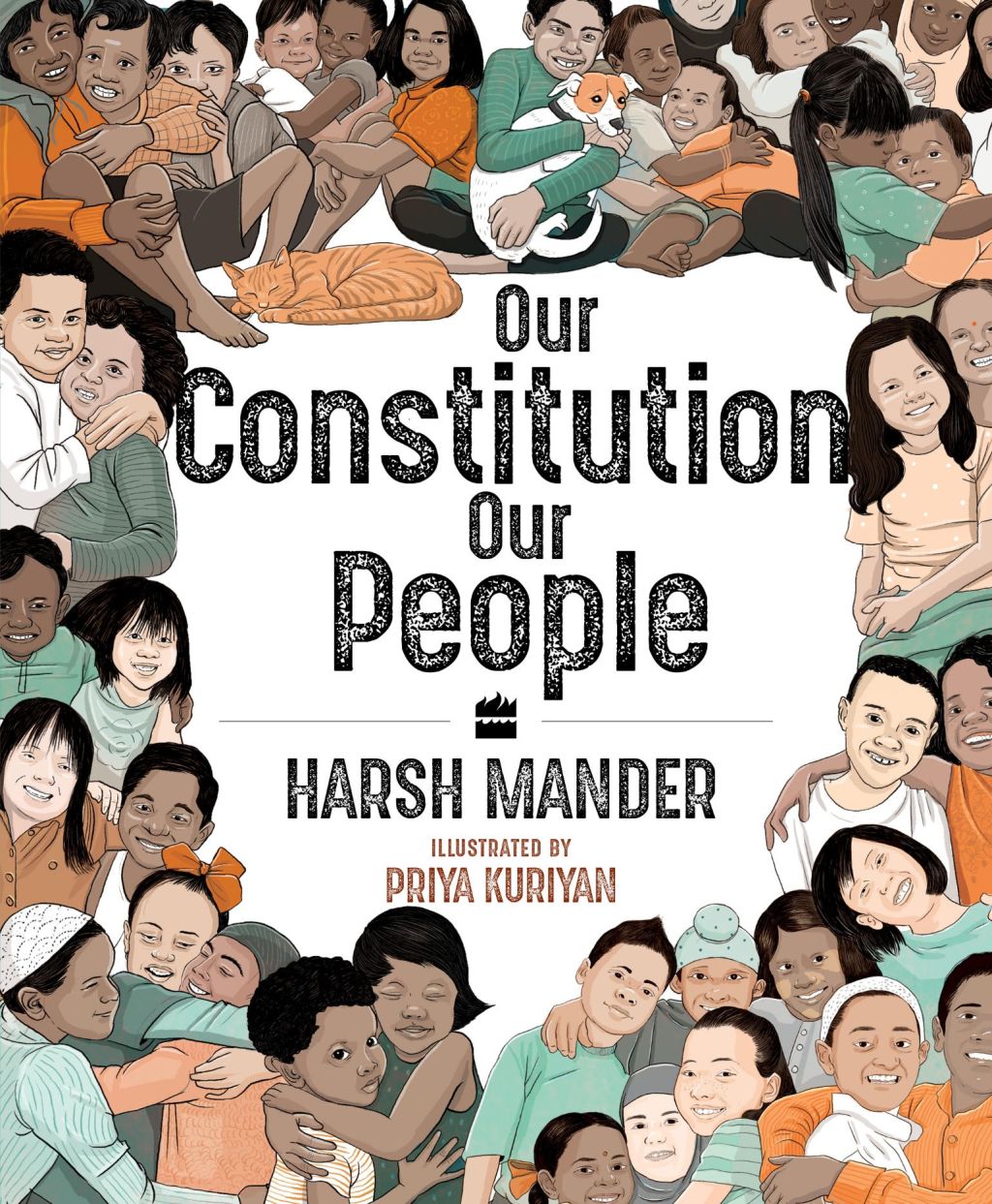
In an age when words like freedom, democracy, and equality are often invoked loudly but understood thinly, Harsh Mander’s book on the Constitution of India arrives with quiet moral clarity. Written for children, yet deeply resonant for adults, the book does something rare: it turns the Constitution from a distant legal document into a living, breathing promise—one that speaks to kindness, justice, and shared belonging.
This is not a textbook. Nor is it a simplified civics lesson. It is a gentle invitation to young readers to understand the soul of India.
The Constitution as a Moral Vision
At the heart of the book lies a powerful idea: the Constitution of India is not merely a set of rules, but a dream and a vision shaped by compassion and courage. Harsh Mander presents the Constitution as a moral framework that asks every citizen—especially the youngest ones—to imagine what a truly equal and just society might look like.
Rather than overwhelming children with articles and clauses, the narrative focuses on values. Freedom is explained not as the absence of control, but as dignity and voice. Equality is not presented as sameness, but as the recognition of the equal worth of every human being. Justice is framed not as punishment, but as fairness and care for the most vulnerable.
In doing so, the book stays true to the radical spirit of the Constitution, especially the transformative vision brought by Dr. B. R. Ambedkar—most notably the abolition of untouchability and the insistence that no human life is lesser than another.
A Gentle Radicalism for Young Minds
One of the book’s greatest strengths is its courage to speak honestly to children. It does not shy away from difficult truths about discrimination, exclusion, and historical injustice. Yet it never becomes heavy or accusatory. Instead, it speaks in a language of empathy.
Harsh Mander draws deeply from the moral inheritance of Mahatma Gandhi and the constitutional framers, emphasising ideas of radical love, equal respect for all faiths, and the equal belonging of people of every religion, caste, gender, and background. These are not presented as abstract ideals, but as living values that children can recognise in their daily lives—in classrooms, playgrounds, neighbourhoods, and friendships.
The result is a form of gentle radicalism: firm in its values, yet tender in its tone.
Illustrations That Breathe Life into Ideas
Priya Kuriyan’s illustrations are not decorative additions; they are an integral part of the book’s storytelling. Her visual language mirrors the gentleness and hope of the text, celebrating India’s diversity with warmth and joy.
Children of different backgrounds, abilities, and identities appear naturally in her illustrations, not as symbols but as everyday companions in a shared world. The visuals celebrate coexistence—people eating, playing, learning, and living together—quietly reinforcing the idea that diversity is not something to be managed, but something to be cherished.
Kuriyan’s art never overwhelms the words. Instead, it opens emotional doorways, allowing young readers to feel the Constitution before they fully understand it.
Citizenship as Compassion
Perhaps the most moving aspect of the book is its understanding of citizenship. Citizenship here is not reduced to voting, obeying laws, or knowing national symbols. It is presented as an ethical relationship—with others and with the country itself.
To be a citizen, the book suggests, is to care. To speak up when someone is treated unfairly. To respect difference. To refuse cruelty. To choose kindness even when it is difficult.
This approach makes the book particularly relevant for our times, when children are growing up amidst polarisation and noise. Instead of fear or nationalism built on exclusion, the book offers patriotism rooted in responsibility and empathy.
Why This Book Matters Now
While written for children, this book feels urgently necessary for adults as well. It reminds parents, teachers, and policymakers of the values we claim to uphold—and often forget to practice.
At a time when the Constitution is frequently reduced to slogans or selectively invoked, this book returns it to its original moral ground. It reminds readers that the Constitution was meant to protect the weakest, dignify the marginalised, and bind a deeply diverse nation through shared ethical commitments.
Final Thoughts
Harsh Mander and Priya Kuriyan have created more than a children’s book. They have created a quiet act of constitutional faith.
This book does not tell children what to think. It invites them to imagine the India they wish to grow into—an India that is tall and strong, yet humble; diverse, yet united; firm in justice, yet soft in compassion.
In doing so, it plants a seed far more powerful than information: a moral imagination rooted in equality, love, and hope.
This is a book every child should read—and every adult should revisit.



 Bookshotsapp
Leave a comment