
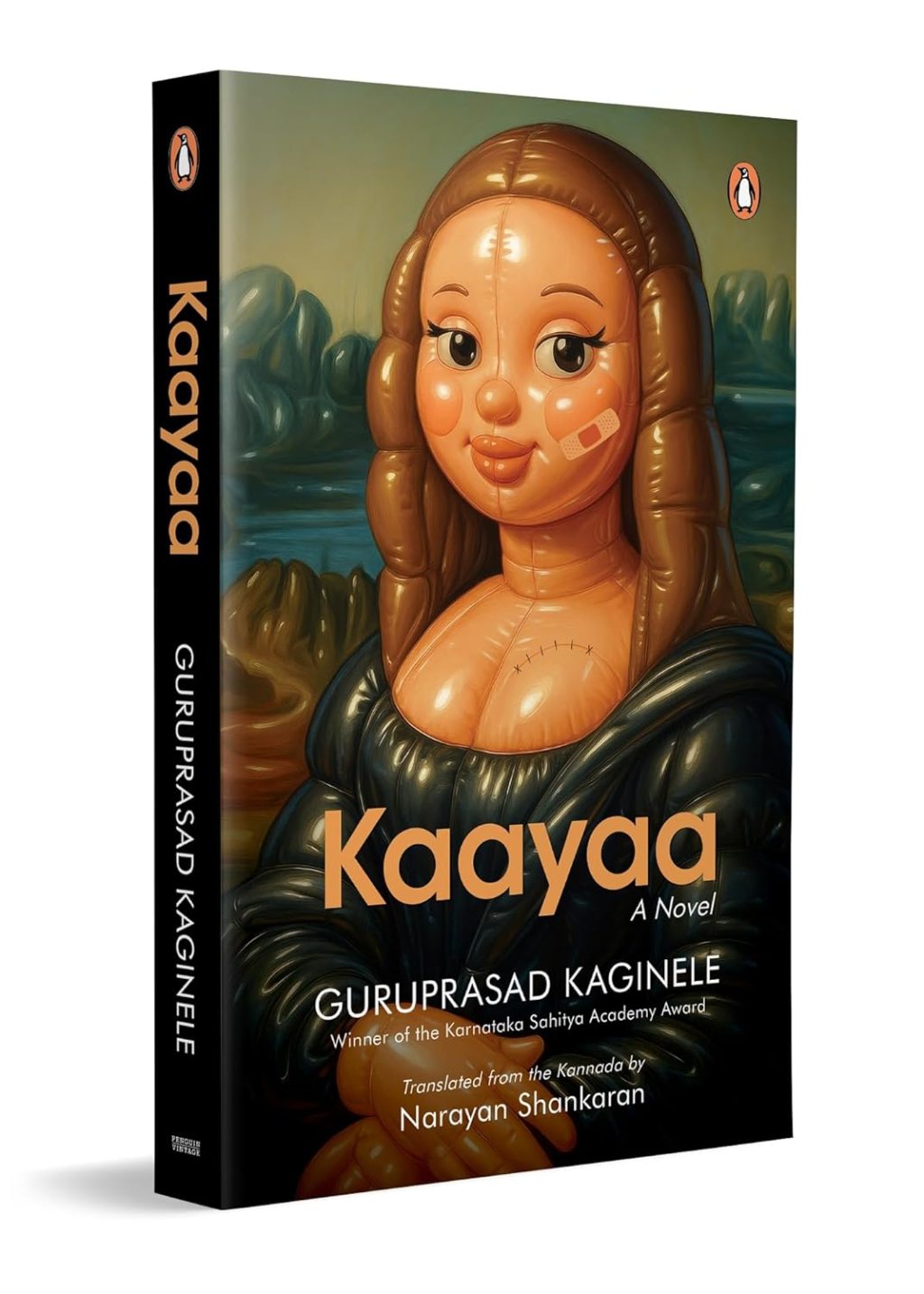
In Kaayaa, Guruprasad Kaginele offers a novel that cuts deep—sometimes uncomfortably so—into the modern obsession with the body, power, desire and reputation. Set largely in the polished, ruthless world of Manhattan’s elite, the novel uses the profession of plastic surgery not merely as a backdrop but as a central metaphor for a civilisation obsessed with surfaces and corrections.
At the heart of the story is Dr Bheem Malik, a celebrated plastic surgeon whose hands sculpt bodies the way an artist shapes marble. His clientele consists of Manhattan’s wealthy and powerful, people who believe beauty can be engineered and perfection purchased. Malik himself seems to embody the American dream: professional success, social prestige, a wife whose body bears his signature as much as his love, and a formidable mother-in-law, Kasturi, a US senator with political ambitions of her own.
This carefully constructed life begins to collapse when Malik’s name surfaces in a MeToo scandal. What follows is not a courtroom drama or a sensational exposé, but something far more unsettling: a slow unravelling of identities, relationships and moral certainties. As Malik’s career teeters on the edge and Kasturi’s political future is threatened, both are forced to confront the pasts they have carefully buried and the compromises they have normalised. The novel asks a piercing question: when everything is reduced to image, ambition and survival, what happens to love, guilt and responsibility?
One of Kaayaa’s greatest strengths lies in its refusal to offer easy moral positions. Kaginele does not present heroes and villains; instead, he gives us deeply flawed individuals navigating a world where ethics are elastic and intimacy is transactional. Bodies in this novel are not just flesh—they are currency, battlegrounds and symbols of control. The repeated surgical interventions mirror the emotional and psychological “corrections” the characters attempt on their own lives.
Despite being set in the United States, Kaayaa never feels distant to Indian readers. Migration, assimilation and the quiet erosion of inherited values run beneath the narrative. As Vasudhendra aptly notes, what initially appears to be an “American story” gradually reveals itself as a mirror held up to the Indian middle class, especially those seduced by global success and status. The American dream here is not glamorous; it is exhausting, hollow and often brutal.
Kaginele’s prose—smooth yet sharp—carries a distinctive “gentle violence,” as B. Jeyamohan describes it. The novel moves briskly through scandal and shifting loyalties, but beneath that momentum lie deeper philosophical concerns: the separation of body and soul, the commodification of desire, and the frightening possibility that love itself may have lost its meaning. There is a satirical edge throughout, but it never dilutes the underlying tragedy of being human in an age obsessed with appearances.
Narayan Shankaran’s translation deserves special mention for preserving the novel’s tonal complexity and cultural texture. The language remains accessible without flattening the moral and emotional ambiguities that make Kaayaa so compelling.
Ultimately, Kaayaa is not just a novel about plastic surgery, politics or scandal. It is a meditation on what it means to live in a world where bodies are endlessly modifiable but inner fractures remain stubbornly resistant to repair. Stark, unsettling and deeply thought-provoking, Kaayaa confirms Guruprasad Kaginele as a writer unafraid to confront the uncomfortable truths of contemporary life—and to remind us that beauty, indeed, is never more than skin-deep.

 Bookshotsapp
Leave a comment