
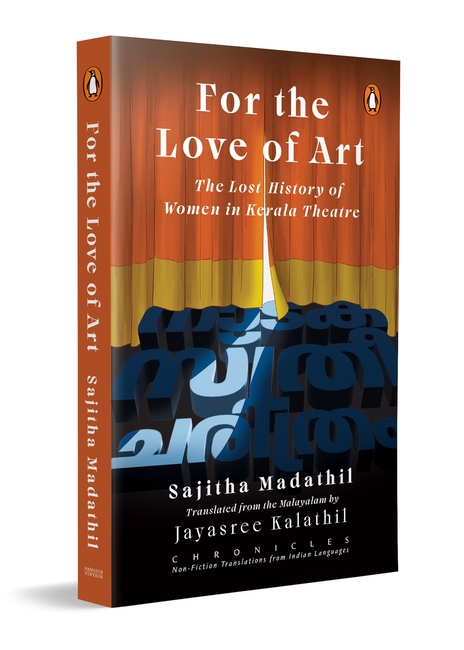
NEW DELHI: A new book, For the Love of Art (Chronicles Series): The Lost History of Women in Kerala Theatre, brings to light the long-erased contributions of women who transformed Malayalam theatre from the margins to the centre stage. Written by theatre practitioners and scholars Sajitha Madathil and Jayasree Kalathil, the book offers a powerful feminist re-reading of Kerala’s theatrical history.
For centuries, Malayalam theatre remained an overwhelmingly male domain, where men not only controlled authorship and direction but also performed female roles. Women, when finally allowed entry, were expected to embody emotion without agency—actors without authorship, presence without power. For the Love of Art challenges this narrative, documenting how women gradually but decisively reshaped theatre as performers, playwrights, organisers, and cultural workers.
Drawing on archival fragments, oral histories, personal memories, and forgotten performances, Sajitha Madathil uncovers a submerged lineage that connects art with activism and performance with protest. The book traces how women’s entry into theatre became an act of resistance—against patriarchal control, moral policing, and the denial of creative ownership.
Rather than presenting women as late entrants or passive participants, the authors argue that women are the rightful creators and owners of cultural capital in Kerala’s theatre history. Their labour, imagination, and political courage, long ignored by mainstream historiography, emerge here as central to the evolution of modern Malayalam theatre.
Part of the Chronicles Series, For the Love of Art is both a historical correction and a confrontation—asking urgent questions about visibility, authorship, and whose stories get preserved. It is an essential read for those interested in theatre studies, gender history, cultural politics, and the intersections of performance and feminism in India.
The book arrives at a moment when conversations around women’s agency in cultural spaces are gaining renewed urgency, making this excavation of the past a timely intervention in the present.




 Bookshotsapp
Leave a comment