
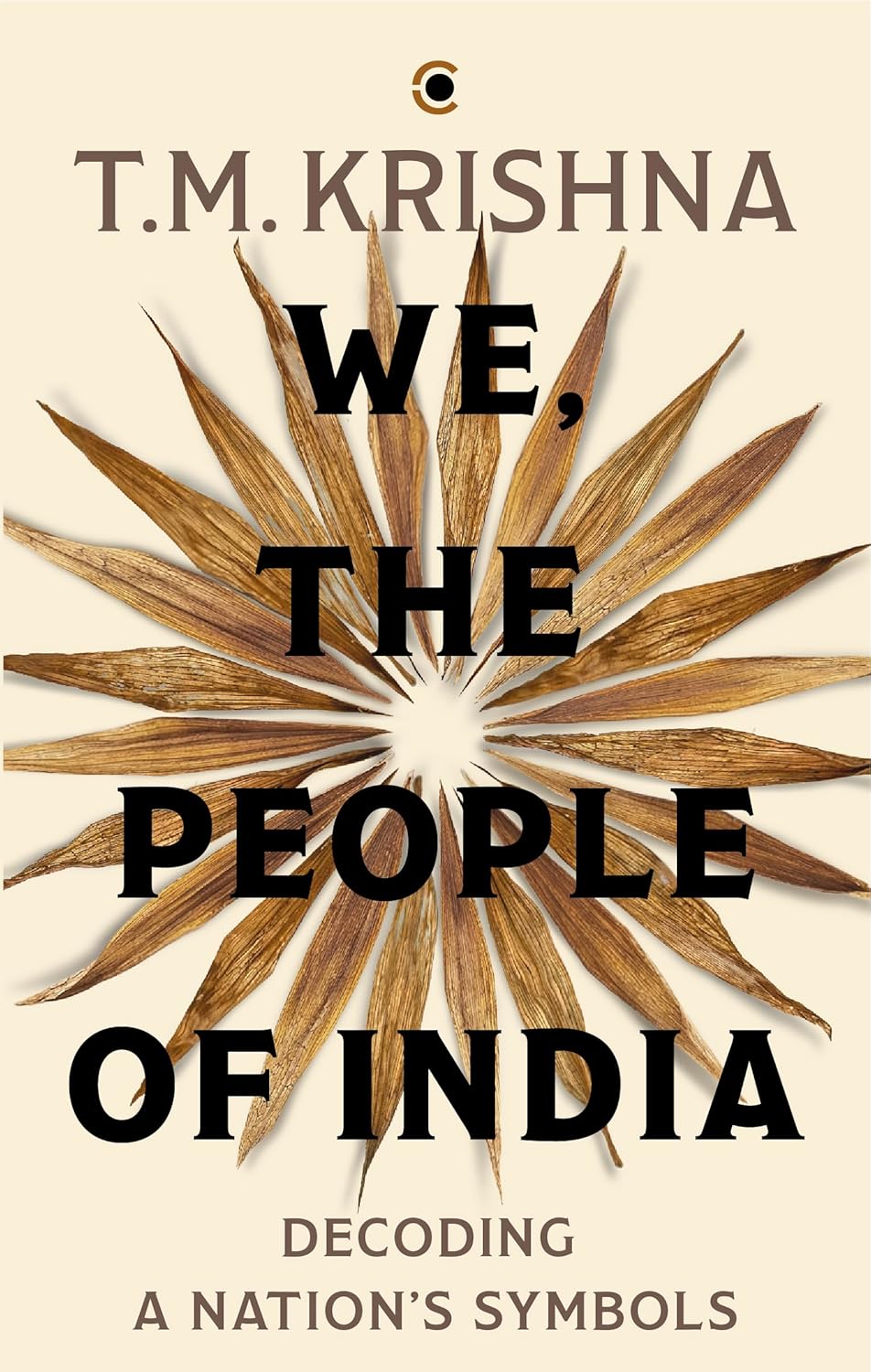
India didn’t just gain independence in 1947—it inherited trauma, urgency and the impossible task of defining itself overnight. While borders were drawn and states stitched together, another quiet but powerful debate unfolded: How does a newly free people see itself? The answers would live on in symbols we now take for granted—the flag, the anthem, the emblem, the motto and the words We, the People.
In We, the People of India, acclaimed musician and cultural thinker T.M. Krishna pulls back the curtain on these familiar icons and asks uncomfortable, necessary questions: Who decided these symbols? Why these choices? And what do they mean for us now?
What began as curiosity quickly turned into a rigorous investigation. Faced with missing records and vague explanations, Krishna dug deeper—through archives, persistent questioning and even RTI applications—to uncover the debates, disagreements and philosophies that shaped India’s national identity. From the decision to place the chakra (not the charkha) at the centre of the tricolour, to the symbolism of the Ashoka lions, the crafting of the Constitution’s preamble, and the adoption of Satyamev Jayate and Jana Gana Mana, the book traces how each emblem emerged from dialogue, tension and compromise.
Krishna doesn’t treat these symbols as sacred relics. Instead, he presents them as living, evolving ideas—ones that continue to provoke debate, especially in light of contemporary controversies such as Vande Mataram. His writing invites readers not just to remember history, but to actively engage with it.
Written with intellectual rigour, emotional depth and striking clarity, We, the People of India is a deeply reflective meditation on democracy, constitutionalism and representation—and a reminder that national identity is not fixed, but continuously negotiated.
About the Author
Thodur Madabusi Krishna is one of India’s most distinctive voices in Karnatik music—at once deeply rooted in tradition and boldly experimental. Beyond music, he is a fearless public intellectual who uses his art and voice to challenge structural inequality and cultural complacency. Through groundbreaking collaborations, festivals and performances across social boundaries, Krishna consistently asks what culture is, who it belongs to, and who gets left out.
We, the People of India is not just a book about symbols. It’s an invitation to rethink what it truly means to belong to a democracy.


 Bookshotsapp
Leave a comment