
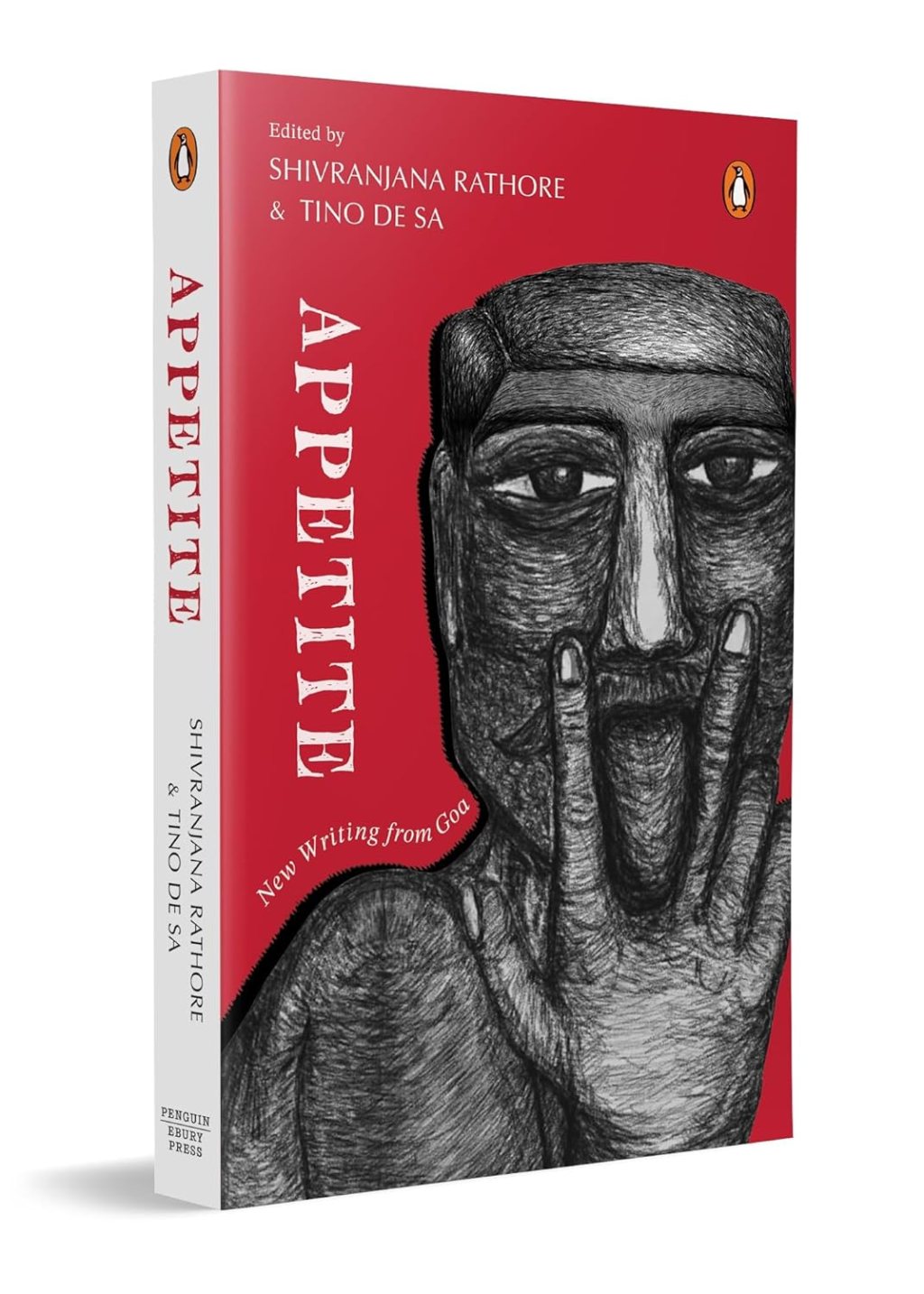
In Indian popular imagination, Goa is often reduced to a postcard—sun, sand, leisure, escape. Its inner lives, contradictions, private negotiations and everyday hungers are rarely heard on their own terms. As the state undergoes visible social, cultural and political shifts, Appetite: New Writing from Goa arrives as a timely literary intervention, offering a rare record from within.
Published by Penguin Random House India and releasing in January, Appetite is a bold new anthology edited by Shivranjana Rathore and Tino de Sa. Bringing together short stories, poems and essays by some of Goa’s most distinctive literary voices—spanning generations, forms and lived experiences both within and beyond the state—the collection turns its gaze inward, away from the tourist lens, to capture Goa as it is lived, remembered and contested today.
Hunger as Metaphor and Method
At the heart of the anthology lies the idea of appetite—understood expansively. Across its pages, hunger appears in many forms: for food, intimacy, belonging, selfhood, creative expression and resistance. The pieces move fluidly between the deeply personal and the quietly political, revealing how desire shapes both private lives and public realities.
Essays written during the isolation of the COVID years reflect on food, dating, love and loneliness. Short fiction inhabits domestic spaces, late-night family meals and intergenerational tensions. Poetry traces desire, resentment and unease, including a striking contemporary poem that responds directly to the rise of conservatism in India. Together, these works form a textured portrait of a society negotiating change.
A State in Transition
Rooted in Goa’s layered history yet sharply attentive to its present, Appetite reflects a region in flux. Questions of in-migration and diaspora, shifting cultural norms, sexuality, faith and political pressure surface organically through lived experience rather than nostalgia. What emerges is not a singular or romanticised Goa, but a plurality of voices—coexisting, arguing, remembering and imagining.
The anthology situates Goa firmly within contemporary Indian literary conversations around identity, belonging and cultural change, resisting the marginalisation of the state as merely a site of consumption. Instead, it asserts Goa as a thinking, writing, questioning space.
A Collective Literary Gesture
Created by members of the Goa Writers collective, Appetite resists any fixed definition of Goan identity. Its strength lies in its diversity—across form, generation and perspective—and in its insistence on literature as a democratic space where complexity is not smoothed over, but held.
Early responses to the book have underscored its significance. Poet and cultural theorist Ranjit Hoskote describes it as “a vibrant polyphony of fiction, poetry, and essays” that captures “the pulse of Goa’s cultural and political present.” Writer and poet Sumana Roy calls it “a delicious history of habit and habitat — of the mouth, and of Goa.”
About the Editors
Shivranjana Rathore is a writer and artist based in Goa. Her practice, rooted in existentialism and often leaning toward the absurd and surreal, spans books, comics, zines and installations. She is currently developing Sense of a Place, a multi-medium project exploring place-making through embodied experience.
Tino de Sa, an IAS officer, is a two-time winner of the Times of India National Short Story Competition. He has authored three books and was shortlisted for the 2025 Commonwealth Short Story Prize. His poems have appeared in anthologies in India and internationally.
Writing Goa Anew
More than an anthology, Appetite: New Writing from Goa is a statement of literary presence. By foregrounding voices that speak from within the state, it challenges reductive narratives and expands the space for Goa in contemporary Indian writing. For readers seeking literature that is attentive, rooted and unafraid of contradiction, Appetite offers an essential and resonant reading experience.
 Bookshotsapp
Leave a comment