
Something fundamental is breaking. Borders are hardening even as power slips beyond them. Democracies feel hollowed out, liberal ideals exhausted, and the promise of the nation-state—security, belonging, political voice—appears increasingly unfulfilled. Across continents, people sense that the rules governing the world no longer work, yet no one seems to know what comes next.
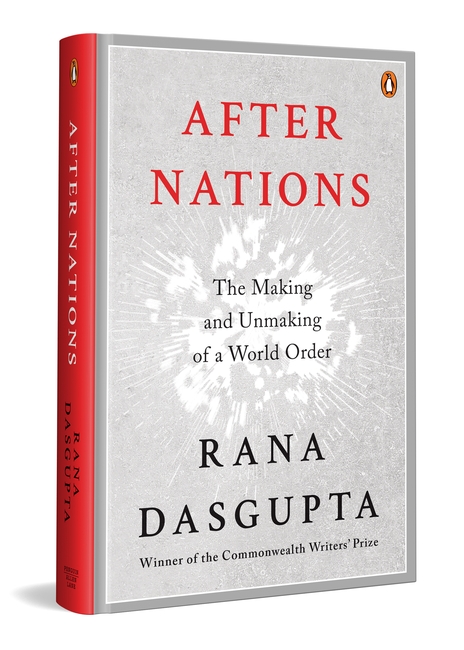
In After Nations, Rana Dasgupta offers a bracing diagnosis of this global moment, arguing that we are witnessing not a temporary crisis, but the slow collapse of the nation-state system itself.
The Unravelling of a World Order
As American hegemony wanes, Western societies retreat into anxiety—marked by xenophobia, debt, and political paralysis. Liberal institutions lose legitimacy, while powerful autocratic states such as China, Russia, and the UAE consolidate influence with startling confidence. For millions abandoned by failing states, survival lies only in perilous migration, revealing a world order that produces fewer protections and far greater dangers.
Dasgupta shows how these crises are interconnected—symptoms of a system no longer capable of governing a globalized, unequal, and ecologically fragile world.
How We Got Here
Moving with sweeping historical clarity, After Nations traces the long arc of political organization:
- from the fall of ancient empires
- through the rise of European ideas of law, money, and sovereignty
- to the modern nation-state and its twentieth-century dominance
- and finally to the twenty-first century, where technology corporations rival states, and Chinese power is dramatically restored
This is not a nostalgic history, but a forensic one.
Citizenship Beyond Borders
If the nation-state is failing, what replaces it? Dasgupta does not offer easy answers, but he insists that new forms of citizenship, law, and economic organization are no longer optional. They are essential if human beings are to regain political agency in a world shaped by global capital, digital platforms, climate breakdown, and mass displacement.
His argument is urgent but measured, visionary yet grounded in history.
A Book for This Moment
Written with intellectual force and moral seriousness, After Nations speaks to readers across politics, history, economics, and culture. It explains not only why democracy feels weaker, but why our sense of collective control has diminished—and why restoring it requires thinking beyond the nation itself.
About the Author
Rana Dasgupta is the author of two novels and a celebrated non-fiction portrait of twenty-first-century Delhi. A former visiting fellow at Princeton University and visiting lecturer at Brown University, he is an internationally respected essayist whose work has appeared in The Guardian, New Statesman, and BBC.com. His writing has won the Windham Campbell Prize, the Commonwealth Prize, and the Ryszard Kapuściński Award. He lives in Delhi.
 Bookshotsapp
Leave a comment