
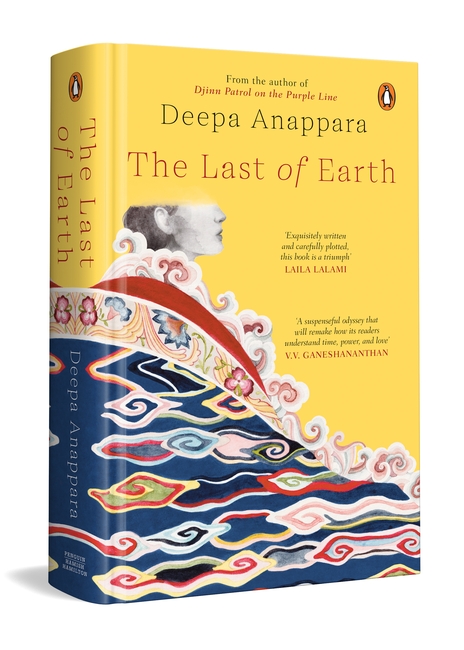
Before satellites and sealed borders, before maps pretended to certainty, there were blank spaces that terrified empires. In 1869, Tibet was one such place—closed, forbidden, and obsessively desired by the British Empire. Into this high-altitude silence stepped men and women in disguise, carrying compasses, secrets, and ambitions that could cost them their lives. The Last of Earth is the story of one such journey—where friendship, obsession, and imperial hunger collide at the edge of the known world.
When the Map Ends, the Story Begins
1869. Tibet is sealed shut to Europeans—an unyielding blank space on the maps of the British Empire. But where white men are forbidden, Indian bodies are deployed. Trained as surveyors and spies, Indians are sent into the high Himalayas to chart rivers, passes, and frontiers—often at the cost of their lives.
A Spy, a Friend Lost, and a Dangerous Bargain
Balram, a schoolteacher turned covert surveyor, has spent years risking everything for the British. His closest companion, Gyan, vanished on a previous mission and is believed to be imprisoned somewhere inside Tibet. Haunted by guilt and loyalty, Balram makes a fateful choice: he agrees to guide an English captain on a reckless journey into the forbidden land—a mission driven less by strategy than by imperial vanity.
A Woman Who Refuses to Be Erased
Their path collides with that of Katherine, a fifty-year-old Western woman traveling in disguise. Barred from recognition by the all-male Royal Geographical Society, she is determined to do the impossible: become the first European woman to reach Lhasa. In a world that denies her both authority and legacy, she chooses danger over disappearance.
Into the White Silence of Tibet
As Balram and Katherine press deeper into the mountains, Tibet reveals itself as both breathtaking and merciless. Snowstorms and bandits, frostbite and fever, wild animals and imperial soldiers test their bodies and their resolve. Each step forward strips away certainty, forcing them to confront ambition, grief, and the moral cost of survival.
Empire, Ambition, and the Question of Legacy
Told through multiple voices, The Last of Earth is a sweeping meditation on how humans seek to leave their mark—through maps and measurements, through love and friendship, through obsession and conquest. It interrogates the egomania of empire while honoring the quieter, enduring bonds that resist erasure.
A Landmark Novel of Exploration and Reckoning
By turns thrilling, intimate, and devastating, The Last of Earth blends historical adventure with piercing emotional depth. With this novel, Deepa Anappara confirms herself as one of the most daring and accomplished storytellers of our time—reclaiming lost histories and illuminating the human cost of drawing lines on a map.
About the Author
Deepa Anappara is an award-winning journalist and internationally acclaimed novelist whose work explores power, invisibility, and the lives shaped by systems of control.
Her debut novel, Djinn Patrol on the Purple Line, was named one of the Best Books of the Year by The New York Times, The Washington Post, Time, The Guardian, and NPR. The novel won the Edgar Award for Best Novel, was longlisted for the Women’s Prize for Fiction, shortlisted for the JCB Prize for Indian Literature, and was included in Time’s 100 Best Mystery and Thriller Books of All Time. It has been translated into more than twenty languages, marking Anappara as a major global literary voice.
She is also the co-editor of Letters to a Writer of Color, a powerful collection of personal essays on fiction, race, culture, and the act of writing itself.
With The Last of Earth, Anappara expands her formidable range, bringing her incisive moral vision and emotional precision to a sweeping historical canvas—illuminating forgotten histories while interrogating the enduring legacies of empire.

 Bookshotsapp
Leave a comment