
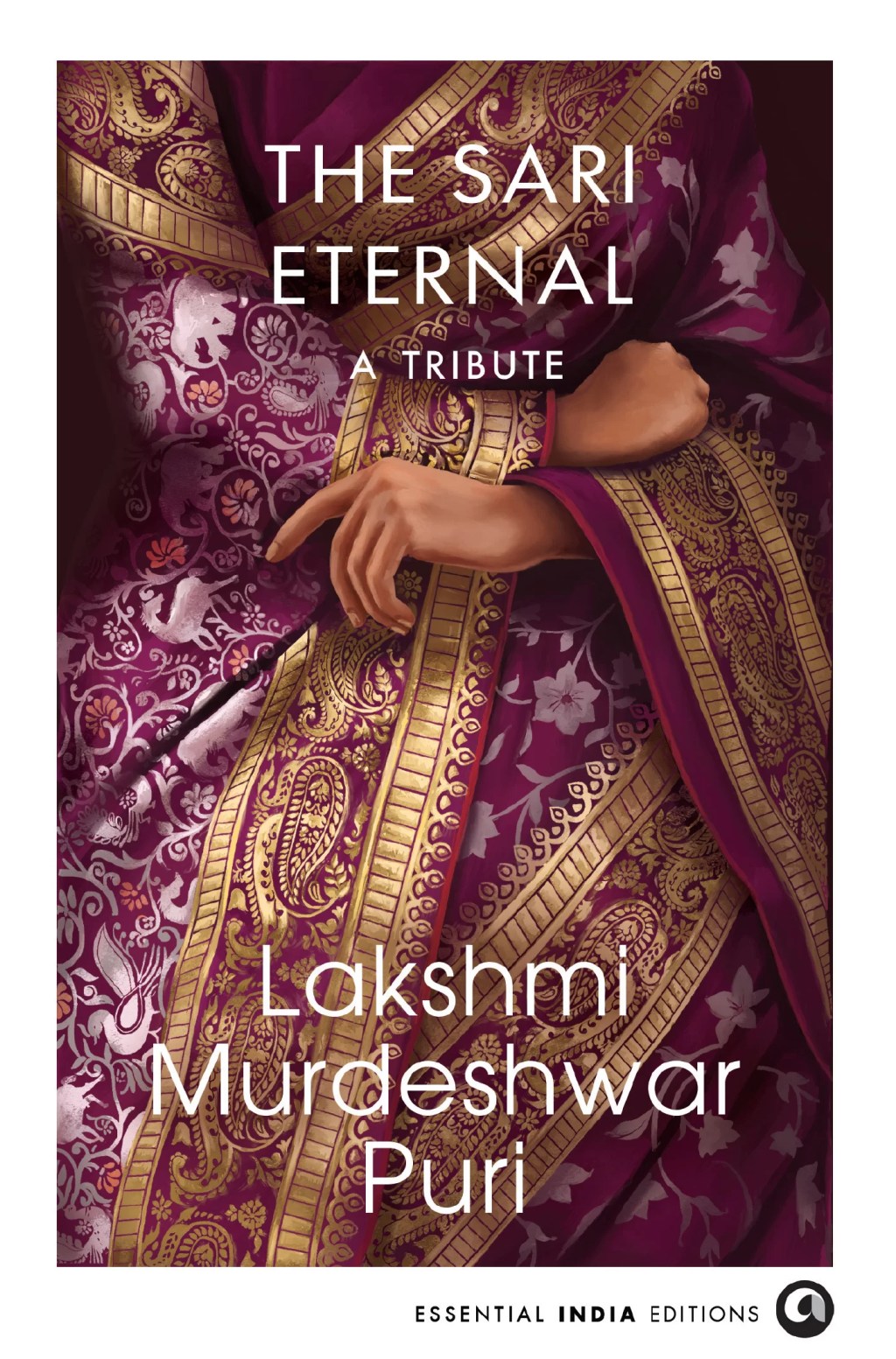
More than a garment, the sari is a civilizational inheritance—fluid, resilient and endlessly expressive. In The Sari Eternal: A Tribute, award-winning writer and diplomat Lakshmi Murdeshwar Puri offers a luminous meditation on India’s oldest surviving attire and its enduring link to the idea of Indian womanhood.
Tracing its origins to the Indus Valley civilization over 5,000 years ago, Puri explores how the unstitched fabric has travelled through time, region and imagination. From Banarasi silks and Kanjivarams to Sambalpuris and Paithanis, the sari emerges as a unifying thread binding India’s plural cultures, aesthetics and identities.
Interweaving personal memory with cultural history, Puri begins with evocative recollections of her childhood in Delhi and Kathmandu, shaped by her mother Malati’s graceful devotion to the sari. As a young woman, she recalls being inspired by Indira Gandhi’s iconic sartorial authority, and later, as an Indian diplomat abroad, consciously challenging Western norms of formal dress by choosing the sari over the expected suit or gown.
The book then widens its lens to examine the sari’s profound presence across Indian history and art—from Vedic literature and temple sculpture at Sanchi, Khajuraho and Konark to the canvases of Raja Ravi Varma, Jamini Roy and M. F. Husain. As an embodiment of feminine shakti, the sari adorns goddesses such as Lakshmi, Saraswati and Parvati, as well as queens, freedom fighters, politicians, entrepreneurs, film icons and Gen-Z influencers.
Richly researched yet deeply personal, The Sari Eternal is both cultural history and intimate tribute—celebrating the sari as a living symbol of India’s spiritual depth, aesthetic continuity and feminine power.
If you’d like, I can also offer alternative headlines—more literary, more journalistic, or tailored for a publisher catalogue or newspaper page.


 Bookshotsapp
Leave a comment