
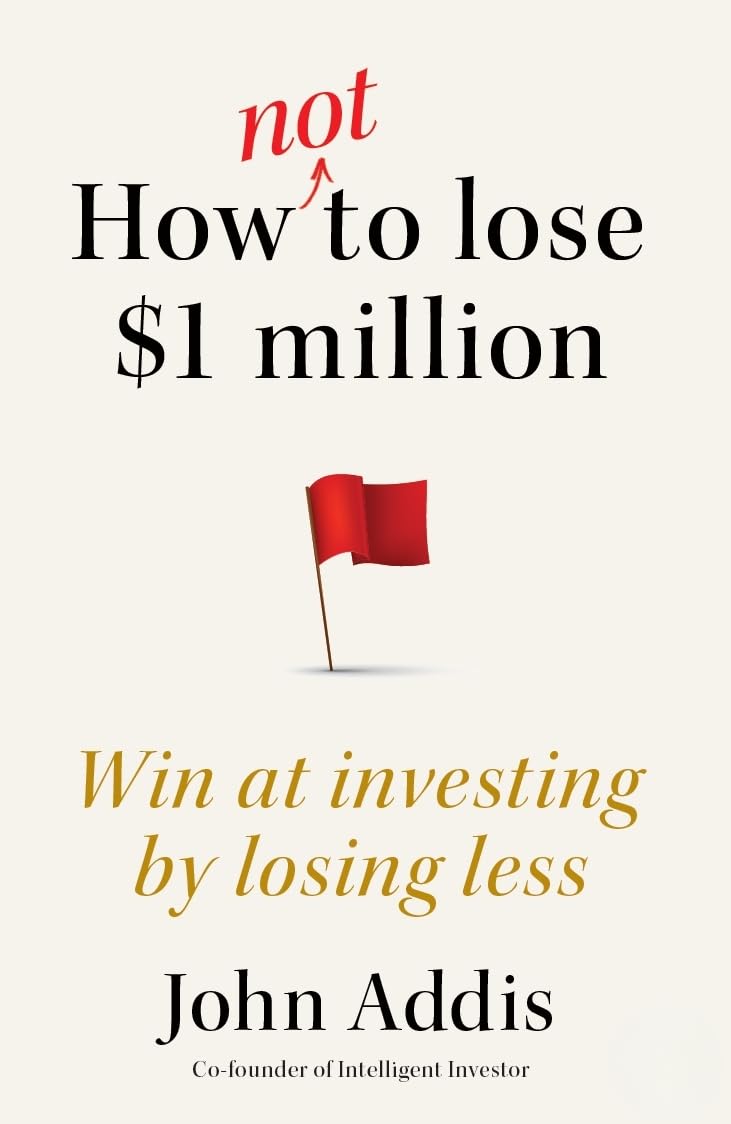
Most investors assume success comes from identifying spectacular winning stocks. John Addis argues the opposite. In How Not to Lose $1 Million, he makes the case that long-term investing success is built by controlling risk, sidestepping avoidable mistakes, and learning how losses occur.
Rather than presenting theories or ideal models, Addis draws on his own hard-earned experience—including more than $1 million lost due to poor investment decisions. With refreshing honesty, he opens up about where he went wrong and why, giving readers the chance to learn without suffering the same consequences.
The book explores a series of common but damaging investor behaviours: becoming emotionally attached to a company or a persuasive CEO, exiting positions too early while strong businesses continue to grow, failing to truly understand how a company makes money, and ignoring warning signs that appear obvious only in hindsight. These errors are not presented as abstract concepts, but as real decisions that cost real money.
Addis organises the book into four clear sections: companies he never should have bought, those he sold prematurely, those he held on to for too long, and the opportunities he missed altogether. This framework highlights a critical insight—mistakes in investing tend to repeat themselves because they stem from human behaviour rather than lack of intelligence.
One of the book’s greatest strengths is its storytelling. Addis writes with candour, self-awareness, and dry humour, making complex lessons accessible and engaging. Unlike many investment books that emphasise valuation techniques or celebrate success stories, this one focuses squarely on the psychological traps that lead investors astray.
Addis also challenges readers with an uncomfortable truth: most individuals are probably better off not managing their own money. However, for those who choose to invest independently, this book serves as a practical guide to improving judgement and discipline by avoiding the most common pitfalls.
The core message is clear—mistakes are inevitable, but they don’t have to be wasted. When examined honestly, losses become powerful teachers. How Not to Lose $1 Million offers readers the rare opportunity to benefit from decades of investing missteps without paying the same price.
Thoughtful, insightful, and grounded in real-world experience, this book is valuable for newcomers to the sharemarket, experienced investors, and anyone interested in understanding the behaviour behind investment decisions. Its lesson is not about how to strike gold—but how to protect capital and survive long enough to succeed.


 Bookshotsapp
Leave a comment