
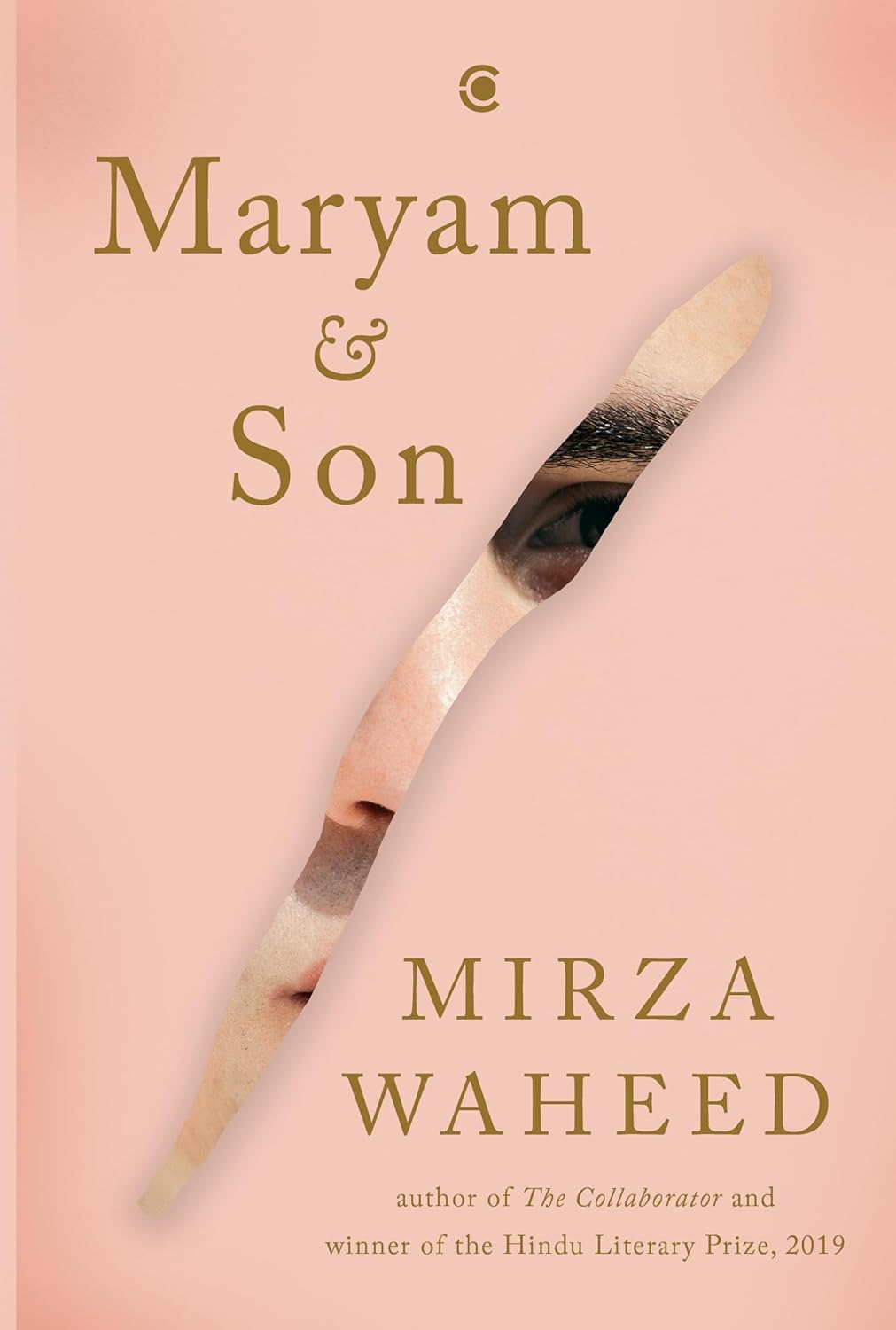
There are novels that tell stories, and then there are novels that inhabit you. Maryam & Son, the fourth novel by Mirza Waheed, belongs firmly to the latter category. Quietly devastating, psychologically rich, and threaded with dark humour and dangerous desire, this is a book that examines not war itself, but the slow-burning wreckage it leaves behind in ordinary homes—particularly in the lives of women who are never asked whether they consent to its consequences.
Set largely in London, Maryam & Son opens with an absence. One morning, Maryam Ali—a school chef, a widow, a woman whose life has been shaped by routine and responsibility—wakes to find her son’s bed empty. Dil, her only child, is gone. What begins as a mother’s fear of a missing son soon mutates into something far more unsettling: suspicion, surveillance, and the insinuation that her child may be involved in acts she can barely name, let alone understand.
From this deceptively simple premise, Waheed constructs a novel of extraordinary emotional complexity.
When the State Enters the Home
At her sisters’ urging, Maryam reports Dil missing, hoping for reassurance, for procedure, for help. Instead, officials arrive—not to comfort, but to inform. Dil may not be in London. He may be far away. He may be involved in something “unthinkable.”
What follows is not a thriller’s chase for answers, but something far more corrosive: waiting. Days stretch into weeks. Information arrives fractured, provisional, unreliable. Maryam’s home—once a space of memory and safety—becomes porous, invaded by suspicion and the quiet machinery of the state. Phones may be tapped. Movements are noted. Conversations are weighed.
Waheed is acutely attentive to how surveillance reshapes interior life. The novel captures the way fear lodges itself in the body, how language becomes cautious, how even grief feels monitored. In Maryam & Son, the state does not merely observe; it rearranges reality, forcing Maryam to question not only her son’s actions, but her own memories of motherhood itself.
A Dangerous Intimacy
Into this charged atmosphere enters Julian, the young family liaison officer assigned to Maryam’s case. He is courteous, attentive, and ostensibly supportive—but he is also the human face of the very system that now holds her son in its gaze.
What unfolds between Maryam and Julian is one of the novel’s most unsettling and compelling threads. Their attraction is unexpected, fraught, and ethically unstable. Desire here is not liberating; it is dangerous, compromised by power, grief, and asymmetry. Waheed writes this relationship with remarkable restraint, never sensationalising it, yet allowing its emotional contradictions to pulse with intensity.
Julian embodies an impossible paradox for Maryam: he offers intimacy at the very moment her life is being scrutinised and constrained. To want him is to risk betrayal—of herself, of her son, of her anger. Yet Waheed refuses to judge her for this longing. Instead, he treats desire as another form of human survival, messy and morally complicated.
War at a Distance, Grief at Close Range
While American bombs fall on Mosul, the violence in Maryam & Son remains largely offstage. Waheed deliberately avoids spectacle. The novel is not interested in geopolitical explanation or ideological debate. Its focus is narrower, sharper, and ultimately more devastating: what happens to the families left behind.
Maryam’s grief is suspended in a cruel limbo. She does not know if her son is alive or dead, guilty or innocent, radicalised or lost, victim or perpetrator. This uncertainty becomes its own form of torment. How does one mourn without facts? How does one love without certainty? How does a mother grieve a child she may never have fully known?
These questions sit at the novel’s moral centre, and Waheed approaches them with rare tenderness. There are no easy resolutions here—only the slow, painful reckoning with the limits of knowing those we love most.
Memory, Humour, and Resistance
As the present becomes unbearable, Maryam retreats into memory. Through her recollections—of marriage, motherhood, sisterhood—Waheed builds a textured inner life that resists reduction to headlines or case files. Maryam is not a symbol; she is sharp, funny, resentful, loving, and stubbornly alive.
One of the novel’s quiet triumphs is its use of humour. Even in moments of despair, Maryam’s voice crackles with wit and observation. This humour does not soften the pain; it sharpens it, reminding us that grief coexists with life’s absurdities.
Ultimately, Maryam & Son is also a story of refusal. A refusal to allow the state to define a woman solely through suspicion. A refusal to let motherhood be rewritten as culpability. A refusal to surrender authorship of one’s own life story.
A Novel That Lingers
Mirza Waheed has long been admired for his ability to render political realities through intimate human lives, and Maryam & Son may be his most accomplished work yet. It is taut yet expansive, dark yet tender, intellectually rigorous yet deeply emotional.
As Westland Books publisher Karthika VK notes, this is a novel that rewards rereading—each return revealing new emotional and thematic layers. Waheed himself hopes that Maryam will “break some hearts and make some laugh.” She does both—and more. She unsettles, provokes, and ultimately claims space in the reader’s imagination long after the final page.
Maryam & Son is not merely a novel about war, motherhood, or desire. It is a piercing examination of what it means to live under suspicion, to love without certainty, and to endure when the ground beneath one’s life has been quietly, irrevocably altered.
It speaks softly, but its impact is enduring.


 Bookshotsapp
Leave a comment