
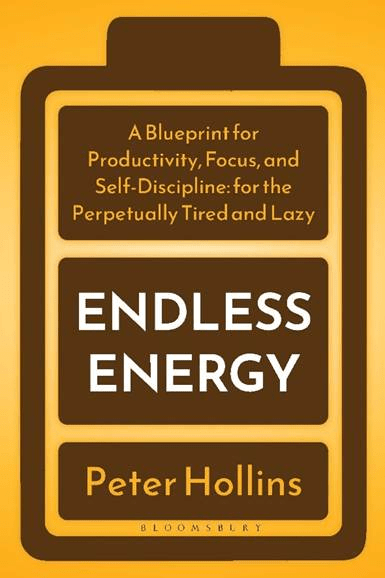
In Endless Energy, Peter Hollins takes on a modern affliction that most of us quietly accept as normal: constant exhaustion. This is not a book about hustling harder or waking up at 5 a.m. to “win” at life. Instead, Hollins argues something far more uncomfortable—and far more useful—that productivity, discipline, and motivation are meaningless concepts if we are running on empty.
At its core, Endless Energy treats energy not as a vague feeling, but as a measurable, manageable resource. Hollins positions energy as the true currency of life: without it, ambition collapses into intention, and intention into guilt.
Energy as the Hidden Driver of Everything
One of the book’s strongest ideas is deceptively simple: energy governs everything. Creativity, focus, emotional resilience, decision-making—all of it depends on how charged or depleted we are. Hollins dismantles the cultural myth that success is primarily about willpower. Instead, he suggests that what often looks like laziness or lack of discipline is actually chronic energy debt.
This reframing is powerful. It removes moral judgment from exhaustion and replaces it with responsibility. If your life feels flat, repetitive, or joyless, Hollins suggests you may not need a new purpose—you may simply need fuel.
The Real Villains: Everyday Energy Vampires
Where the book becomes particularly compelling is in its discussion of “energy vampires.” These are not dramatic life crises but quiet, persistent drains—poor sleep, erratic eating, unresolved emotional stress, unfulfilling work, and relationships that demand more than they give back.
Hollins shows how people can become so accustomed to depletion that they mistake it for normal adulthood. One of the most striking insights is that emotional despair often masquerades as existential confusion, when the real problem is physical and psychological exhaustion layered over time.
Before changing careers, relationships, or life goals, the book insists on restoring baseline energy. It’s a grounded, almost compassionate approach that pushes against the culture of constant self-reinvention.
The Body Is Not Optional
Unlike many productivity books that live entirely in the mind, Endless Energy is unapologetically physical. Sleep rhythms, glucose management, hydration, temperature exposure, and micronutrients are treated not as wellness add-ons but as foundational infrastructure.
Hollins repeatedly reminds the reader that we do not live “from the neck up.” Cognitive clarity and emotional stability are deeply tied to biological systems, and ignoring them is not discipline—it’s denial. The science is presented clearly, without overwhelming jargon, making it accessible even to readers unfamiliar with physiology.
Why “More Choices” Can Make You Miserable
In a particularly relevant section, Hollins explores the paradox of choice and its impact on mental energy. He contrasts maximizers—those who chase the best possible option—with satisficers, who stop once something is good enough.
The insight here is not about lowering standards but about conserving mental bandwidth. Endless deliberation, Hollins argues, quietly exhausts us and leaves us less satisfied, not more. In a world of infinite options, learning when to stop choosing becomes an act of self-preservation.
Action Creates Energy, Not the Other Way Around
One of the book’s most motivating ideas is its reversal of a common belief: motivation does not precede action—energy does, and action follows. When energy is restored, movement becomes natural. Small, intentional actions then generate momentum, creating a reinforcing cycle of vitality and confidence.
This perspective feels refreshingly humane. Rather than shaming readers for inaction, Hollins explains it—and then shows how to break out of it without dramatic life overhauls.
A Practical, Grounded Guide for the Chronically Drained
Endless Energy works because it doesn’t promise transformation through mindset alone. It insists on fundamentals. The book reads less like a motivational speech and more like a maintenance manual for modern life—one that recognizes how easily we become depleted without noticing.
For anyone who feels capable but tired, ambitious but stuck, or productive yet strangely joyless, this book offers a necessary pause. It asks a better question than “Why am I not doing more?” Instead, it asks: Why am I so tired in the first place?
In answering that, Endless Energy becomes not just a productivity book, but a quietly radical reminder that a full life begins with the strength to live it.

 Bookshotsapp
Leave a comment