
In 1912, when most women in British India were excluded from formal medical education, Jamini Sen entered the global medical establishment. She became the first woman Fellow of the Royal Faculty of Physicians and Surgeons of Glasgow—an exceptional achievement for an Indian woman of her time. Despite international recognition, her legacy gradually slipped from India’s public memory.
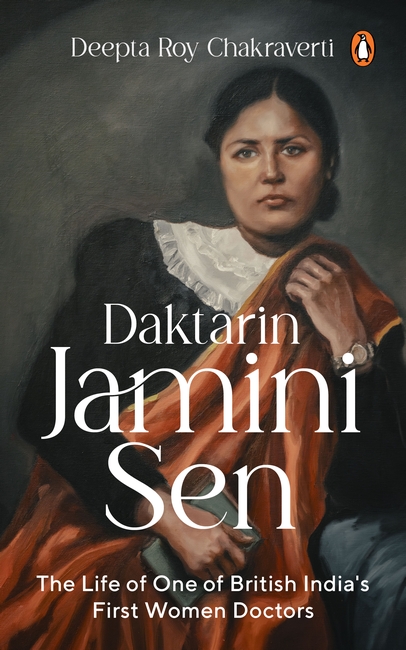
Penguin Random House India now brings her story back into focus with Daktarin Jamini Sen, a rigorously researched biography by her great-niece, Deepta Roy Chakraverti. Drawing on rare family archives, the book reconstructs the life of one of the earliest Indian women doctors to gain formal medical recognition in Britain.
Jamini Sen’s career unfolded across colonial India, Britain, and the Nepal royal court. For over a decade, she served as physician to the Nepal royal family under King Prithvi Bir Bikram Shah, helping introduce modern medical practice in a setting where medicine, power, and trust were closely linked. Her fellowship in Glasgow places her among the earliest Indian women formally acknowledged within international medicine, at a time when gender and race severely limited access to professional institutions.
Beyond professional achievement, the book reveals a life lived in quiet defiance of social norms. Jamini Sen remained unmarried, pursued an independent medical career across borders, and raised a child alone—choices that carried profound social consequences in colonial India. Her story offers a rare, intimate account of women’s autonomy and resilience long before such lives found public recognition.
Built from diaries, letters, journals, personal belongings, and oral histories preserved across generations, Daktarin Jamini Sen transforms private family memory into public history. It recovers not only a forgotten doctor, but a wider moment when Indian women were already shaping global medicine, even as history failed to record their contributions.
As conversations around women’s labour, authorship, and historical recognition gather momentum ahead of Women’s Day, Daktarin Jamini Sen arrives as a timely act of archival recovery—returning a pioneering woman doctor to the histories she helped shape.




 Bookshotsapp
Leave a comment