
As the year settles into routine, something subtle is unfolding in Indian homes and classrooms. Parents are no longer merely setting resolutions about screen time; they are grappling with its lived consequences. Teachers report drifting attention, altered social dynamics, and growing emotional volatility. Children, meanwhile, are growing up in a world where friendships, play, curiosity, and self-image are increasingly mediated by screens.
When Screen Time Becomes a Childhood Question
The numbers tell part of the story. Nearly half of urban Indian parents say children between 9 and 17 spend three or more hours a day on screens, with over one in five exceeding six hours. Behind these statistics lie deeper concerns: shrinking attention spans, heightened anxiety, weakened social skills, and a childhood that risks becoming more observed than lived.
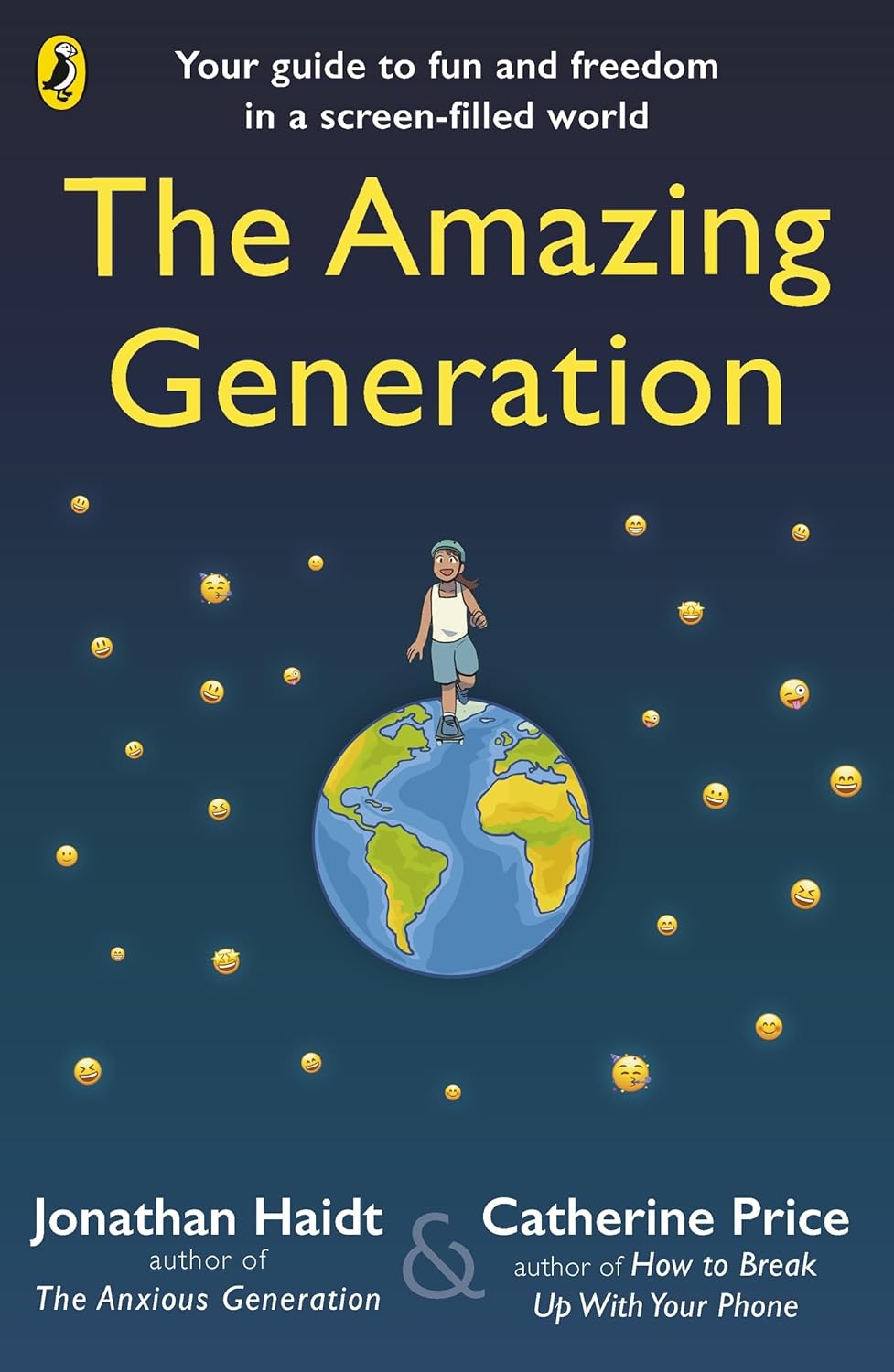
It was this unease that propelled Jonathan Haidt’s The Anxious Generation into a global conversation, reshaping how adults think about smartphones, adolescence, and mental health. Now, that conversation has found a thoughtful continuation—one that speaks not about children, but to them.
A Book That Hands the Mic to Children
The Amazing Generation, co-authored by Jonathan Haidt and science journalist Catherine Price, is designed for readers aged 8 to 12. But to describe it merely as a children’s book would miss its ambition. This is a bridge between generations—a science-backed, interactive guide that equips children with language, insight, and agency in a digital world they did not design but must learn to navigate.
Where The Anxious Generation diagnosed the problem for adults, The Amazing Generation offers young readers tools: how to understand their attention, how to protect their emotional space, and how to build lives rich in curiosity, courage, and connection beyond the screen.
Importantly, the book does not demonise technology. Instead, it reframes the conversation. Screens are not the enemy; unexamined habits are. The message is not restriction, but choice.
Learning Through Curiosity, Not Fear
One of the book’s most compelling features is its tone. There is no scolding, no alarmism, no nostalgia for a pre-digital golden age. Instead, Haidt and Price speak to children with respect and trust, explaining—clearly and engagingly—how screens influence focus, mood, sleep, friendships, and self-image.
Science is woven seamlessly into stories, illustrations, and simple challenges. Children learn why endless scrolling can leave them restless, why comparison online can distort self-worth, and how boredom, far from being dangerous, is often the doorway to creativity.
Rather than overwhelming young readers, the book invites experimentation: Try noticing how you feel after time online. Try doing something hard. Try being bored without fixing it.
A Book That Creates Conversations
Perhaps the book’s most inspired design choice is how deliberately it draws parents into the reading experience. Throughout, children are prompted to talk to the adults in their lives:
- Ask your parents what afternoons looked like before smartphones.
- Ask how their first experiences of social media felt.
- Calculate how daily screen time adds up over a year—and notice the reaction.
These moments are small, but powerful. They transform the book into a shared space for reflection, storytelling, and mutual understanding. For families struggling to discuss technology without conflict, The Amazing Generation quietly opens doors.
Teaching Independent Thinking in an Influencer Age
One of the book’s strongest and most necessary themes is independent thought. In language children can grasp, the authors explain how social media feeds are filled with opinions crafted to capture attention, not nurture identity. When young minds spend hours absorbing these voices, there is little room left to discover who they are or what they truly care about.
This insight—rarely addressed directly in conversations about screen time—feels especially urgent. The book encourages children to protect their mental space, to question what they consume, and to recognise that becoming oneself requires time, silence, and exploration away from the constant noise of other people’s lives.
Handling Hard Truths with Care
The digital world is not without danger, and The Amazing Generation does not pretend otherwise. Anxiety, bullying, appearance-based judgement, inappropriate content, and unsafe online interactions are all addressed—carefully, calmly, and without sensationalism.
These sections benefit most from shared reading. While the book is age-appropriate, it touches on realities some children may not yet have encountered. Read together, it becomes a tool for preparedness rather than fear, offering language for concerns children may struggle to articulate.
More Than Less Screen Time
What ultimately sets The Amazing Generation apart is its core conviction: reducing screen time only matters because it creates space for better things. The book repeatedly returns to what children gain offline—deep friendships, creativity, risk and adventure, resilience, self-trust, and experiences that shape character.
This is not a book about limits. It is a book about fullness. About building a childhood rich enough that screens naturally take their place rather than dominate it.
Who Should Read This—and When
Marketed for ages 9–12, the book lands best at moments of transition: the cusp of middle school, the first desire for a smartphone, the growing awareness that peers are living increasingly online lives. Read at this stage, it helps children make sense of what they are seeing—and form opinions before habits harden.
That said, reading it earlier has value too. For families not yet having regular conversations about technology, this book offers a gentle, structured beginning. Annotating together, underlining surprising ideas, and discussing questions in the margins can turn reading into an ongoing dialogue.
A Quietly Radical Book for Our Time
In an era dominated by panic, polarisation, and resignation about children and technology, The Amazing Generation feels quietly radical. It is optimistic without being naïve, realistic without being bleak, and empowering without being preachy.
More than a book, it is an invitation—to slow down, to pay attention, and to raise children who are not merely connected, but grounded.
For parents, educators, and anyone invested in the future of childhood, The Amazing Generation is not just worth reading. It is worth living with.



 Bookshotsapp
Leave a comment