
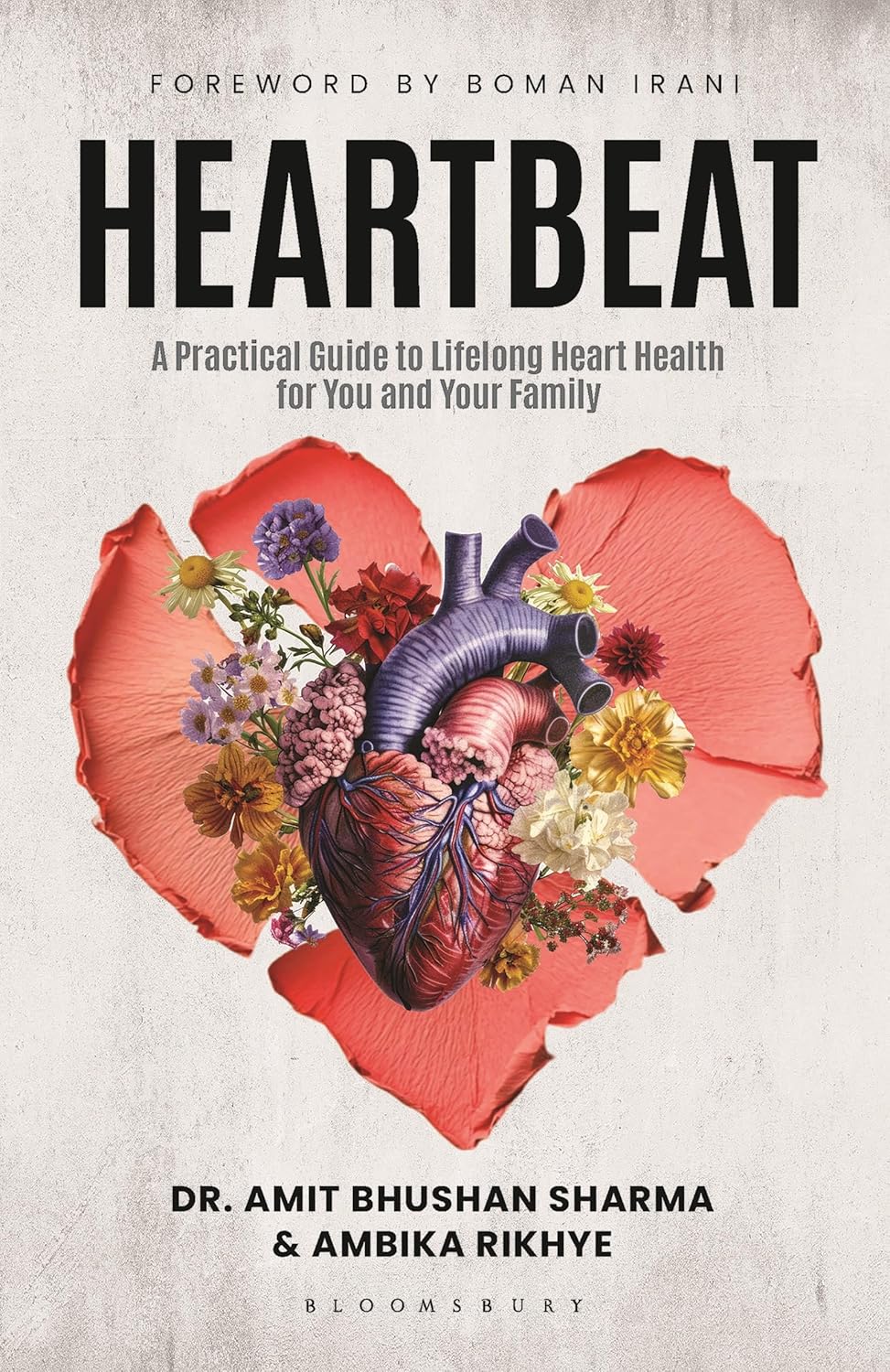
Heart disease is still widely imagined as an illness of age, excess, or neglect—something that happens to “other people”. Heartbeat dismantles that illusion with unsettling precision. Written by cardiologist Dr Amit Bhushan Sharma and author Ambika Rikhye, the book argues that today’s cardiac crisis is as much about denial, delay, and misunderstanding as it is about cholesterol or clogged arteries. The heart, the authors remind us, does not wait for us to feel ready.
A Foreword That Sets the Emotional Tone
The book opens with a deeply empathetic foreword by Boman Irani, who describes Heartbeat as a work that can save lives not merely through medical insight, but through compassion. He notes how the book never reduces the heart to an organ alone. Instead, it treats it as the keeper of memory, emotion, love, and second chances. This framing matters, because it prepares the reader for a book that speaks as much to lived fear and vulnerability as it does to science.
When Denial Becomes the Real Enemy
One of the most powerful chapters, Ticking Time Bomb: How One Man’s Denial Cost Him Everything, captures the book’s central warning. A 36-year-old father experiences unmistakable signs of a heart attack—chest pain radiating to the arm, sweating, anxiety—but delays hospital care to attend his son’s dental appointment. That ordinary decision proves catastrophic. By the time he seeks help, irreversible heart damage has occurred, followed by heart failure and a stroke. The chapter brings home a brutal cardiology truth: “time is muscle.” Lost minutes mean lost heart tissue—damage that no medicine can undo.
Real Stories, Real Consequences
The book’s first section, Matters of the Heart, is built around true cases that unfold with narrative urgency. In A Race Against Time, a young mother fights for breath as a massive pulmonary clot threatens her life. Defying the Unthinkable and The Fallen Star reveal how even elite athletes are vulnerable to hidden cardiac risks. Too Young to Fall shatters the belief that youth offers immunity, while Like Father, Like Son exposes the quiet inheritance of genetic heart disease across generations.
These are not sensational stories. They are disturbingly familiar, shaped by postponed check-ups, misread symptoms, and the common belief that discomfort can wait.
Women, Pregnancy and the Blind Spots of Medicine
Heartbeat is particularly strong in its treatment of women’s heart health. Chapters such as Pregnancy and the Heart, Women and Heart Attacks, and Broken Heart Syndrome highlight how women’s symptoms are frequently misunderstood or dismissed as anxiety, acidity, or stress. The book makes clear that these misinterpretations are not rare errors but systemic failures—with fatal consequences.
From Emergency to Empowerment
Midway through, the book shifts gears. The second section, The Science of the Heart: Living Stronger, Living Longer, moves from emergency rooms to everyday life. Here, the authors explain complex medical concepts with clarity and restraint, covering sleep, exercise, pollution, diet, obesity, menopause, stress, palpitations, and sudden cardiac deaths in the young. Chapters on gym-related cardiac events and stress testing for busy executives are particularly relevant in an era obsessed with fitness yet indifferent to warning signs.
What stands out is the absence of jargon and moralising. The book does not shame readers into lifestyle change; it equips them with understanding.
A Personal Reckoning
Ambika Rikhye’s account of her father’s sudden heart attack lends the book its emotional core. Her story captures the shock of discovering vulnerability in someone disciplined, active, and seemingly in control. It also exposes a quieter truth: caregiving often makes us neglect ourselves. This personal thread grounds the medical narratives in shared human experience.
Listening Before It’s Too Late
Ultimately, Heartbeat is about attention—paying it early and paying it seriously. As Boman Irani observes, the book never forgets that behind every diagnosis is a human being: a parent, a partner, a child. In a world where symptoms are minimised, check-ups postponed, and endurance celebrated over caution, Heartbeat issues a calm but urgent appeal: listen to your body, respect time, and act before denial becomes destiny.
This is not a book meant to frighten. It is meant to awaken. And in doing so, it may just save lives.
 Bookshotsapp
Leave a comment