
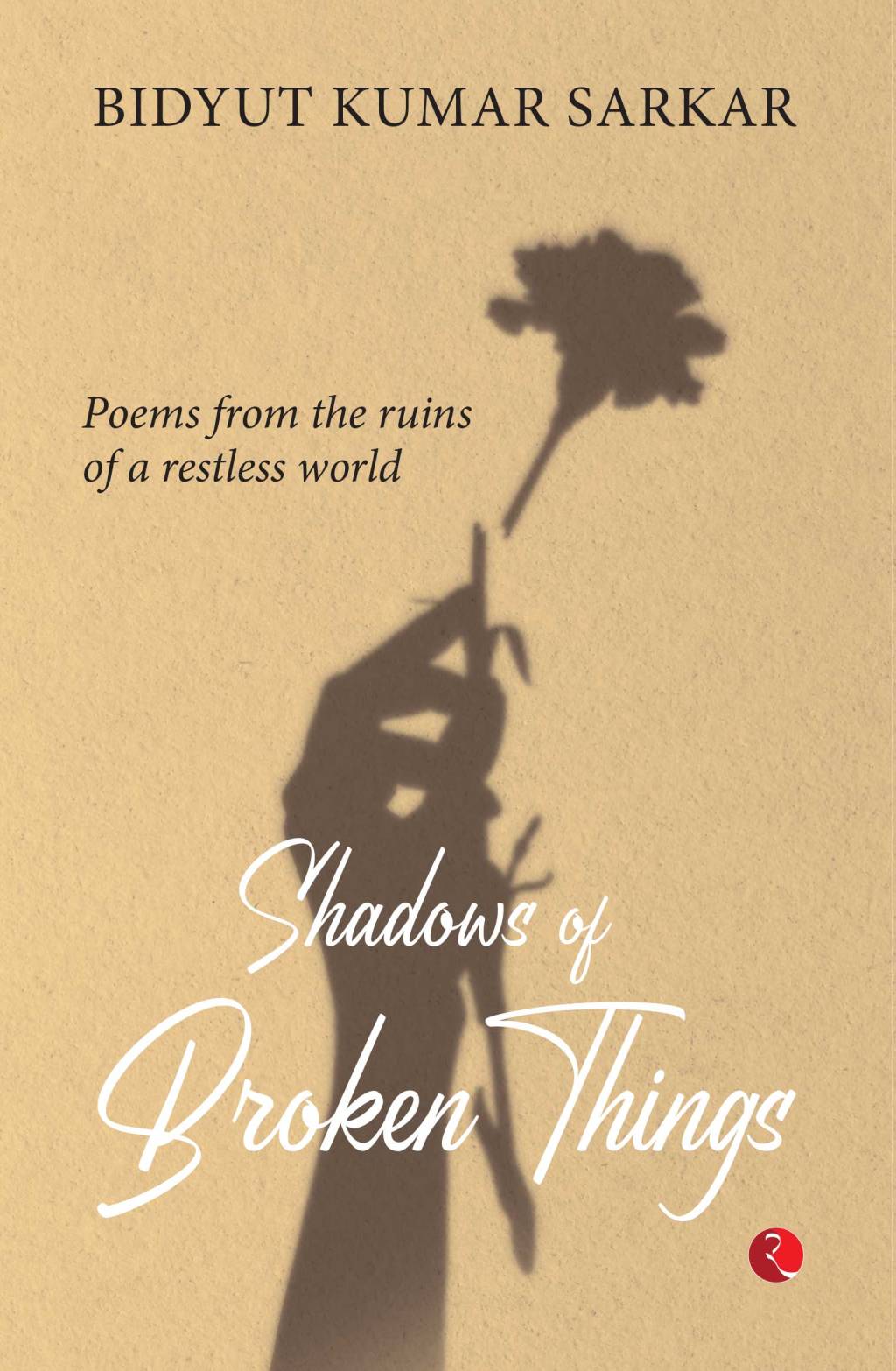
In Shadows of Broken Things, poet Bidyut Kumar Sarkar peers steadily into the abyss of modern existence—where memory fractures, mortality looms, and civilization teeters on the edge of erasure. This striking collection of poems moves through the ruins of the contemporary world and the depths of the human psyche, searching for flickers of light amid entropy and despair.
The poems confront the fragility of modern life, where human memory struggles to endure against the pressures of war, environmental decay, and collective loss. Sarkar’s writing reflects deeply on mortality and consciousness, marked by meditative clarity and emotional restraint rather than excess. Love and longing appear not as escapes, but as fragile forces that coexist with devastation and grief.
What sets Shadows of Broken Things apart is its distinctive fusion of poetry with metaphysics, philosophy, and the imagery of quantum physics. A retired nuclear engineer from the Department of Atomic Energy, Government of India, Sarkar brings to his verse the precision of a scientist and the searching anguish of a philosopher. His language oscillates between lament and laudation, capturing the tensions of a world caught between collapse and continuity.
Drawing on experiences and landscapes across India, Bhutan, and Nepal, Sarkar writes with a heightened awareness of both inner and outer worlds. His poems emerge from the narrow, charged spaces where creativity meets consciousness—where science brushes against the ineffable, and where the human heart searches for meaning in the shadow of annihilation.
Each poem in the collection functions as both elegy and awakening, reminding readers that beauty can persist even in despair. Shadows of Broken Things asks the questions we often avoid: What endures after destruction? What remains when the light withdraws?
This book is meant for readers who seek understanding rather than escape—those drawn to thoughtful, resonant poetry that illuminates without offering easy answers. In Shadows of Broken Things, Sarkar invites readers to confront darkness not to surrender to it, but to recognize the quiet, enduring pulse of being that survives within it.


 Bookshotsapp
Leave a comment