
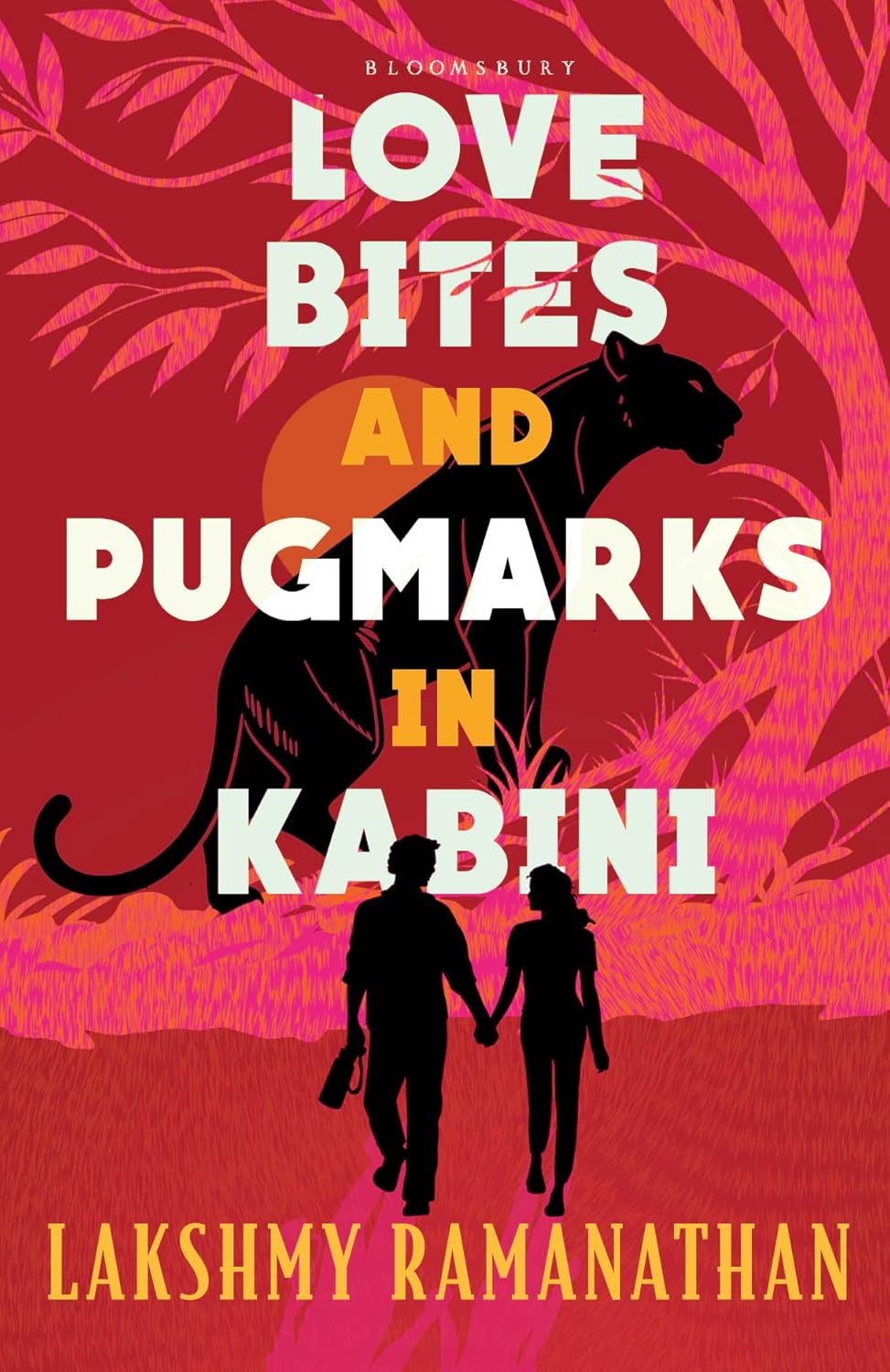
In Love Bites and Pugmarks in Kabini, Lakshmy Ramanathan weaves a gripping tale where the wilderness is not a backdrop but a living, breathing presence—observant, endangered, and occasionally unforgiving. Part conservation thriller, part eco-fiction, and part slow-burn romance, the novel asks an urgent question: what happens when human desire—whether for love, ambition, or progress—collides with a forest already fighting for survival?
Set in the lush yet increasingly vulnerable forests of Kabini in Karnataka, the novel situates personal relationships within larger ecological and ethical fault lines. The result is a story that is as much about people as it is about the land they inhabit—and threaten.
A Panther, a Filmmaker, and the Weight of the Gaze
At the heart of the novel is Dhruv Thimayya, an acclaimed wildlife filmmaker tasked with filming Kabini’s most enigmatic resident—the melanistic black panther known locally as Karia. Dhruv arrives carrying the authority of global platforms and prestigious networks, but also the fatigue of a life spent chasing the perfect shot. His mission is ostensibly scientific and cinematic: to uncover unanswered questions about Karia’s life, lineage, and elusive behaviour.
Yet Ramanathan cleverly complicates the act of filming itself. The camera, often assumed to be a neutral witness, becomes a symbol of intrusion. Dhruv’s pursuit of Karia mirrors the larger human obsession with visibility, virality, and storytelling—raising uncomfortable questions about whether documentation protects wildlife or merely repackages it for consumption.
Mira Ponappa: Belonging Without Ownership
If Dhruv represents the outsider’s gaze, Mira Ponappa embodies lived intimacy with the forest. She is no romanticised forest nymph but a woman deeply enmeshed in the rhythms of Kabini—rowing coracles, handling a country dagger, and managing an eco-friendly homestay with quiet competence. Mira’s relationship with the land is not performative; it is practical, defensive, and deeply emotional.
Her struggle is not only external—against poachers, encroachers, and ecological neglect—but also internal, as she attempts to modernise the homestay without betraying the fragile ecosystem she loves. The tension between conservation and livelihood is rendered with nuance, refusing easy moral binaries.
The Granny with a Gun and the Politics of Resistance
One of the novel’s most striking characters is Mira’s gun-toting grandmother, a fierce matriarch who views any form of change with suspicion. Far from being a caricature, she represents a generation shaped by direct confrontation with danger—wild animals, hostile authorities, and indifferent systems. Her resistance to modernisation is rooted not in nostalgia but in survival instincts honed over decades.
Through her, Ramanathan explores a rarely examined aspect of conservation discourse: the distrust local communities often feel towards “development” narratives that arrive dressed as sustainability but quietly erode autonomy.
Wildlife as Character, Not Spectacle
Karia, the black panther, and Kapila, the green-eyed leopardess, are not merely animals in the story; they are agents whose movements shape human choices. Ramanathan’s background knowledge of wildlife behaviour lends authenticity to these portrayals, avoiding anthropomorphism while still imbuing the animals with presence and agency.
The novel’s opening scene—a tense standoff in the forest involving a captive Mira, armed men, and an unseen big cat—sets the tone. Danger here is not sensationalised; it is constant, unpredictable, and morally murky. Human–animal conflict is shown not as an abstract policy issue but as a lived reality where fear, desperation, and misunderstanding often escalate into violence.
Love That Arrives Late—and Carefully
The romance between Dhruv and Mira unfolds slowly, almost cautiously, mirroring the tentative trust required to coexist with the wild. This is love later in life, shaped by past disappointments, guarded hearts, and competing loyalties. Ramanathan resists melodrama, allowing emotional intimacy to develop through shared silences, ethical disagreements, and mutual respect.
Crucially, the love story never overshadows the novel’s ecological concerns. Instead, it reinforces them—suggesting that genuine connection, whether between people or with nature, requires restraint, patience, and humility.
A Timely Intervention in Indian Eco-Fiction
Love Bites and Pugmarks in Kabini arrives at a moment when India’s forests are under increasing pressure—from tourism, infrastructure projects, and digital-era wildlife voyeurism. Ramanathan’s novel does not preach, but it does provoke. It urges readers to reconsider easy narratives of conservation, heroism, and progress.
This is a book for readers of wildlife thrillers, conservation fiction, Indian nature writing, and romantic suspense—but it is also for anyone willing to confront the uneasy truth that loving the wild does not automatically mean protecting it.
In Kabini, the forest watches back. And not everyone who enters leaves unchanged.



 Bookshotsapp
Leave a comment