
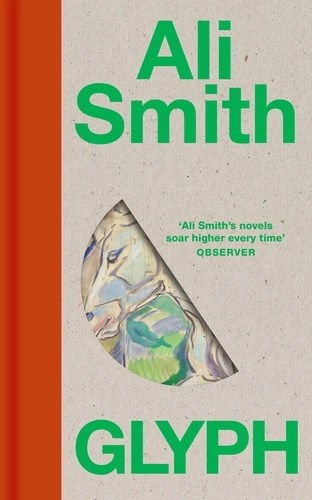
Ali Smith has long been one of the most alert chroniclers of political and moral crisis in contemporary fiction. With Glyph, she delivers one of her sharpest and most resonant novels yet — a work that confronts how language, history, and care are being eroded in an age of war, surveillance, and systemic violence.
At its core, Glyph is an anti-war novel. But rather than depicting battlefields, Smith examines how conflict infiltrates the everyday: through bureaucratic language, mediated violence, and the slow normalisation of cruelty.
Ghosts, Stories, and the Burden of Care
“Ghosts don’t exist,” the novel insists at the outset — only to immediately undermine its own certainty. In 1996, sisters Petra and Patch hear a disturbing story from the past. To protect her younger sister, Petra invents a consoling fiction: she claims to communicate with the spirit of the dead man in the story, whom they name Glyph.
What begins as an act of care gradually accrues consequence. Petra becomes known as a medium; neighbours arrive seeking contact with lost loved ones. Smith is incisive about how stories told for survival can harden into responsibility, and how imagination, once set loose, cannot be easily contained.
Thirty years later, the sisters are estranged. When Petra encounters a phantom horse tearing through her bedroom — an image at once comic and deeply unsettling — she calls Patch. The past returns not as memory but as disturbance, demanding reckoning.
War Without Battlefields
Glyph is haunted by contemporary conflict. Smith engages directly with the war in Gaza, the killing of journalists in Ukraine, drone warfare, and the distancing of violence through technology. These references are not didactic; they surface as part of the novel’s moral atmosphere.
Smith’s concern is not only violence itself but the language that enables it — euphemism, abstraction, and the systems that make killing feel remote. War, in Glyph, is not elsewhere. It is present in our speech, our screens, and our silences.
Language as Resistance
As a companion to Gliff (2024), Glyph operates both as a standalone novel and as a revelation hidden within its predecessor. If Gliff imagined a near-future dystopia governed by systems of verification and exclusion, Glyph asks how such systems are built — and how meaning is stripped away in the process.
Smith’s linguistic play is central here. Words fracture, echo, refuse to settle. Titles like Gliff and Glyph are not ornamental cleverness but semiotic acts, insisting on multiplicity in a world that demands flattening clarity. In Smith’s hands, language becomes a site of resistance rather than control.
Children, Gaps, and Moral Vision
Children recur as moral agents in Smith’s work, and Glyph is no exception. They notice what adults overlook. They find gaps in painted lines and slip through. Their resistance is not ideological but attentional — grounded in naming, curiosity, and care.
Smith suggests that while children may not save the world, they retain a radical plasticity adults lose. If they cannot undo systems of power, they can still tend to what has been damaged. They can, as Smith memorably puts it, “solve it by salving it”.
A Novel for a Broken Present
What gives Glyph its force is its balance of urgency and generosity. It recognises the brokenness of our moment — political, ethical, linguistic — without surrendering to despair. Instead, Smith offers attention as a form of ethics, and imagination as a mode of solidarity.
This is Ali Smith at her most precise and purposeful. Glyph is playful yet grave, demanding yet humane — a novel that insists meaning must be made again and again, even when the world seems determined to erase it.
 Bookshotsapp
Leave a comment