
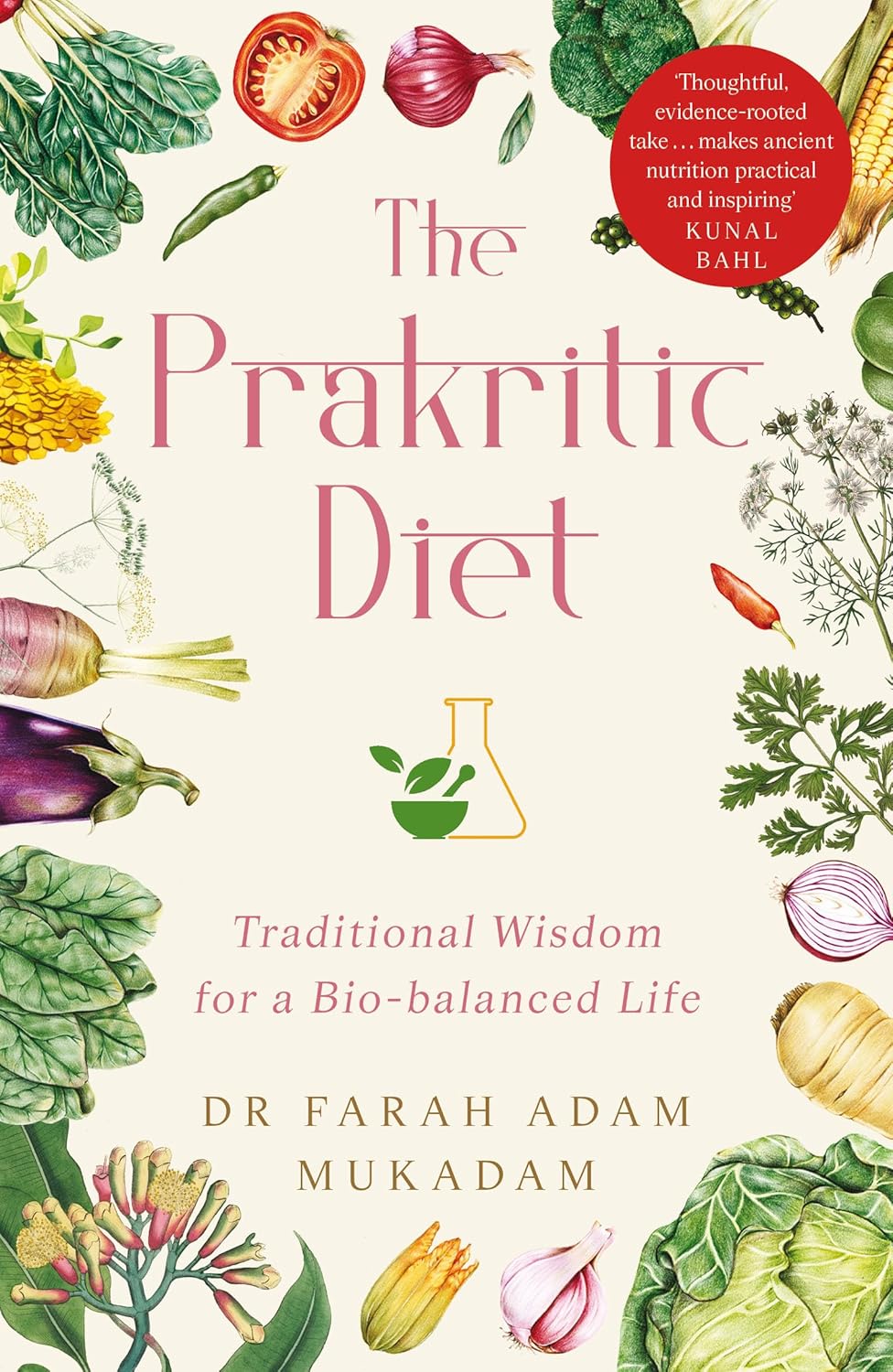
There comes a quiet, unsettling moment when you realise that eating is no longer instinctive. Every meal now arrives burdened with questions and anxieties: Is this carb acceptable? Is this fat dangerous or healing? Should this fruit be eaten only at a certain hour—or avoided altogether? In an age flooded with superfoods, strict rules and endlessly changing advice, the most basic human act has turned into a daily negotiation.
The Prakritic Diet enters this space of confusion without offering yet another rigid framework. Instead, it asks a far more unsettling—and liberating—question: What if the body already knows what it needs? What if the real crisis in modern nutrition is not excess, indulgence or lack of willpower, but the erosion of balance?
From its opening pages, the book draws readers into a deeper enquiry that spans centuries. Long before calorie counts, glucose charts and clinical trials, medical traditions such as Ayurveda and Unani were grappling with questions modern science is only now revisiting: Why does the same food nourish one person and disturb another? Why do bodies react differently across seasons, ages and emotional states? And why does health stubbornly resist standardised solutions?
Rather than presenting these systems as relics or alternatives, Dr Farah Adam Mukadam reveals them as sophisticated frameworks of observation—ones increasingly echoed by contemporary nutritional science and endocrinology. The book unfolds less like a prescriptive diet manual and more like a gradual revelation. Concepts such as the Ayurvedic doshas—Vata, Pitta and Kapha—or the Unani idea of mizaj (temperament) are introduced not as abstractions, but as practical lenses through which readers begin to recognise their own patterns: the diet that worked once but no longer does, the chronic complaint that refuses to settle, the persistent sense that the body is sending signals that go unheard.
Food as Care, Not Control
What gives this exploration its quiet suspense is the authority behind the voice. Dr Mukadam is neither a wellness influencer nor a traditionalist rejecting modern medicine. She is an allopathy-trained family physician who has spent years in clinical practice, listening carefully to patients whose bodies do not conform neatly to textbook norms. The tension between ancient wisdom and modern science does not erupt into opposition here; instead, it resolves into something more compelling—alignment.
Throughout the book, the idea that health must be achieved through restriction or deprivation is steadily dismantled. Food is reframed not as something to control or fear, but as a form of care—one that responds to individual constitution, seasonal rhythms and lived realities. Seasonal eating, often reduced to a lifestyle trend, is grounded in both traditional knowledge and metabolic logic. The result is an approach that feels intuitive rather than punishing, personal rather than prescriptive.
The inclusion of simple, time-tested home remedies reinforces this philosophy of empowerment. These are not miracle solutions or shortcuts, but sensible interventions that encourage attentiveness to early signs of imbalance. For readers dealing with chronic conditions, the book offers something rare in today’s wellness culture: reassurance without exaggeration, guidance without guilt.
A Doctor Who Listens
Dr Mukadam’s clinical experience is evident throughout, not as distant authority but as empathy shaped by practice. As a family physician and lactation counsellor, she understands health as something negotiated daily—amid work pressures, caregiving responsibilities, financial constraints and emotional stress. Her involvement in community health initiatives with NGO Focus India further informs the book’s accessibility. This is not wellness writing aimed at idealised lives, but guidance rooted in real kitchens, real schedules and real limitations.
Ultimately, The Prakritic Diet speaks to readers who feel overwhelmed by modern diet culture yet unconvinced by extreme detoxes or one-size-fits-all solutions. It is especially resonant for those curious about Indian systems of medicine but unsure how they intersect with evidence-based healthcare today.
Who This Book Is For
The book does not promise transformation in a fixed number of days. What it offers instead is something quieter and more durable: understanding. And in a landscape dominated by quick fixes and dietary dogma, that may be its most radical contribution of all.
In choosing integration over ideology, and balance over control, The Prakritic Diet makes a persuasive case that the future of sustainable health lies not in choosing between ancient wisdom and modern science—but in finally allowing them to speak to each other.


 Bookshotsapp
Leave a comment