
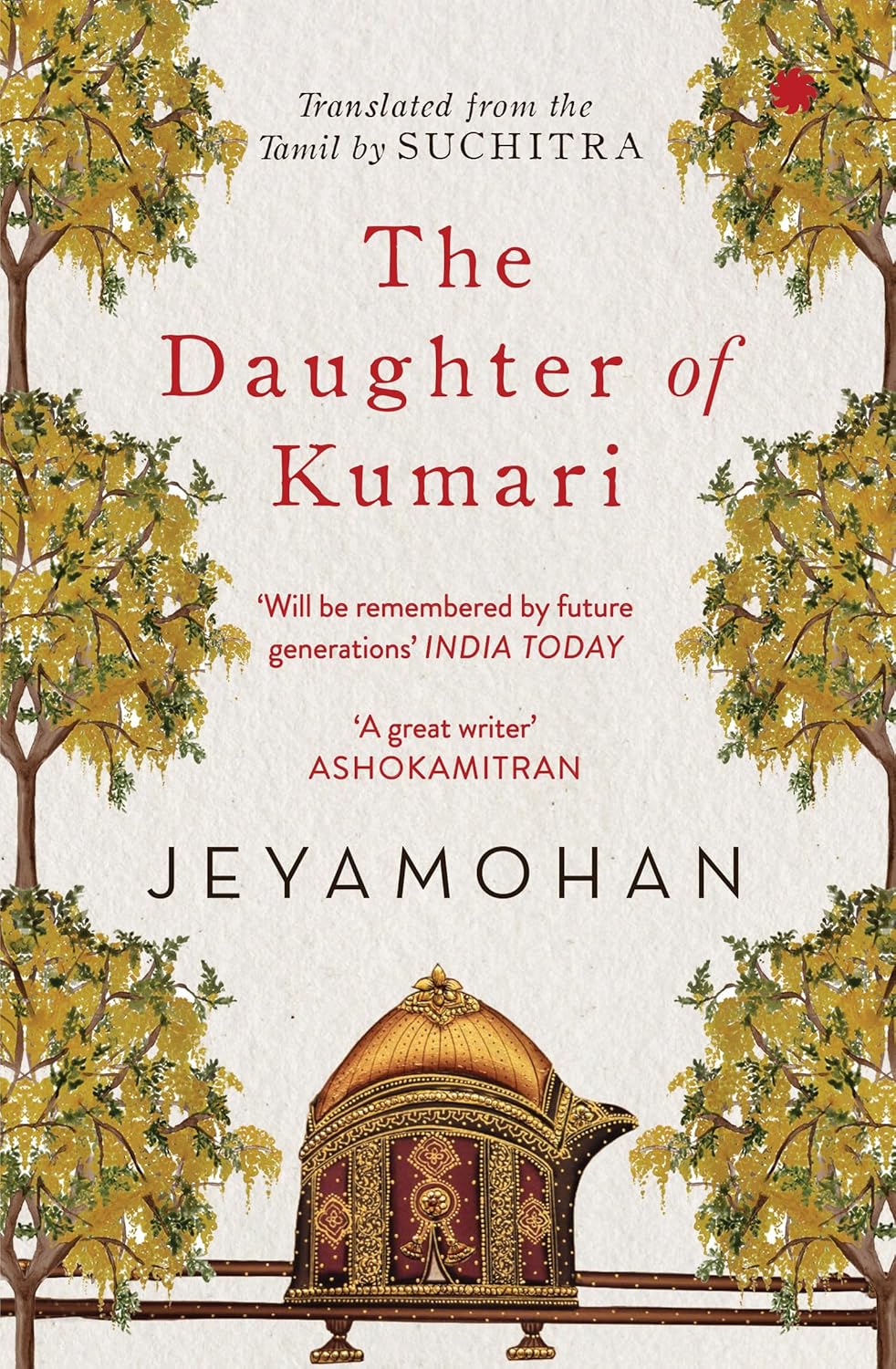
In The Daughter of Kumari, B. Jeyamohan reimagines a turbulent chapter of South Indian history through the lens of myth, memory and longing. When the forces of Alauddin Khilji overrun Madurai, the city’s presiding goddess, Meenakshi, is forced into exile. She finds refuge in the coastal land of Kumari, sheltered by the Venad kingdom, where her presence transforms the region for sixty luminous years.
This is not merely a tale of conquest and displacement. It is a meditation on belonging. For the people of Kumari, Meenakshi ceases to be a distant divinity; she becomes a daughter. And when divine law calls her back to Madurai, her departure wounds the land like the loss of a beloved child.
Myth as Emotional Truth
Jeyamohan’s storytelling dissolves the boundaries between gods and mortals. The divine does not hover above human experience—it lives within it. Faith here is not abstract doctrine but lived relationship: protective, intimate and vulnerable. The novel transforms exile into an emotional and spiritual state, asking what it means to lose a presence that has shaped a community’s identity.
There is a quiet grandeur to the narrative. Rather than dramatizing spectacle, Jeyamohan dwells on atmosphere—devotion woven into daily life, the subtle reshaping of a kingdom under sacred protection, and the ache that lingers when grace departs. History is not retold as chronology but re-experienced as feeling.
A Landmark Writer in Translation
Widely regarded as one of the most important voices in contemporary Tamil literature, Jeyamohan brings the philosophical depth and intensity familiar from works like Vishnupuram and Kotravai into this historical fiction. His writing has often been described as unsettling—demanding emotional and intellectual engagement from readers. The Daughter of Kumari continues that tradition, though with a lyrical softness that makes its sorrow all the more piercing.
Suchitra Ramachandran’s translation is elegant and fluid, preserving the novel’s devotional cadences while making it accessible to English readers. The prose carries both cultural specificity and universal resonance, ensuring that the emotional core of the story transcends linguistic boundaries.
Themes of Exile and Return
At its heart, the novel explores:
- Exile as transformation – How displacement reshapes identity, even for a goddess.
- Faith as relationship – Devotion depicted as mutual love rather than distant worship.
- The politics of sacred space – Conquest, refuge and return intertwined with spiritual geography.
- Loss as sacred experience – Departure felt not as theological inevitability but human grief.
The Daughter of Kumari is a luminous and contemplative work that blends myth and history into an emotionally resonant narrative. It is both rooted in Tamil cultural memory and expansive in its themes of belonging, exile and devotion. For readers of literary fiction, mythology-infused narratives and translated works that carry philosophical depth, this novel is an essential read.




 Bookshotsapp
Leave a comment