
There are moments in history that do not pass — they linger in memory like unfinished sentences. The pandemic was one such moment. Sirens in the night. Highways crowded not with vehicles, but with people walking. Hospital gates that would not open. Phones ringing with news no family was prepared to hear.
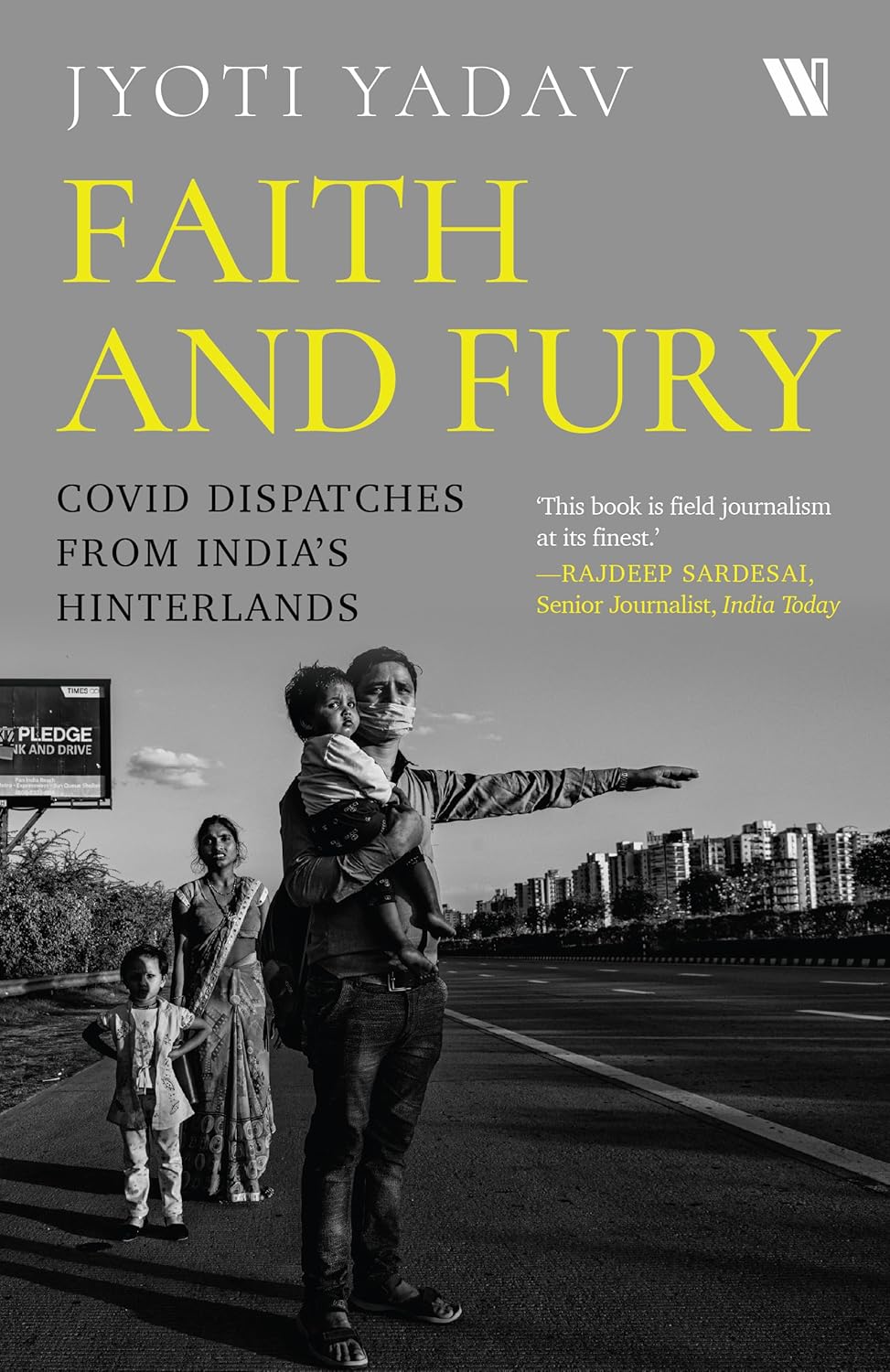
Faith and Fury brings us back to that time — not through distant analysis, but through footsteps on burning asphalt.
On the morning of 7 May 2020, as India reeled under the first wave of Covid-19, Jyoti Yadav stepped onto the highways of Uttar Pradesh and Bihar. The country had shut down. Transport had stopped. But people had not. Migrant workers — men, women, children — were on the move, carrying their belongings, their hunger, and their uncertainty across hundreds of kilometres. Yadav chose to follow them.
What she witnessed was not just a public health crisis. It was an unraveling.
Through small towns and forgotten villages, she documented the migrant exodus and the slow collapse of healthcare systems that were never built to withstand such pressure. She worked through exhaustion, illness, blistering heat, poor sanitation, unreliable statistics, and the hostility that often greets uncomfortable truth. Online abuse followed her. Official resistance tried to block her. But she kept reporting.
She spoke to those on the road — families who had lost work overnight, children too tired to cry, mothers rationing hope along with food. She entered hospitals where oxygen was scarce and fear was thick in the air. She visited crematoria where the fires did not stop. She sat with families who had lost loved ones whose deaths would never be fully counted.
When the far deadlier second wave struck, she went back again. This time, the devastation was deeper. Through careful documentation and relentless data collection, she exposed the undercounting of deaths — numbers that did not reflect the reality on the ground. Behind every statistic was a name, a home, a silence left behind.
What makes Faith and Fury so powerful is that it refuses to let the tragedy blur into abstraction. Yadav writes with the clarity of a reporter and the conscience of someone who understands rural India from within. Born and raised in a village in Haryana, she knows the texture of these landscapes — the pride, the struggle, the invisibility. Her own journey from an agrarian family to becoming an award-winning journalist gives her reporting both intimacy and moral urgency.
This book is not driven by outrage alone. It carries grief. It carries anger. But it also carries dignity. Even in the darkest chapters, there are glimpses of resilience — strangers helping strangers, communities finding ways to endure when systems failed them.
Faith and Fury is an immense reporting achievement, but more than that, it is an act of remembrance. It asks us not to look away from what happened — not from the highways filled with migrants, not from hospital corridors that echoed with desperation, not from the pyres that burned longer than they should have.
In a time when the world is eager to “move on,” this book insists on memory.
It reminds us that the pandemic was not only a global event. It was lived — step by step, breath by breath — by millions whose stories deserved to be told.
And in telling them, Jyoti Yadav ensures they will not be forgotten.



 Bookshotsapp
Leave a comment