
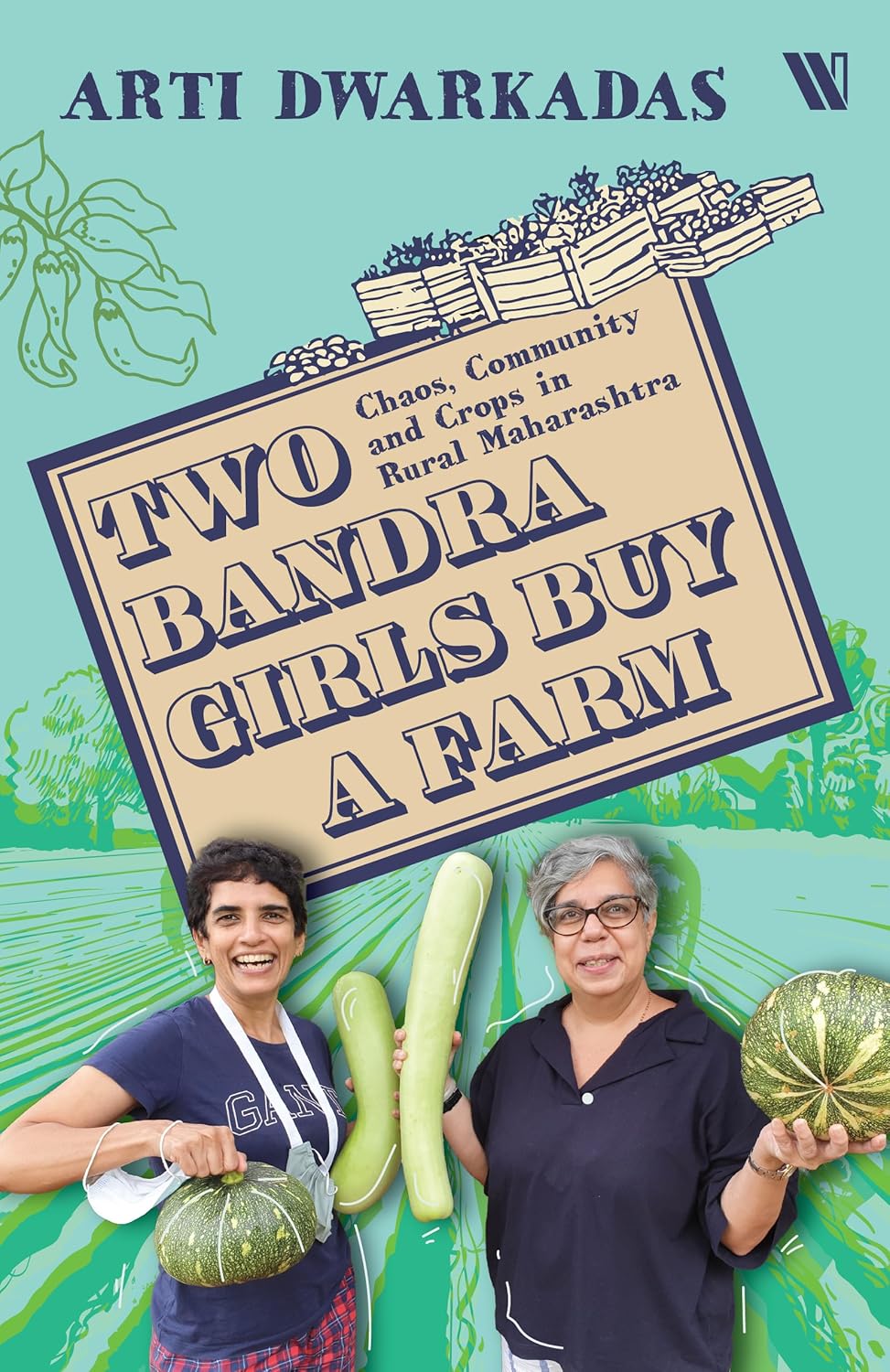
What happens when two Bandra girls trade cappuccinos for cow dung? In Two Bandra Girls Buy a Farm, Arti Dwarkadas answers that question with wit, warmth and a refreshing honesty that makes this memoir as nourishing as the soil it celebrates.
Subtitled Chaos, Community and Crops in Rural, the book delivers exactly what it promises—and more. It begins with a seemingly impulsive decision: two urban women, high on post-lockdown optimism and balcony-grown tomatoes, decide to buy farmland in Raigad and “go organic.” What could possibly go wrong? As it turns out—quite a lot. And that is precisely where the charm of this book lies.
Dwarkadas, who once navigated the high-octane worlds of advertising and digital media, brings a storyteller’s instinct and comic timing to every page. Her voice is self-aware, gently irreverent and deeply observant. The early chapters capture the heady confidence of city dwellers convinced that enthusiasm can substitute for experience. Tomatoes and chillies may have flourished in her Bandra balcony garden, but a ten-acre organic farm in rural Maharashtra is a vastly different proposition.
From negotiating with sceptical villagers to dealing with unpredictable weather, stubborn soil and even more stubborn cows, the narrative unfolds as a delightful comedy of errors. Each misstep—whether logistical, emotional or agricultural—is recounted with candour. Yet the humour never feels flippant. It is rooted in humility, in the willingness to admit what one does not know, and in the gradual, sometimes painful process of learning.
What elevates the book beyond a simple fish-out-of-water tale is its deeper engagement with rural life. The farm is not merely a backdrop for urban experimentation; it becomes a living, breathing ecosystem of relationships. Dwarkadas sensitively explores the dynamics between outsiders and the local community—the initial wariness, the cultural gaps, the quiet negotiations of trust. In doing so, she resists romanticising the countryside while also refusing to reduce it to stereotype. Rural life emerges as complex, resilient and deeply interdependent.
The theme of “going organic” is handled with refreshing realism. Rather than presenting sustainability as a fashionable lifestyle choice, Dwarkadas reveals it as relentless, hands-on labour. There are no Instagram-perfect harvests without days of back-breaking work. Seeds fail. Crops succumb. Plans unravel. But then comes the miracle of the first true harvest—small, imperfect and profoundly earned. Those moments are described with an almost childlike wonder, reminding readers how disconnected many urban lives have become from the sources of their food.
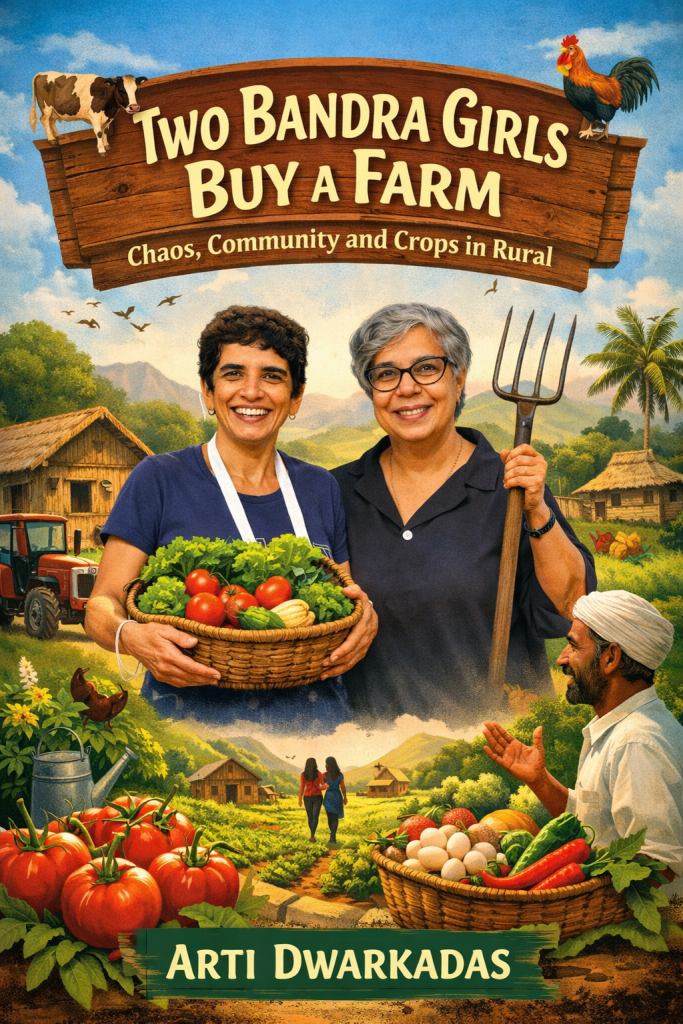
The memoir is also quietly philosophical. Beneath the laughter runs a current of reflection on what it means to build something tangible in a digital age. Having led creative teams and built brands, Dwarkadas now builds compost heaps and irrigation systems. The shift from boardrooms to barnyards is not framed as rejection of her former life, but as an expansion of it. Creativity, she suggests, is not confined to campaigns and concepts; it thrives equally in crop rotation and soil regeneration.
Her background—as a certified patisserie from Le Cordon Bleu and a long-time food writer—infuses the narrative with sensory richness. Descriptions of produce are lush without being indulgent; the connection between soil and sustenance is made tangible. Food, here, is not simply consumed—it is cultivated, understood and respected.
Stylistically, the book reads like a long, animated conversation with a friend who has both the courage to leap into the unknown and the grace to laugh at herself when she stumbles. Dwarkadas’ prose is accessible yet polished, reflective yet brisk. She balances anecdote with insight, comedy with quiet reverence for the land.
Perhaps the most compelling aspect of Two Bandra Girls Buy a Farm is its refusal to present transformation as neat or complete. The farm does not magically solve existential questions, nor does it offer a simplistic escape from city life. Instead, it reshapes perspective. It challenges assumptions about labour, privilege and sustainability. It asks what it truly means to “make a difference”—not through grand gestures, but through consistent, grounded effort.
For readers who have ever fantasised about leaving the city, this book offers both encouragement and caution. For those who have no intention of abandoning urban comfort, it provides the next best thing: the pleasure of watching someone else try—and try again—while discovering something essential along the way.
Witty, warm and wonderfully grounded, Two Bandra Girls Buy a Farm is more than a tale of urban farmers finding their footing. It is a celebration of resilience, community and the quiet dignity of working with one’s hands. In the end, Dwarkadas plants more than crops—she plants the idea that growth, like farming itself, requires patience, humility and a willingness to get a little dirty.
An engaging, heartfelt debut that lingers like the taste of a freshly plucked tomato—sun-warmed, imperfect and utterly real.

 Bookshotsapp
Leave a comment