
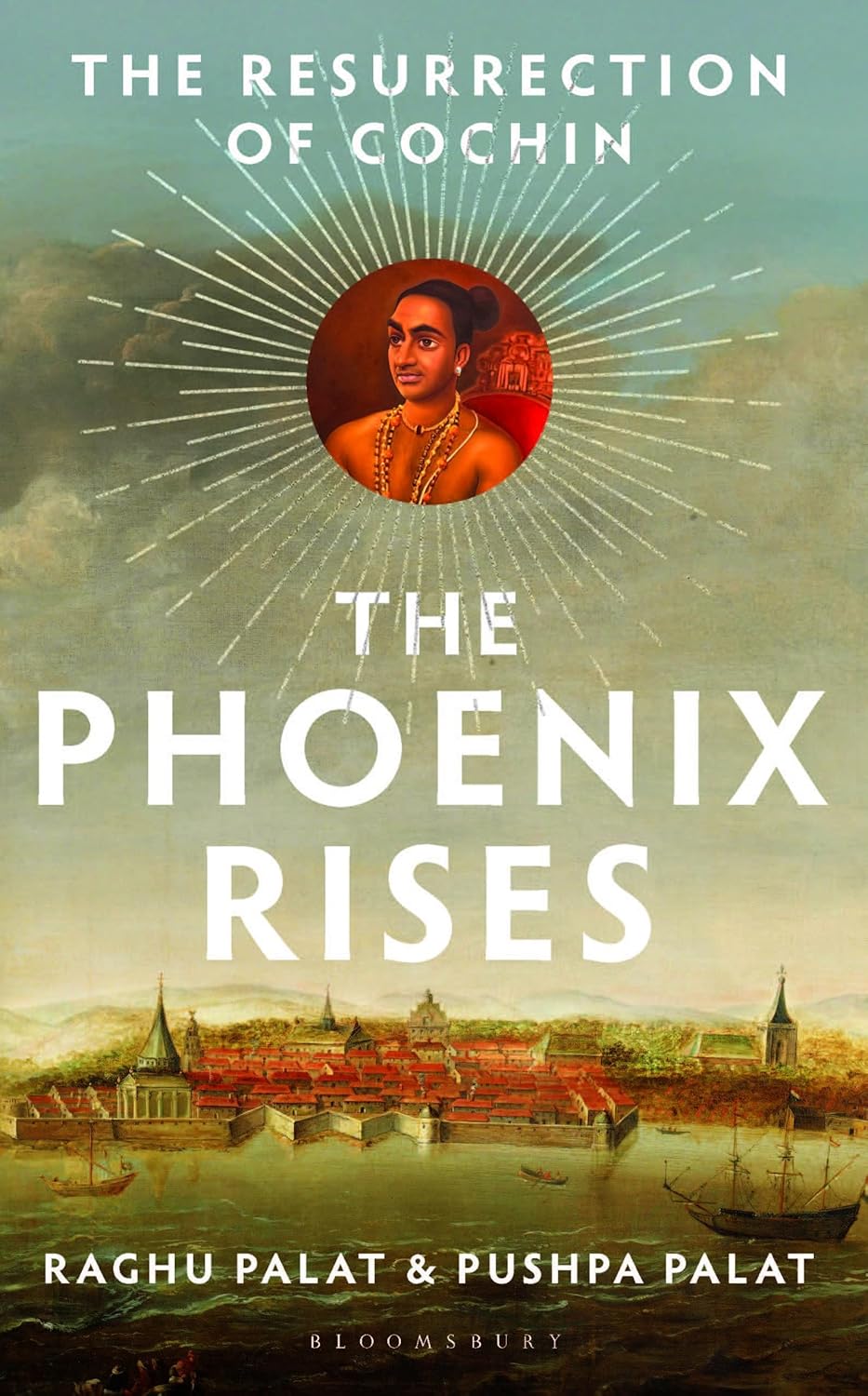
History often remembers empires at their zenith, but it is in moments of near ruin that true greatness is forged. In their sweeping new work, Raghu and Pushpa Palat transport readers to a time when the kingdom of Cochin stood trembling on the brink of collapse—and from those ashes rose a ruler whose vision would alter the destiny of Kerala forever. With narrative grace and meticulous research, the authors resurrect the extraordinary life and reign of Rama Varma IX, the indomitable Shakthan Thampuran, restoring to the forefront of Indian history a monarch whose courage, reform and resolve reshaped a fragile state into a formidable kingdom.
Bestselling authors Raghu and Pushpa Palat return with a sweeping and deeply immersive work of historical storytelling that resurrects one of Kerala’s most formidable rulers—Rama Varma IX, better known as the legendary Shakthan Thampuran. Following the success of The Case That Shook the Empire, the duo once again demonstrates their mastery over narrative history, this time turning their attention to the kingdom of Cochin at a moment when it stood perilously close to collapse.
The book opens against a backdrop of political fragility and looming annexation. Cochin was at its nadir—fractured by internal rivalries, weakened by economic strain, and constrained by entrenched power structures. Into this uncertain landscape steps eighteen-year-old Kunjipilla, unexpectedly entrusted with the reins of governance. What unfolds is a story of improbable leadership and remarkable transformation.
Under his astute and often audacious stewardship, the fragile state evolves into a stable and prosperous kingdom. The Palats trace this metamorphosis with both precision and narrative energy: strategic alliances are forged, towns are built, trade networks expanded, and royal authority consolidated. Most significantly, Shakthan Thampuran dismantles the entrenched nexus between priests and the Nair nobility, recalibrating the political equilibrium of the region. In doing so, he does not merely govern—he reshapes the very social and administrative fabric of Kerala.
What distinguishes this book is the balance it strikes between rigorous scholarship and compelling storytelling. Drawing on meticulous archival research, the authors reconstruct a pivotal yet often overlooked chapter of Indian history with authority and depth. Yet the narrative never feels burdened by academic weight. Instead, it moves with the momentum of a historical epic—rich in courtly intrigue, diplomatic manoeuvring and the quiet drama of reform.
The Palats excel at presenting Shakthan Thampuran as a layered and complex figure. He is neither reduced to legend nor confined to a catalogue of achievements. Rather, he emerges as a visionary—strategic, pragmatic and keenly aware of the shifting currents of power in his time. His reign becomes not simply an episode in regional history, but a meditation on governance itself: on how decisive action, clarity of purpose and institutional reform can redirect the destiny of a faltering state.
There is also a larger act of reclamation at work. Despite his profound impact on Cochin and the shaping of Kerala’s identity, Shakthan Thampuran has remained underrepresented in mainstream narratives. This book corrects that omission with conviction. It goes beyond the contours of a conventional biography, offering instead a vivid and immersive portrait of a reign that left an enduring imprint on the region’s political consciousness.
The collaborative strength of Raghu and Pushpa Palat is evident throughout. Raghu Palat’s disciplined structural approach lends clarity and coherence to the historical framework, while Pushpa Palat’s expansive storytelling sensibility brings emotional nuance and narrative warmth. Together, they craft a text that is accessible without sacrificing depth—dramatic without descending into melodrama.
For readers of Indian history—especially those drawn to the royal legacies of South India—this book is both informative and enthralling. Admirers of the Palats’ earlier works, including Destiny’s Child and God’s Own Empire, will find in this volume a continuation of their project to illuminate overlooked rulers and redefine the contours of regional history.
With this latest offering, the Palats once again blend scholarship and storytelling to powerful effect. The Untold Saga of Shakthan Thampuran is not merely a recounting of a monarch’s life—it is the restoration of a towering figure to India’s historical imagination. Richly layered, meticulously researched and narratively compelling, it stands as a testament to how history, when told with care and conviction, can reclaim its forgotten giants and reawaken the soul of a region.

 Bookshotsapp
Leave a comment