
There are reformers who change policies. There are innovators who change systems. And then there are rare individuals who change the way a nation thinks. Dr Bindeshwar Pathak belonged to that rare category.
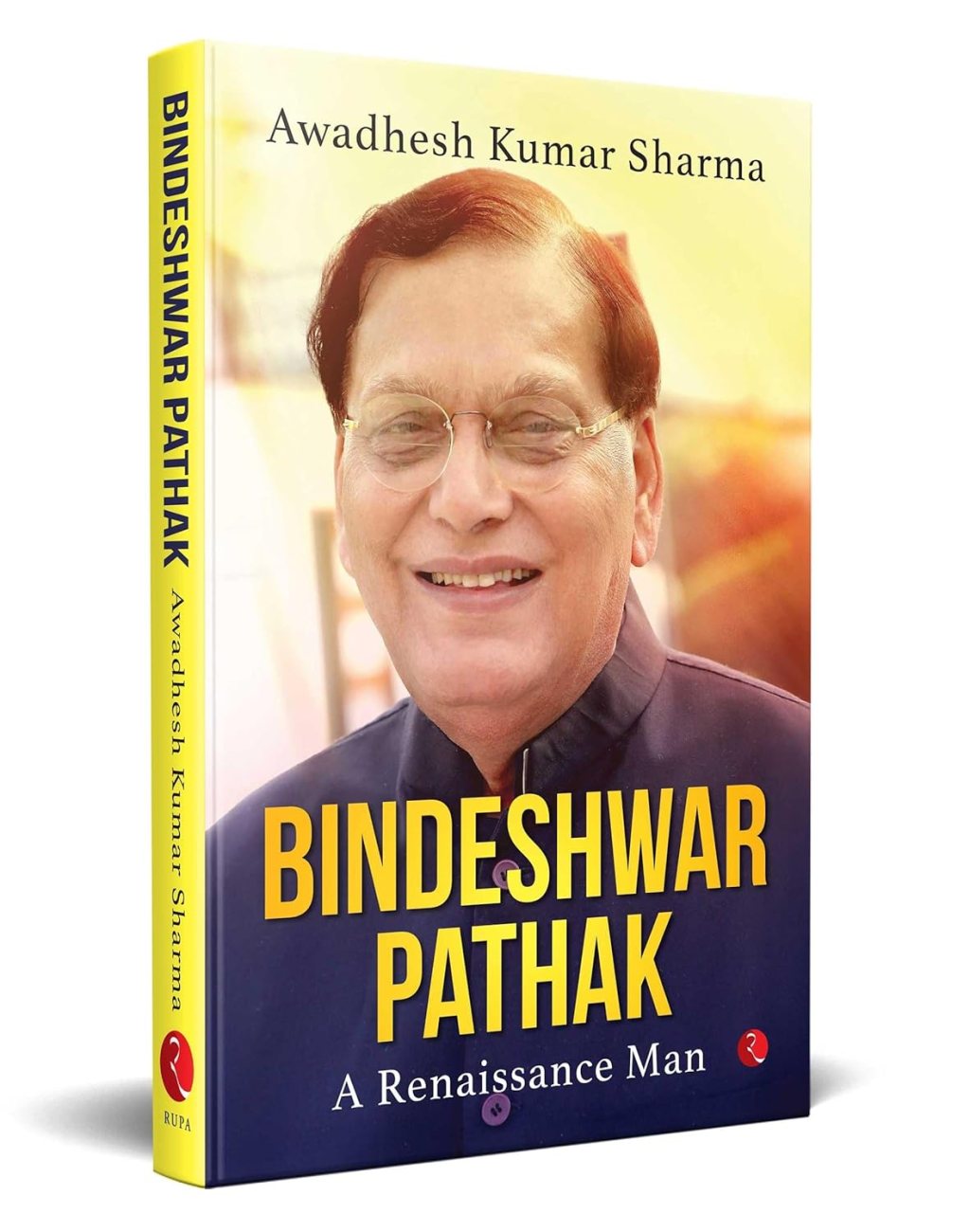
In Bindeshwar Pathak: A Renaissance Man, Awadhesh Kumar Sharma offers a deeply felt tribute to the founder of Sulabh International — a man who revolutionised sanitation in India and, in doing so, restored dignity and hope to millions. But this book makes it clear from the outset that Dr Pathak’s legacy cannot be contained within the word “sanitation.” His work touched the fault lines of caste, class, gender and human rights, transforming something society preferred not to see into a powerful instrument of social justice.
Structured across eleven tightly woven chapters, the book introduces us to Dr Pathak in all his dimensions. We see him as a scientist and social scientist — combining innovation with social understanding. We encounter him as a poet and philosopher — a thinker concerned not merely with systems, but with the moral and spiritual health of society. He appears as a spiritualist drawing strength from faith, as an environmentalist conscious of sustainability, and as a philanthropist driven by compassion rather than recognition.
The phrase “Renaissance man” is often used lightly. Here, it feels deliberate and earned.
What makes this biography especially compelling is its emphasis on purpose. Dr Pathak’s work through the Sulabh movement did not simply improve public health; it confronted deeply rooted social barriers. Sanitation in India has long intersected with caste-based discrimination and inherited stigma. By addressing this uncomfortable reality head-on, Dr Pathak reframed cleanliness as a matter of dignity and human rights. Toilets became tools of transformation. Reform became restoration.
Sharma’s writing is clear, insightful and deeply moving. There is admiration, but also reflection. The book does not reduce Dr Pathak to a single achievement; instead, it highlights the breadth of his intellectual and moral commitments. It shows how compassion, innovation and relentless drive can coexist — how science and spirituality need not be opposites, and how activism can be grounded in humanity.
Perhaps most inspiring is the reminder that systemic injustice can be challenged by individual resolve. The book underscores how one person, guided by conviction and empathy, can alter entrenched structures. Dr Pathak’s life becomes a testament to service — not as charity, but as justice.
For readers interested in social reform, human rights and modern Indian history, this biography offers both understanding and inspiration. It traces the origins and impact of the Sulabh movement, explores the complex intersections of sanitation with caste and class, and demonstrates the transformative power of sustained commitment.
Bindeshwar Pathak: A Renaissance Man is more than a tribute. It is a meditation on what it means to live with purpose. It reminds us that dignity can begin in the most overlooked places, and that true reform requires both courage and compassion.
In telling the story of the man who turned toilets into instruments of change, Awadhesh Kumar Sharma also tells a larger story — of humanity reclaiming its own worth.
 Bookshotsapp
Leave a comment