
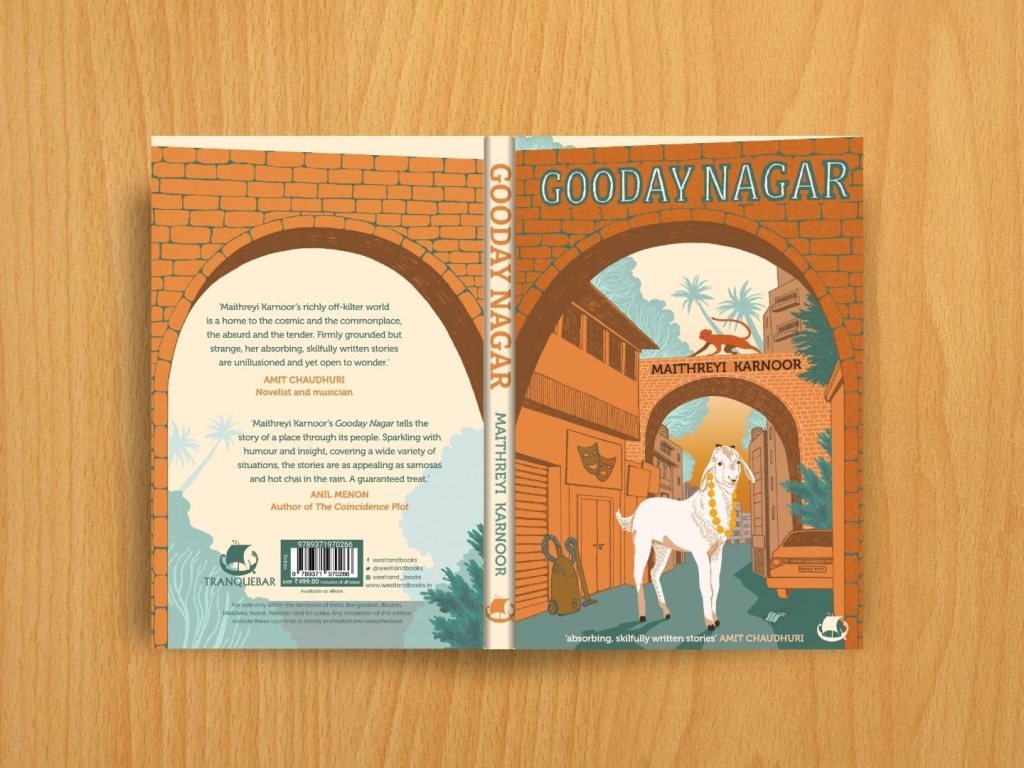
There are towns that exist on maps, and then there are towns that exist in the imagination long after the page is turned. Gooday Nagar belongs to the latter. Maithreyi Karnoor conjures a place that feels as intimate as memory and as unstable as a dream—a small Indian town refracted through satire, lyricism and a daringly surreal gaze.
At first glance, Gooday Nagar appears comfortingly familiar. It carries faint echoes of Malgudi—the same unhurried rhythms, the same eccentric citizens, the same quiet dramas unfolding in tea shops and living rooms. But Karnoor tilts the mirror. The reflection fractures. The ordinary begins to shimmer with strangeness.
Here, disillusioned playwrights nurse their failures over boxes of soan papdi. Vacuum-cleaner salesmen wander through existential crises. Armless ghosts haunt not to terrify, but to linger—like unfinished sentences. Former revolutionaries tremble before gobhi manchurian, as though ideology itself has curdled into farce. The absurd is not spectacle; it is diagnosis.
The pandemic looms in the background like a shared wound. Lives disrupted by lockdowns are stitched back together in the most improbable ways—sometimes by thieving monkeys, sometimes by sheer human stubbornness. In one story, the world ends and reappears as cake—soft, sweet, and fatally perishable. In another, medieval English castles intrude upon Indian sensibilities, harbouring stories of murder and magic that feel both misplaced and inevitable. Heaven-made marriages collapse under earthly gravity. Reality buckles, but it never entirely breaks.
Karnoor writes with a poet’s ear and a philosopher’s mischief. Her prose moves lightly, but it carries weight. Humour becomes her scalpel—precise, gleaming, deceptively gentle. She dissects power, faith, bureaucracy, loneliness and longing without ever losing tenderness for her characters. Even at their most ridiculous, they remain achingly human.
What elevates Gooday Nagar beyond clever surrealism is its meditation on language itself. Words are not passive vehicles here; they pulse and pivot, shaping the world they describe. The stories seem aware of their own artifice, inviting the reader into a game where meaning is layered, unstable and alive. Karnoor does not merely tell stories—she reimagines the architecture of storytelling.
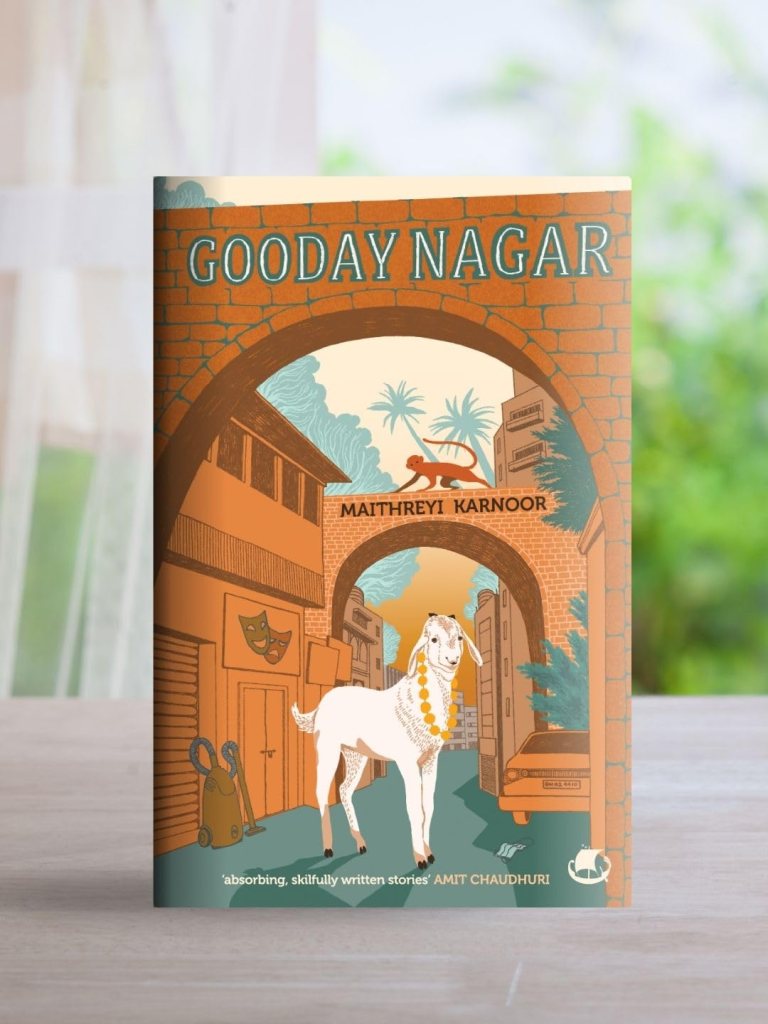
Beneath the whimsy lies a profound recognition of contemporary India: its anxieties, its contradictions, its capacity for reinvention. The town could be anywhere, which is to say it is everywhere. In its narrow lanes and improbable landscapes, we glimpse our own absurdities magnified—and somehow forgiven.
Maithreyi Karnoor, already distinguished as a novelist, poet and translator of rare finesse, reaches a new imaginative height with this collection. Gooday Nagar is not simply a book to be read; it is a world to be inhabited, puzzled over, laughed with and quietly mourned.
In transforming the small town into a theatre of the surreal, Karnoor has crafted something luminous and lasting—a work that feels at once playful and profound, fleeting and eternal. Gooday Nagar may be fictional, but once entered, it refuses to let you go.

 Bookshotsapp
Leave a comment