
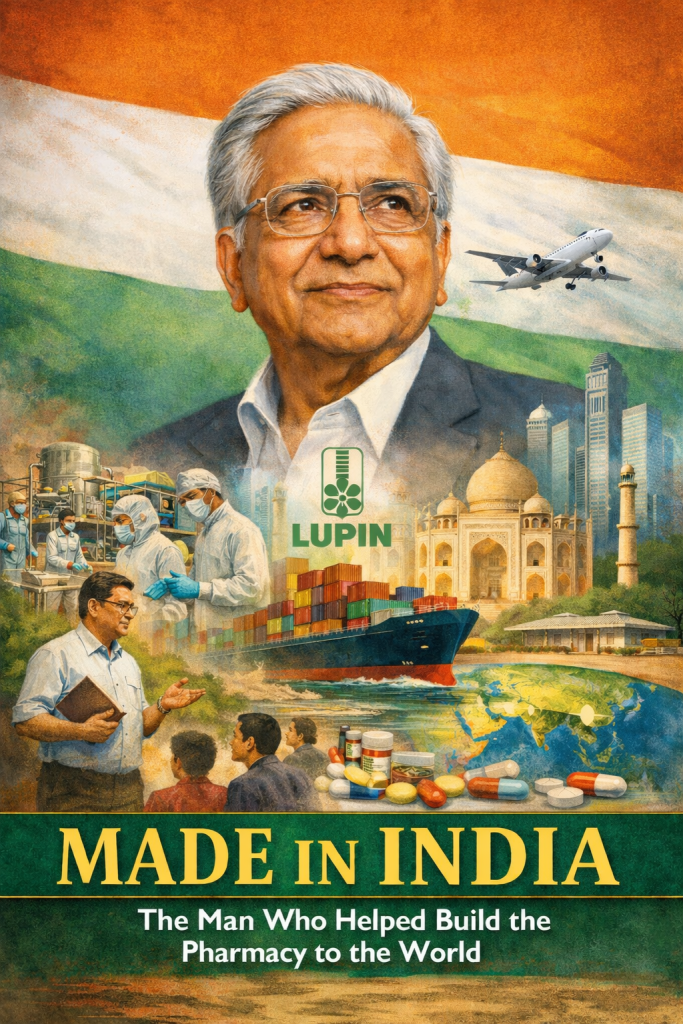
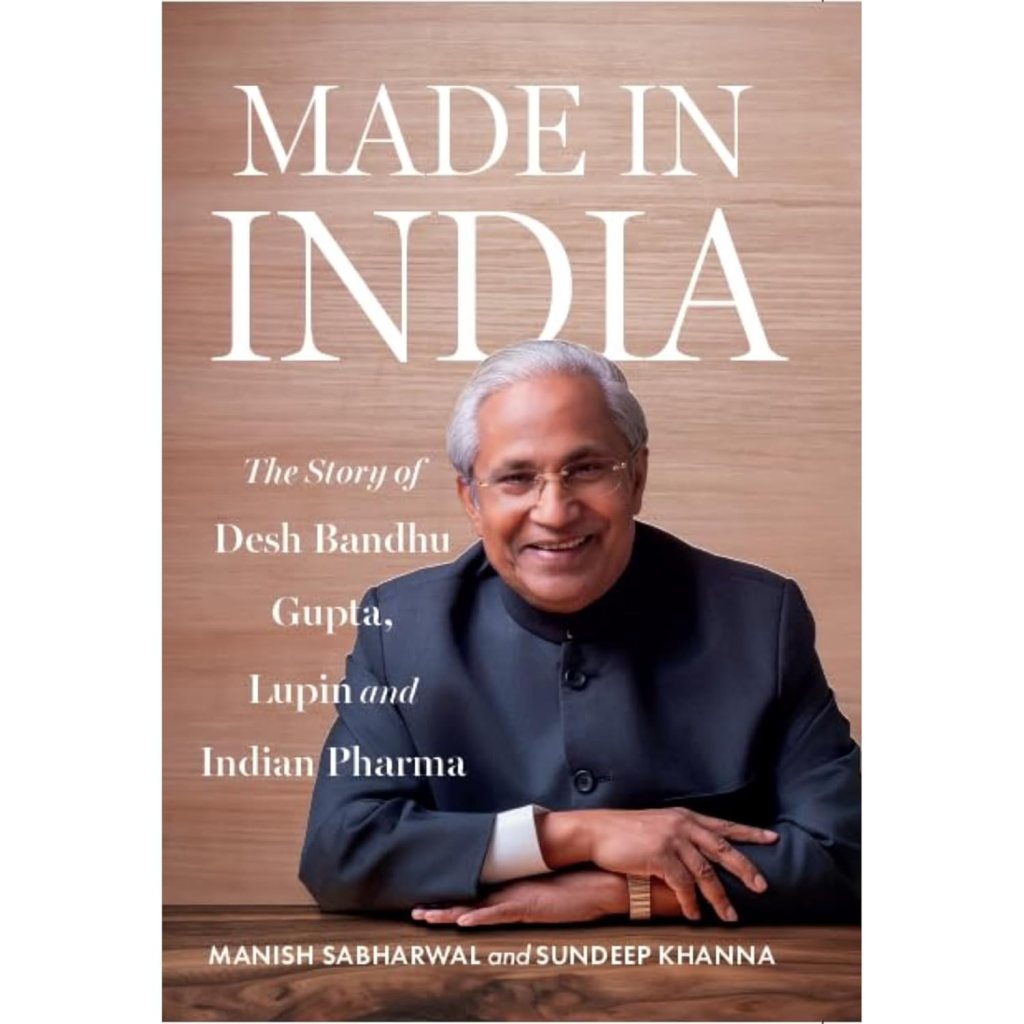
Some business stories celebrate success. Made in India tells the story of significance. Written by Sundeep Khanna and Manish Sabharwal, this compelling biography traces three interwoven journeys — the rise of Desh Bandhu Gupta (DBG), the making of Lupin, and the transformation of India from a medicine-importing nation into the “Pharmacy to the World.” Together, these arcs create not just a corporate chronicle, but a story about ambition, resilience, governance, family, and nation-building.
From Village Roots to Global Reach
DBG’s life reads like improbable fiction — except it is rigorously real. Born in a small Rajasthan village, he began as a teacher and professor before stepping into pharmaceuticals and eventually founding Lupin with a modest sum of money. What distinguished him was not privilege, capital, or connections, but a relentless hunger shaped by adversity.
The book captures how that hunger evolved into a mission. The early death of a childhood friend from tuberculosis left a permanent imprint on DBG’s mind, shaping his lifelong commitment to affordable medicine. From that emotional core grew a company that today sells in more than 120 countries and became one of the world’s leading generics manufacturers.
But the authors resist the temptation to turn DBG into a myth. Instead, they portray a fallible, thinking, evolving entrepreneur who faced financial collapse, leadership missteps, and governance challenges — and rebuilt, often painfully.
The Inside View That Makes the Difference
Manish Sabharwal’s personal proximity to DBG gives the book unusual texture. The narrative benefits from rare access, candid reflections, and an absence of sanitised storytelling. Successes are celebrated, but mistakes are examined with equal honesty.
The biography also avoids the classic “hindsight bias” that plagues many business books. Lupin’s rise is presented within the broader ecosystem of Indian pharma — alongside pioneers like Yusuf Hamied, Dilip Shanghvi, Anji Reddy and others — who collectively dismantled the assumption that global pharmaceutical dominance belonged only to Western multinationals.
The result is a contextual history of how India came to produce nearly half of the pills consumed in the United States and 60% of the world’s vaccines.
Governance, Leadership and Reinvention
One of the book’s strongest sections explores leadership transitions and corporate governance. DBG’s journey from a tightly controlled family-run board to a cognitively diverse, professionally governed company mirrors the maturation of Indian enterprise itself.
The authors thoughtfully examine questions that confront every founder:
- When should control give way to institutionalization?
- Can family leadership coexist with professional management?
- How does a board move from rubber stamp to strategic compass?
DBG’s eventual embrace of independent directors, global expertise, ESOPs, and professional CEOs marked a decisive shift from entrepreneurial hustle to institutional scale. The near-collapse during the financial crisis became a crucible that refined his thinking on accountability, culture, and talent.
The Human Architecture of Success
Perhaps the most refreshing aspect of Made in India is its insistence that institutions are built by people, not abstractions.
Manju Gupta, DBG’s wife, emerges as a central pillar — not a background figure. Her early financial support, emotional resilience, and equal partnership challenge simplistic narratives about entrepreneurship being a solitary pursuit.
Small decisions loom large in this story:
A ₹5,000 investment.
A board appointment.
An ESOP rollout.
A health scare that reinforced discipline through meditation and yoga.
These are not footnotes — they are inflection points.
The book also gently dismantles stereotypes about the Marwari business community, portraying a culture where education, professionalism, and empowering women coexist with enterprise and risk-taking.
Entrepreneurship Without Illusion
DBG believed companies should never become bureaucratic machines filled with “hyenas” living off others’ work. He wanted hunters — accountable, driven builders. That clarity about ownership, purpose, and hunger runs throughout the book.
In an era where artificial intelligence is reshaping white-collar work and entry-level roles are shrinking, Made in India feels timely. It reminds readers that entrepreneurship remains one of society’s most powerful engines of mobility and impact. Institutions rise when individuals combine audacity with discipline.
A Story Larger Than Business
This is more than a corporate biography. It is a meditation on ambition in a developing country. It is about aligning national priorities with global standards. It is about turning policy windows into industrial dominance.
Most importantly, it is about purpose — how a life marked by early hardship can fuel a company that touches millions of patients across continents.
Made in India will resonate with entrepreneurs, management students, policymakers, and young Indians searching for role models grounded in grit rather than glamour.
DBG did not just build Lupin. He helped build an industry.
And in doing so, he helped build India’s global credibility.
That is the story this book tells — candidly, thoughtfully, and without varnish.
And it is a story worth reading.



 Bookshotsapp
Leave a comment