
The story of the Indus Valley Civilization is one of history’s most fascinating puzzles. It was one of the world’s earliest urban societies, yet for thousands of years it remained completely forgotten. In The Indus: Lost Civilizations, Andrew Robinson brings this ancient world back to life, guiding readers through its discoveries, achievements and lingering mysteries in a clear and engaging way.
Robinson begins by tracing the rise of the Indus civilization, which flourished between around 2600 and 1900 BC across a vast region that today includes parts of India and Pakistan. What stands out immediately is the level of sophistication these cities achieved so long ago. Places like Harappa and Mohenjo-daro were carefully planned with straight streets, organized neighborhoods and advanced drainage systems. Some homes even had toilets and bathing areas—features that feel surprisingly modern for a civilization that existed more than four thousand years ago.
The scale of the civilization is equally striking. Archaeologists have identified over a thousand settlements spread across nearly 800,000 square kilometres, making it the largest urban culture of its time. Trade played an important role in sustaining this network. Evidence suggests that Indus merchants were connected to distant regions such as Mesopotamia, exchanging goods across long maritime routes and linking their cities with wider ancient trade systems.
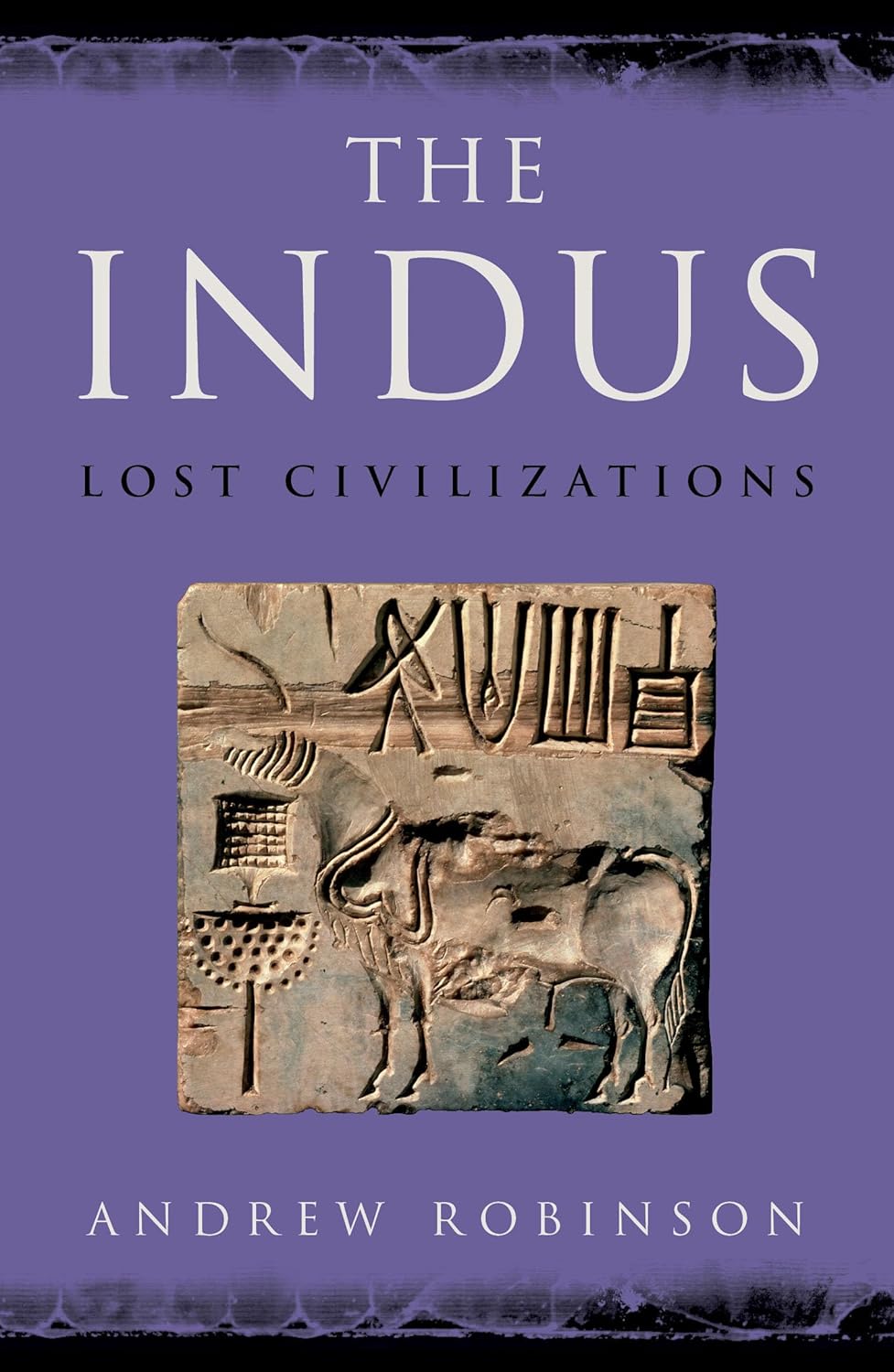
One of the most intriguing aspects of the Indus world is its craftsmanship and symbolism. Excavations have revealed beautifully carved seals, delicate gemstone jewellery and carefully measured stone weights used in commerce. Many of the seals carry a short script alongside images of animals. Yet despite decades of study, this writing system has not been deciphered, leaving a major part of the civilization’s story locked away.
Equally curious is what archaeologists have not found. Unlike many other ancient civilizations, there are no obvious signs of powerful kings, grand palaces or large armies. Robinson points out that the absence of such markers has led scholars to wonder whether the society functioned in a more balanced or decentralized way. While the evidence is still incomplete, it adds to the sense that the Indus civilization may have followed a very different social model from its contemporaries.
One of the strengths of Robinson’s book is how approachable it feels. He avoids heavy academic language and instead focuses on telling the story of the civilization through discoveries, questions and evolving interpretations. The book reads less like a technical report and more like a guided journey through an ancient landscape that archaeologists are still trying to understand.
Robinson also reflects on how the rediscovery of the Indus cities in the 1920s reshaped our understanding of South Asian history. Before these excavations, the antiquity of urban civilization in the region was not fully recognized. The findings pushed the timeline of Indian history back by millennia and revealed a complex society that had thrived long before many later historical traditions emerged.
The Indus: Lost Civilizations works well as an introduction for anyone curious about the ancient past of the Indian subcontinent. It does not claim to solve the many mysteries surrounding the Indus people, but it presents the evidence in a thoughtful and engaging way. By the end, readers are left with a deeper appreciation of a civilization that was both remarkably advanced and still, in many ways, unknown.



 Bookshotsapp
Leave a comment