
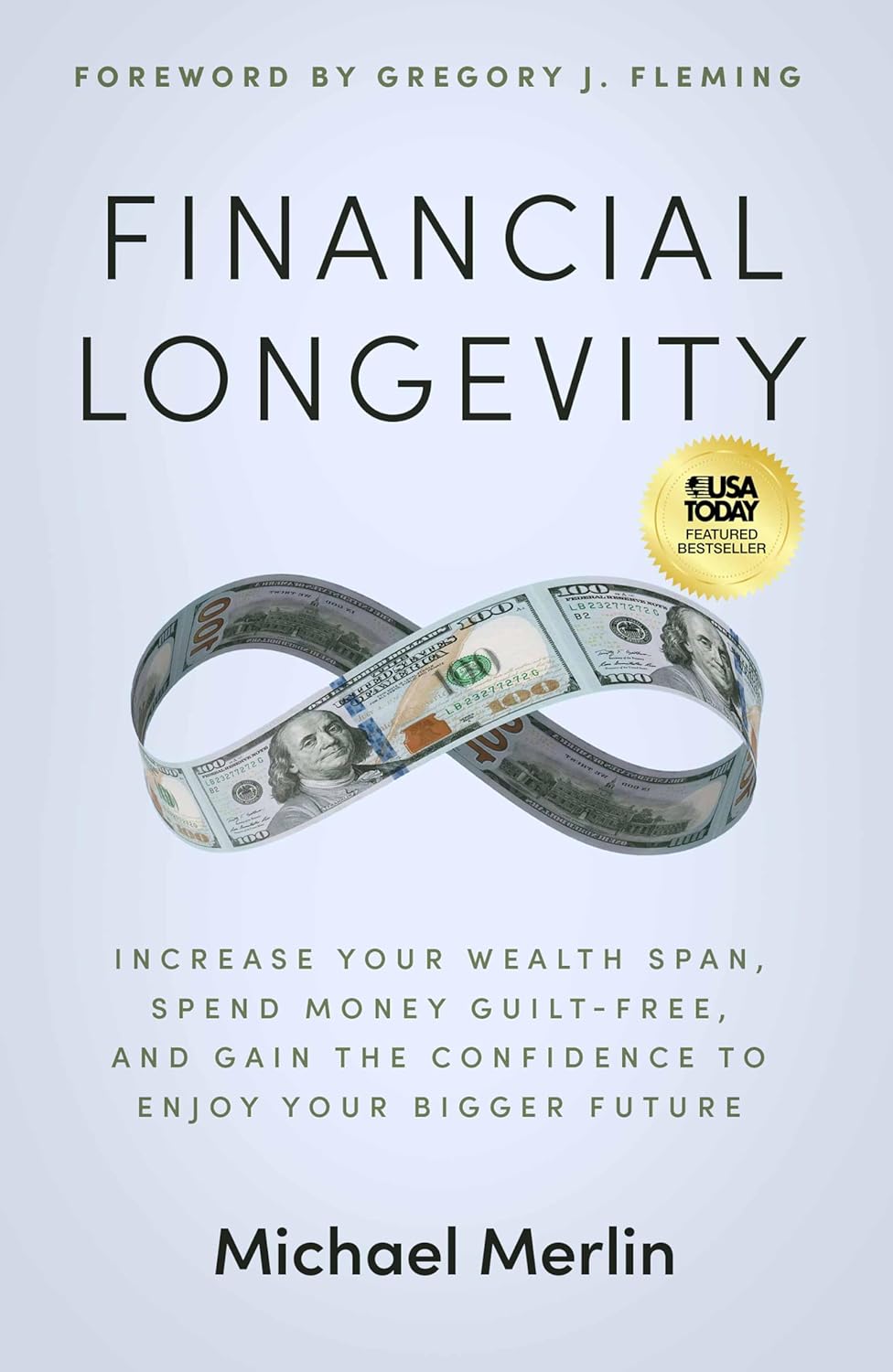
Most personal finance books tend to circle around the same idea: earn more, save aggressively, invest wisely, and your future will be secure. Financial Longevity by Michael Merlin takes a step back from that familiar formula and asks a more thoughtful question — what is the point of building wealth if we don’t know how to use it well over the course of a longer life?
That question sits at the heart of this book. Merlin argues that as people begin to live longer than previous generations, financial planning also needs to evolve. It is no longer just about accumulating money; it is about making sure that your resources last long enough to support the kind of life you hope to live. He calls this the idea of a “wealth span,” and it becomes the guiding thread throughout the book.
What makes Financial Longevity stand out is its calm, practical approach. Merlin doesn’t preach extreme frugality, nor does he push readers toward complicated investment strategies. Instead, he focuses on the everyday decisions people make with their money and how those choices quietly shape their financial future. Drawing from more than twenty years of experience advising families, he explains how many people unintentionally shorten their “wealth span” through what he calls three financial “diseases.” These are not dramatic financial mistakes, but subtle habits that slowly erode financial security over time.
One of the most refreshing parts of the book is its discussion of spending. In many financial guides, spending is treated almost like a failure of discipline. Merlin approaches it differently. He recognizes that many people feel uneasy about using their money, even when they have enough saved. The fear of the unknown future often turns spending into a source of guilt rather than enjoyment. Through clear examples and practical frameworks, he shows how people can spend with confidence while still protecting their long-term financial stability.
The writing style also makes the book approachable. Merlin avoids the dense language and technical jargon that often make financial planning feel intimidating. Instead, he explains ideas in a way that feels more like a conversation than a lecture. The advice is easy to follow, grounded in real-life situations, and designed to help readers make better decisions without feeling overwhelmed.
Perhaps the most valuable takeaway from Financial Longevity is its balanced outlook on money. Merlin reminds readers that financial planning should not revolve solely around protecting wealth at all costs. Money, after all, is meant to support a life well lived. The challenge is finding the middle path—ensuring that your resources last while also giving yourself permission to enjoy them.
In the end, Financial Longevity is less about complicated financial strategies and more about changing the way we think about money and time. It encourages readers to plan not just for retirement, but for a long and meaningful life. For anyone trying to navigate the uncertainties of the future while still enjoying the present, this book offers thoughtful guidance and a reassuring perspective.

 Bookshotsapp
Leave a comment