
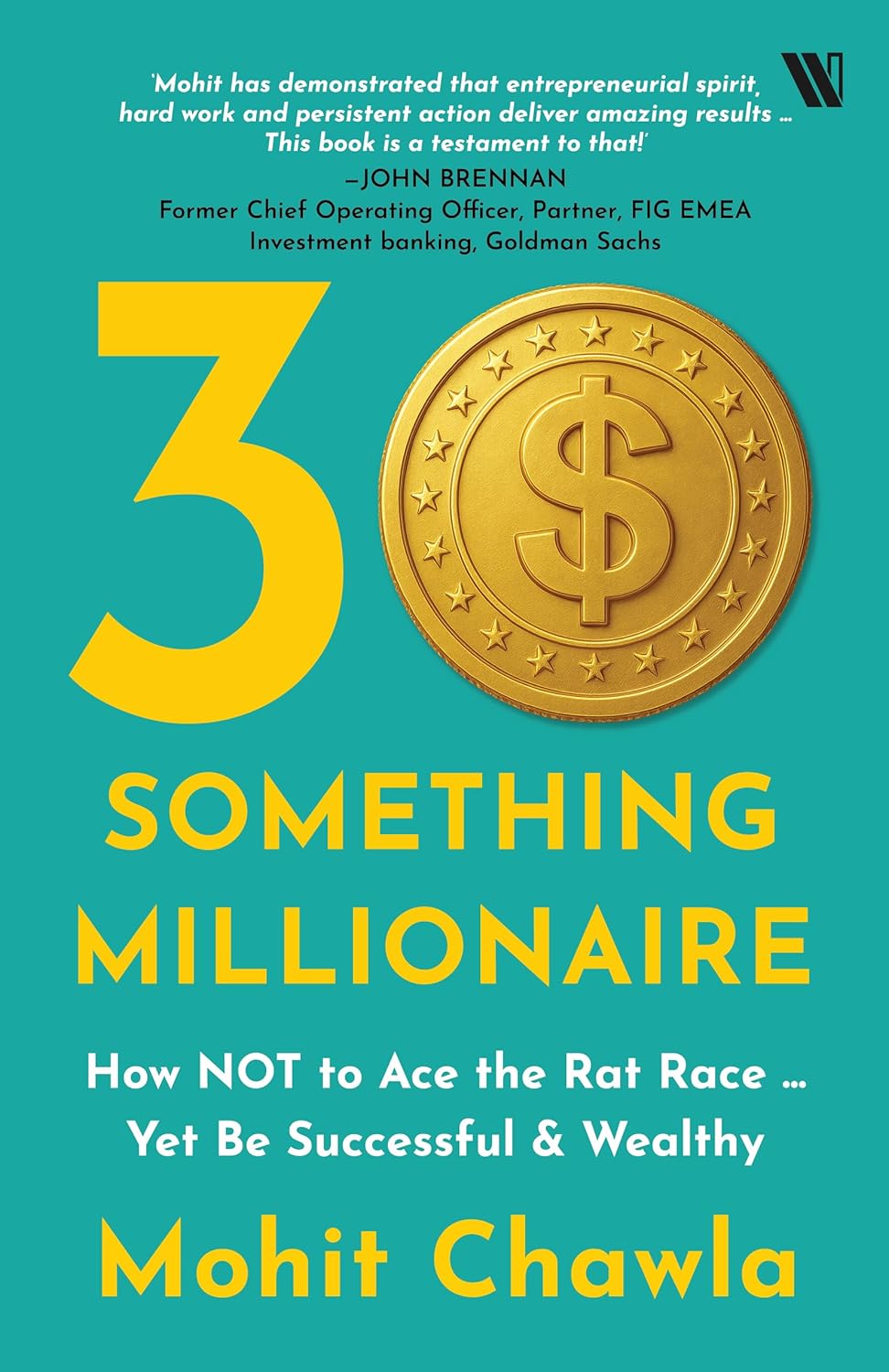
Most “get rich” books feel like they were written by people who have never actually sat in a cubicle. Mohit Chawla’s 30 Something Millionaire is different. It’s the story of a self-described “regular Indian guy” who realized early on that the traditional “master of one” advice is a trap. Instead, Chawla pitches a more modern path: being a “jack of all trades” and letting those skills compound over time.
The Strategy: Compounding Beyond the Bank Account
The core of Chawla’s philosophy is that compounding isn’t just for your 401k or stock portfolio. It’s for your habits, your relationships, and even your mistakes. He’s obsessed with the “compound effect”—to the point where he keeps his phone wallpaper set to Consistency, Discipline, and Patience as a constant nudge. The book isn’t just telling you to save money; it’s telling you to build a life where your efforts today make tomorrow exponentially easier.
The Journey: From IIT to Wall Street and Back
Chawla splits his story into three distinct “acts”:
The Roots: He takes us back to his intense days at Vidyamandir Classes and IIT. This isn’t just academic nostalgia; he highlights how the “IITian DNA” of problem-solving and self-reliance became his springboard. He also leans heavily into his spiritual side, crediting meditation for the “equanimity” needed to survive high-pressure environments.
The High-Stakes Grind: This is the “commercial backbone” of the book. Chawla walks us through the halls of global giants like Goldman Sachs and Morgan Stanley across New York and Dubai. It’s a fascinating look at how global capital flows, but more importantly, it shows the moment he decided to leave the “outrageous monetary benefits” behind to build something of his own in India with Bimtek Capital.
The “Ikigai” Factor: In the final stretch, the book pivots from “how to make money” to “why it matters.” He uses the Japanese concept of Ikigai to explain his personal trifecta: financial independence, mental peace, and creating value for the world.
Chawla’s tone is conversational and refreshingly honest. He doesn’t pretend to have a secret magic formula; he just shows how a “regular” person can use discipline to arrive at a stage where money stops being a constraint.
It’s less of a dry, step-by-step manual and more of a reflective roadmap. If you’re feeling burnt out by the corporate grind or wondering if there’s a way to balance a high-octane career with deep personal peace, this is a must-read. It’s a reminder that success isn’t about running the fastest—it’s about running the right race.
 Bookshotsapp
Leave a comment